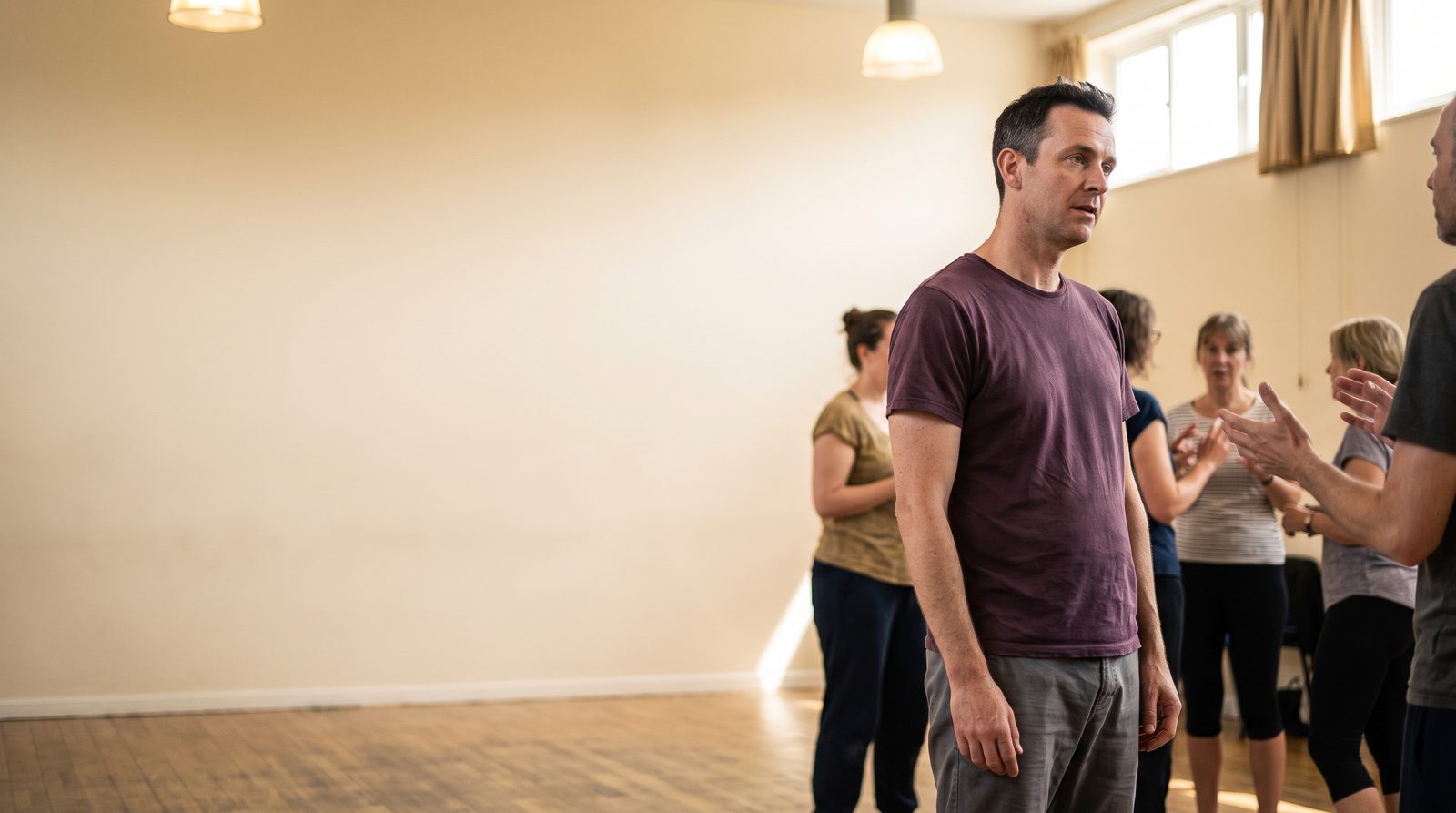
The fact that reorganises everything else on this page
Acting teaching is unlicensed, and you are the customer.
There is no qualification, register, inspection or accreditation required to teach acting. As one source puts it, it takes no effort at all to “hang up a shingle and call yourself an acting teacher.”
A good acting class for beginners does three things: it gets you on your feet in the first session, it gives you something to work on between sessions, and it tells you honestly where you are.
The sentence to keep in your head
“Acting classes are a business and actors are the customers.”
On-set acting coach Joseph Pearlman. You have a right to insist on standards and to reject red flags. The absence of licensing does not erase your standing as a buyer — as another coach puts it, it just means “nobody’s doing the quality control for you.”
So here is the one free tool, and everyone agrees on it
Ask to audit. Before committing to a multi-week class with a hefty price tag, ask whether you can sit in on one. Backstage recommends it. So does every other credible source in our research. Sitting in gives you the teacher’s style, how the class actually runs, and how the students treat each other.
Any school that refuses to let you observe a class before enrolling is hiding something — poor teaching, a difficult room, or a class so large that individual attention is impossible. Legitimate schools welcome audits because they are confident in what they are selling. (That particular line comes from an acting school, so treat the framing accordingly — but the logic is sound and every competing source says the same thing.)
What to actually watch for while you are sitting there
Four questions, and none of them are about the teacher’s credits.
- Are students actually acting for most of the time, or listening to a monologue about acting?
- Is the teacher present and working, or performing for the room?
- Is the feedback specific and fixable in the session — or general and admiring?
- Would you be comfortable being wrong in this room? Watch what happens after somebody struggles.
Cathryn Hartt puts the whole thing in one line: first and foremost, “you need someone you can trust so that you are willing to let go” and move past your blocks. And the older, slower method still works — ask the actors who book a lot, and ask enough of them that patterns emerge.
Before you compare anything
“Acting class” means six different products.
They are sold at wildly different prices and a beginner buying the wrong one loses both the money and the year.
A beginner asking “should I take acting classes” is nearly always asking about the first three, and those three answer different questions. Specialist workshops — voice, dialect, stage combat, singing, commercial — are the seventh thing, and they come later.
The question nobody online actually answers
What happens in a beginner class?
You will probably feel awkward for the first ten minutes. That is not evidence you do not belong. It is what learning something exposed feels like.
A warm-up
Simple movement, breathing or focus work. Its real job is to get a room of strangers into the same space and out of their coats and their day.
Listening and responding
Games or partner work that move your attention off yourself and onto another person.This is the whole game, and it is what casting says it is watching for. Most beginner nerves are a symptom of attention pointing the wrong way.
Working a scene
You will probably read from the page at first. Memorization is rarely the point on day one, and a class that makes it one on day one is testing you rather than teaching you.
A note, and then you go again
A good note gives you something playable — try to win them over without letting them see you need them. A bad note is a verdict about you as a person, and there is nothing you can do with it.
Good teachers know how to bring beginners into the work gradually. You should be stretched. You should not be humiliated, and the difference is not subtle. A class should be the safest room you act in, because it is the only one where being bad is the point.
Five proper nouns, and nobody translates them
The techniques, decoded.
You do not have to choose a lifelong method. These are traditions, not personality types, and teachers interpret them differently — the individual room matters more than the label on the door.
The translation a beginner actually needs
The real distinction is not between schools. It is between working from the inside — your memories and feelings — and working from the outside: your partner, the text, the circumstances.
Strasberg’s Method is the purest inside. The Meisner technique is the purest outside. Everything else sits between them. Read any studio’s website with that in mind and you will understand what you would actually be doing on a Tuesday night.
The most famous technique in the world, and the fact nobody tells beginners
The Method question.
A sourced, surprising thing to know before handing anyone your money
The Method rests on the part of Stanislavski’s work that Stanislavski moved away from.
Strasberg built the Method on emotional memory. Stella Adler — the only member of the Group Theatre to have studied with Stanislavski in person — challenged that emphasis on precisely the grounds that Stanislavski himself had abandoned it, in favour of imagination and physical action.
Sanford Meisner moved the same way, away from internal emotional excavation and toward partner-based work. Over the Group Theatre’s life, both of them found the approach too often unhealthy and self-absorbed. The charge, then and since, was that it was “more therapy and less actor training.”
Modern teachers put it more bluntly: emotional memory can be psychologically harmful and artistically limiting, and repeatedly accessing painful personal memories can do damage — particularly to actors carrying trauma.
And the defence, which is real: between them, Strasberg, Adler and Meisner trained James Dean, Marlon Brando, Marilyn Monroe, Al Pacino and Dustin Hoffman. This is not a fringe tradition.
Both things are trueOne qualification worth carrying. There is nothing inherently dangerous in Stanislavski’s teaching, and by the end of his life he was not much interested in emotional recall as a reliable technique. The concern attaches to one later interpretation, not to the root tradition.
When people argue about “Method acting” they are almost always arguing about staying in character off set — the accents held for months, the stories about actors refusing to break. That is not Strasberg’s technique. Strasberg’s technique is a rehearsal-room mechanism for generating emotion from memory. The off-set immersion is a separate, later, largely media-driven phenomenon, and you will never meet it in a Tuesday-night beginner class.
The bridge from this page to the rest of the site
Stage training and on-camera training are different skills.
The classical tradition — Stanislavski, Adler, Meisner, scene study — was built for the theatre. The work you are most likely to be assessed on is a self-tape: chest-up, a few seconds to land, a reader beside the lens, no audience and no adjustment.
Casting says so repeatedly. Weeble Mountain Casting: speak at a conversational volume, you usually do not need to project or enunciate on camera, and over-acting makes a director pass quickly. Luci Lenox: what reads is being alive on tape, still in character when not speaking. Caroline Liem: the camera sits at eye level so casting can catch everything you are listening to.
Technique teaches you to act. On-camera teaches you to be seen acting by a lens. Neither substitutes for the other — and a beginner who only ever trains in a theatre tradition will make well-prepared self-tapes that read as too big, and will not know why.
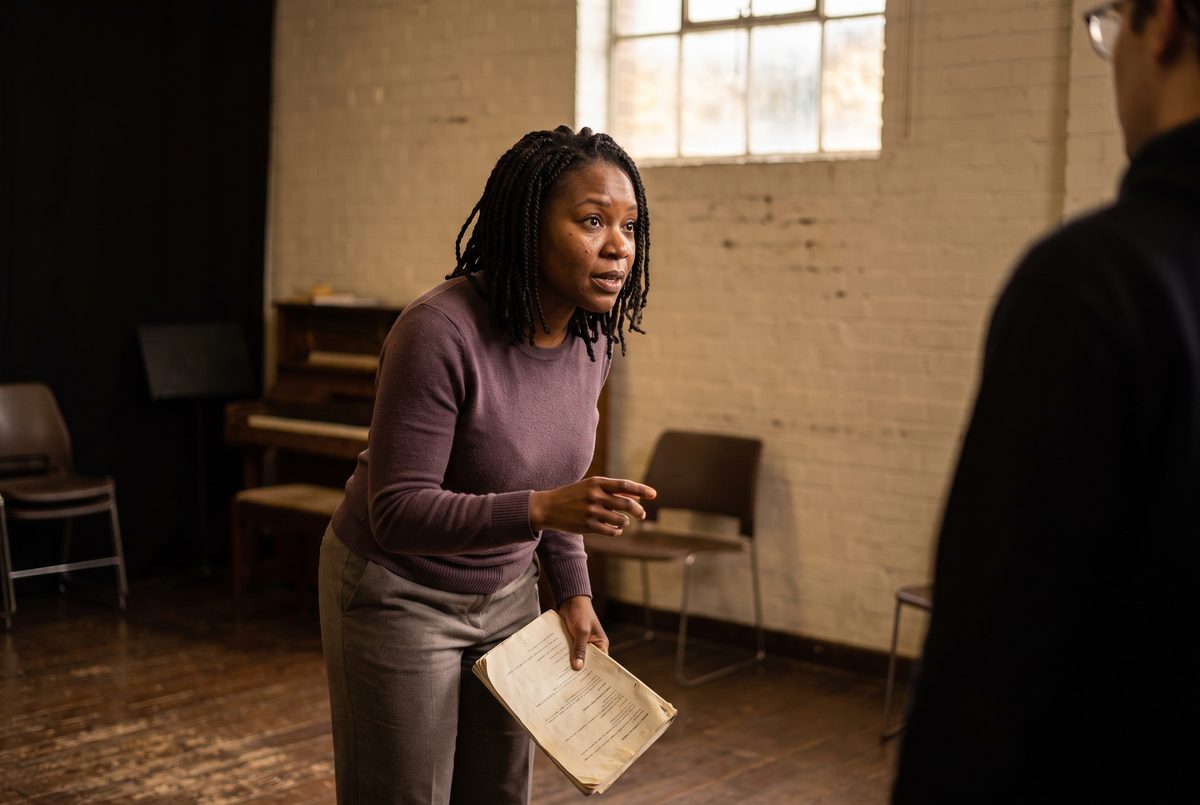
The most practically valuable list on this page
Red flags, from coaches who audit classes for a living.
Joseph Pearlman compiled his from auditing rooms in both New York and Los Angeles, and notes that teachers with questionable practices sometimes build large followings — often because they once coached somebody who became famous.
The literal search, answered with published numbers
What acting classes actually cost.
All of these move. They were current when we checked them in August 2026, and you should confirm before you commit.
And the most useful sentence in this whole section
“Price correlates with brand, facility, and demand more than with teaching quality.”
From a directory of published Los Angeles rates. Which means the number cannot tell you whether a class is good — so something else has to. That something is the audit, and it is free.
Online or in the room?
The variable is not the format. It is whether you get worked on.
Many teachers now run classes over video — from paid weekly studios down to free online acting classes — and online sessions are generally priced lower than in-studio ones. But the real distinction is a different one.
Content
Watching somebody talented talk
- MasterClass and its equivalents. Genuinely interesting, often inspiring.
- You are not acting, and nobody is telling you what happened when you did.
- Useful as reading. Not a substitute for a class.
Training
You act, and somebody responds
- The thing you are actually buying is reps.
- The question to ask any class, online or not: do I get worked on, by name, every session?
- A ten-person Zoom scene-study class where you are up every week beats a hundred-person in-person class where you watch.
Online class is self-tape practice. You are performing to a lens, in your own room, with your own framing and lighting, being judged on what the camera sees. For anyone whose first audition round will be a tape — which is now almost everyone — that is training in the actual medium rather than a compromise.
The cheaper and less frightening doors
Improv, and the side entrances.
If the thing stopping you is the room rather than the money, start here.
Improv suits a beginner for three reasons the field implies but rarely states: it removes the memorization barrier entirely, it trains listening — which is what casting says it is watching for — and it is socially lower-stakes than presenting a prepared scene in front of strangers. It is not a substitute for text work. As a first class for somebody frightened of the room, it is the least intimidating door there is. Meisner’s own exercises encourage improvisation, so the traditions are not opposed.
Handle this one carefully — there is a legal dimension
Classes taught by casting directors, and the trap next to them.
The question underneath the spending
Do you need class at all?
The honest answer is contested, and both sides are worth hearing.
No: the US Bureau of Labor Statistics says a formal education is not always required for actors. Typical entry-level education is some college, no degree, and required prior work experience is none. Actors typically develop through classes and years of practice.
Yes: the observation that carries the most weight is a working teacher’s — that actors who had already built recognisable careers were still turning up to class. And the structural argument: acting is one of very few skills that cannot be practised alone. You need a partner, a text, and somebody whose job is to tell you what actually landed. A class is the cheapest reliable source of all three.
How we would resolve it
Class is not a qualification. It is a rehearsal room you can rent.
Nobody will ever ask what you trained in. What they will see is whether you can listen, make a choice and take an adjustment — and those are practised, not learned once. You are buying reps, not a credential — so if you are not being worked on, you are not buying anything, whatever the monthly fee says.
The honest state of the evidence
Where the field disagrees.
Is the Method the gold standard?
YesIt trained Brando, Dean, Monroe, Pacino and Hoffman. That is not nothing.
ContestedStella Adler: Stanislavski himself abandoned emotional memory. Meisner: too self-absorbed. Modern coaches: potentially harmful.
Do you need class?
NoBLS: no formal education required. Experience required: none.
YesActors with real careers are still in class, and you cannot practise acting alone.
Does price signal quality?
ImplicitlyPremium studios, premium rates, and the assumption most beginners make.
NoA directory of published LA rates: price correlates with brand, facility and demand more than with teaching.
Should students critique each other?
CommonStandard practice in a great many classes.
NeverJoseph Pearlman: students should never be permitted to critique one another’s work.
Casting-director workshops?
AccessMarketed as time in front of industry decision-makers.
Illegal, if hollowSAG-AFTRA: no meaningful critique makes it a paid audition. 28 people charged in 2017.
Should a class use your own emotions?
YesStrasberg’s central mechanism, and the engine of the Method.
CarefulNamed as a red flag by working coaches: a class about who can dredge up the most pain is not teaching acting.
Online or in person?
In personThe tradition, the default, and the assumption.
OnlineCheaper — and for anyone auditioning by self-tape, practice in the actual medium.
Before you pay anybody
The class check.
- I asked to audit — and they said yes without hesitating.
- Students spent most of the session acting, not listening.
- The notes were specific and playable, and I saw somebody change after one.
- I watched how the teacher treated somebody who was struggling.
- Nobody critiqued another student’s work directly to them.
- There is no guarantee of bookings, no required photographer, and no pressure to sign today.
- I know which of the six things I am buying, and why that one.
- I know the total cost, including any minimum commitment.

You are the customer. Act like one.
Nobody has checked your teacher, price will not tell you whether they are good, and the one tool that will is free and takes an evening. Sit in on the class. Watch what happens after somebody is bad. Then decide.
And when you have found the room, remember what it is for: reps, not a certificate.
Learn the other half, free