Start with the uncomfortable part
This is a search you cannot win, and that is useful to know.
“Near me” is a proximity query. Google reads it as a trigger and quietly replaces it with wherever you are standing, then ranks on that. What you get back is a three-listing map pack.
The ranking factors in that pack are proximity, relevance and prominence, weighted roughly 40 / 35 / 25. The top map result takes somewhere between 44% and 58% of all the clicks on the page. A small local business can sit above a national directory there even when the directory is enormously stronger, because being close beats being big.
Because the second fact about that map pack is the one that actually matters. It surfaces businesses that market themselves. A very large share of adult and community drama provision does not market itself at all.
The chapter
Seven kinds of class exist. You are being shown one.
Here is the whole local market, and how much of it a map pack will ever hand you.
How big the invisible layer actually is
The WEA was founded in 1903 and is the largest voluntary-sector adult education provider in the UK. It delivers around 9,000 courses a year across more than 500 local branches, taught by over 2,000 tutors to roughly 65,000 learners. In one recent year it ran over 8,000 courses in more than 1,800 community venues. Almost none of that has ever appeared in a map pack.
This is the most common complaint about this search, and it has a boring cause. Children’s provision advertises hard, because parents search, book by the term and stay for years. Adult provision often does not advertise at all. It fills through the theatre’s mailing list, the council brochure, the WEA prospectus and word of mouth.
The absence of adult classes in your results is not evidence that there are none.
The highest-value fifteen seconds on this page
Change one word and the town changes.
“Drama” and “acting” are not synonyms. They have different centres of gravity, and the search engine knows it even if you do not.
Search “drama classes”
You will mostly get
- Children and teenagers. This is the phrase the children’s market owns outright.
- Schools, youth theatre, community groups and adult education.
- Stage and spoken word, plus confidence, communication and taking part.
- British usage, and often a graded-exam syllabus attached.
Search “acting classes”
The same town returns
- Adults, and people who intend to work professionally.
- Commercial studios, private coaches and conservatoires.
- Screen more than stage, and booking work as the goal.
- American usage, which quietly shifts the whole result set.
Two other terms are worth trying in your own town. “Youth theatre” is what youth theatres actually call themselves, so search their language rather than yours. And “performing arts” usually means drama plus singing plus dance, and usually means children — useful if that is what you want, and useful to know if it is not.
The most consequential thing on this page
One of these words is protected by law. The other is protected by nothing.
Inside a single search for drama classes near you, two completely different kinds of person can appear in the same list, styled identically. Almost nobody explains the difference.
Dramatherapist
A regulated clinical profession
- “Dramatherapist” is a protected title under UK law. Using it without registration is a criminal matter.
- The HCPC regulates it, along with the other arts therapies, and you must be on the register to practise.
- Training is at Level 7 — a Masters — on an approved programme. There are four in the UK.
- You can check the register yourself, in about thirty seconds, before you book anything.
Drama teacher or acting coach
An entirely unregulated one
- No register exists. Drama teachers require no HCPC registration and work outside healthcare frameworks entirely.
- No minimum qualification is required to teach acting or to charge you monthly for it.
- Nobody is doing the quality control. It takes no effort to hang up a shingle and call yourself an acting teacher.
- So you do the vetting — the audit, the red flags, the questions. That is what the beginners chapter is for.
If somebody calls themselves a dramatherapist, you can check them on a statutory register in half a minute, and it is a criminal matter if they are not on it. If somebody calls themselves a drama teacher or an acting coach, there is no register, no minimum qualification and nobody to check with.
Same search results. Completely different accountability. So for a class you do the vetting yourself, and for therapy you check the register.
The method, since the list is impossible
Eight searches, and each one opens a different door.
Run these in order. The first gives you what you already had. The rest give you the four kinds you were never shown.
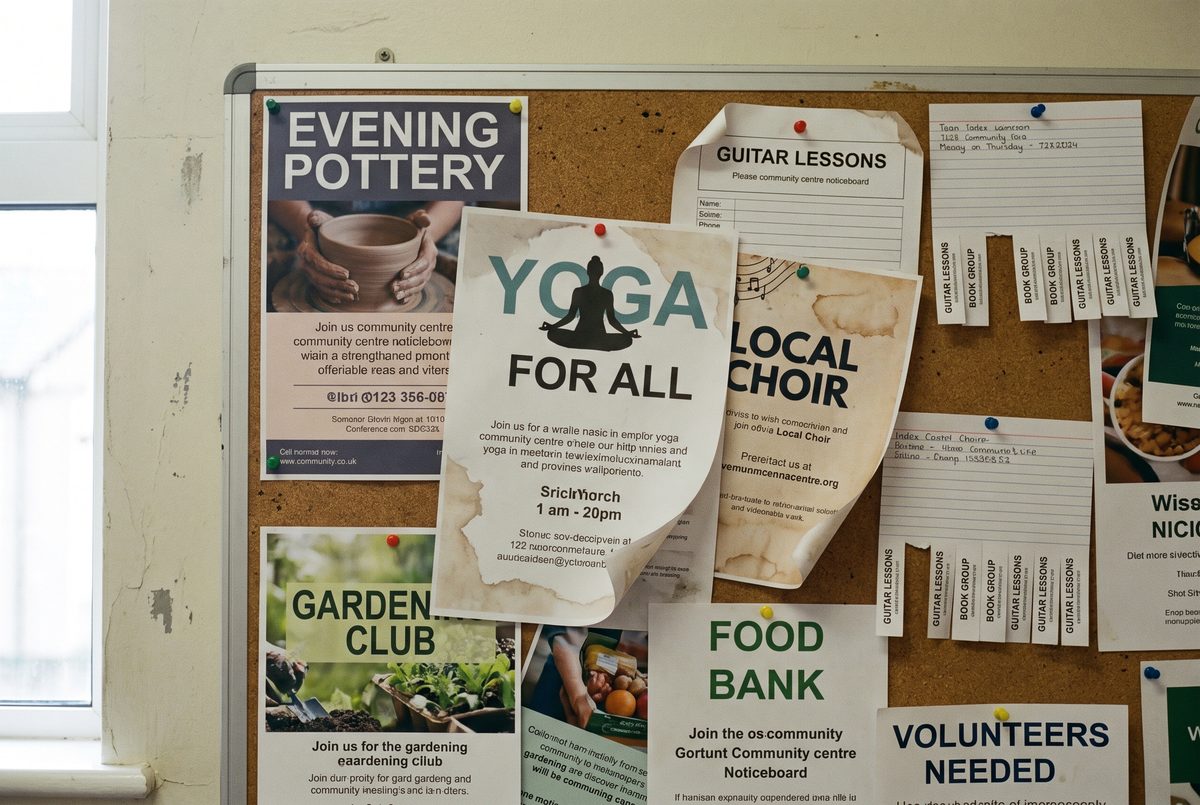
The other half of the local market. None of this is a business with reviews, so none of it can be ranked.
“acting classes [your town] adults”
The commercial layer. This is roughly what the map pack already gave you, with the children’s market filtered out.
“[your town] theatre” — then look for Take Part
Every producing theatre files its classes under Take Part, Learn, Participation, Education or Creative Learning. Not one of them says “acting classes”.
Highest-yield search on the list. Theatre websites are built to sell tickets, so the classes are buried.“[your county or borough] adult learning”
Usually a course-search page or a PDF brochure rather than a business listing, which is exactly why you have never seen it.
“WEA [your region]” or “[your area] community college non-credit”
The cheapest tier in either country, designed to sit within a couple of miles of you.
“[your town] amateur dramatic society”
Then email and ask whether they run workshops. Many do, and some will build one if enough people ask.
“drama classes [nearest city] evening”
A class forty minutes away at 7:30pm can be far more usable than one in your town at 2pm on a Wednesday.
Search again from a different location
Your work postcode, or a nearby larger town. Proximity is about 40% of the ranking, so a different starting point genuinely returns a different set.
Ask the map pack results who else exists
A local studio knows the whole local ecosystem — the theatre course, the council class, the am-dram group. Most will simply tell you.
Nobody thinks of this one, and it is often the fastest of the eight.If there is genuinely nothing
Twenty miles of nothing is common, and less final than it looks.
A large share of people running this search are outside a city and get thin results. Here is the ladder, best first, and every rung is real provision documented above.
Not living near a hub used to be a career barrier. It is much less of one now. First-round auditions are self-tapes, and casting offices receive them from everywhere.
Where you live now constrains your class options far more than it constrains your auditions — which is close to the opposite of what it meant twenty years ago.
On online classes, one distinction decides it. A pre-recorded course is content: you watch somebody talk. A live class is training: you act, and somebody tells you what happened. The test is not online against in-person, it is whether you are worked on, by name, every session. A small live class where you are up weekly beats a large in-person one where you watch. And if your auditions will be self-tapes, an online class is practice in the exact medium you will be judged in — your room, your framing, your lens.
Where the money actually differs
The gap between kinds of provider dwarfs the gap between towns.
People assume prices vary by postcode. They vary far more by what sort of organisation is running the class — and you are only ever shown the expensive kind.
A question nobody answers
How far is too far for a weekly class?
There is one genuinely useful number here, and it comes from the organisation whose entire model is being close to you.
The number
Three quarters of them travelled under two miles.
75% of WEA students travelled less than two miles to their class. That is a national adult-education provider with more than 500 branches, and it is what people actually do when a genuinely local option exists — they travel almost no distance at all.
A weekly evening class over a ten-week term is about twenty journeys. Adults reliably overestimate what they will keep doing in January, in the rain, after work. This is our reasoning rather than research, but the WEA figure behind it is real.
For a weekly term-time class, shorter beats better. For an intensive or a monthly workshop, distance barely matters — which is a good argument for taking the strong course in the city as a block, rather than the mediocre one nearby every single week.
Judging a class you have never seen
Read the reviews for the wrong thing on purpose.
You cannot audit ten places. The full framework for judging a teacher is in the beginners chapter. These four points are the ones specific to choosing from a distance.
Copy this into an email before you pay anybody
Eight questions, one message.
- Can I come to a taster, or audit a session?
- What is the current age range and experience mix in the adult class?
- Is this for people who want to work professionally, or for enjoyment? Both are fine. I need to know which.
- Will we be filmed, and do you do any on-camera work?
- How many people are in the class, and how often will I be up working?
- Who teaches it, and where can I see their work?
- What happens if I miss a session, and what is the refund policy if I stop?
- Do I need to prepare anything to join?
Questions one, two and five are the ones that predict whether you will still be going in week eight. Question four is the one this site will keep insisting on: most local provision is stage provision, and the audition you will face is a camera audition.
The honest state of the evidence
Where this gets contested.
Can a national site rank for “near me”?
In theoryStrong domains rank for most things, and directories chase these queries constantly.
In practiceProximity is around 40% of the local ranking. A church hall with a Google profile beats a national site with none.
Are Google reviews a good guide to teaching?
Widely usedThey are the main thing most people judge a local class on.
CircularReview volume is a ranking factor, so the most-reviewed studio is partly the one best at collecting reviews.
Drama or acting — same thing?
LooselyBoth describe performing, and plenty of providers use them interchangeably.
Not in a searchOne returns children, stage and community. The other returns adults, screen and career. Same town.
Who is accountable for the class?
RegulatedDramatherapist: a protected title, a statutory register, and a Masters-level approved training.
NothingDrama teacher: no register, no qualification and nobody checking.
Online or in person?
In personThe default assumption, and better for ensemble and movement work.
OnlineCheaper, available anywhere — and practice in the exact medium your auditions happen in.
How far should you travel?
Go for qualityThe better teacher is worth the journey, and people say so confidently in September.
Go for near75% of WEA students travelled under two miles. Twenty journeys a term is what actually gets tested.
Run the search again. Change one word.
Same town, “drama” swapped for “acting”. Then go looking for the four kinds that were never going to appear — the council brochure, the theatre’s Take Part page, the WEA, and the amateur company that would probably start a class if you asked.
Then, whichever room you end up in, learn the camera. It is where the audition happens now, wherever you live.
Learn to self-tape, free