Self-Tapes for Child Actors: A Parent's Guide
A practical parent guide to safe child-actor self-tapes: verify the project, protect privacy, support the reading and know when to stop.
By Sal Framondi
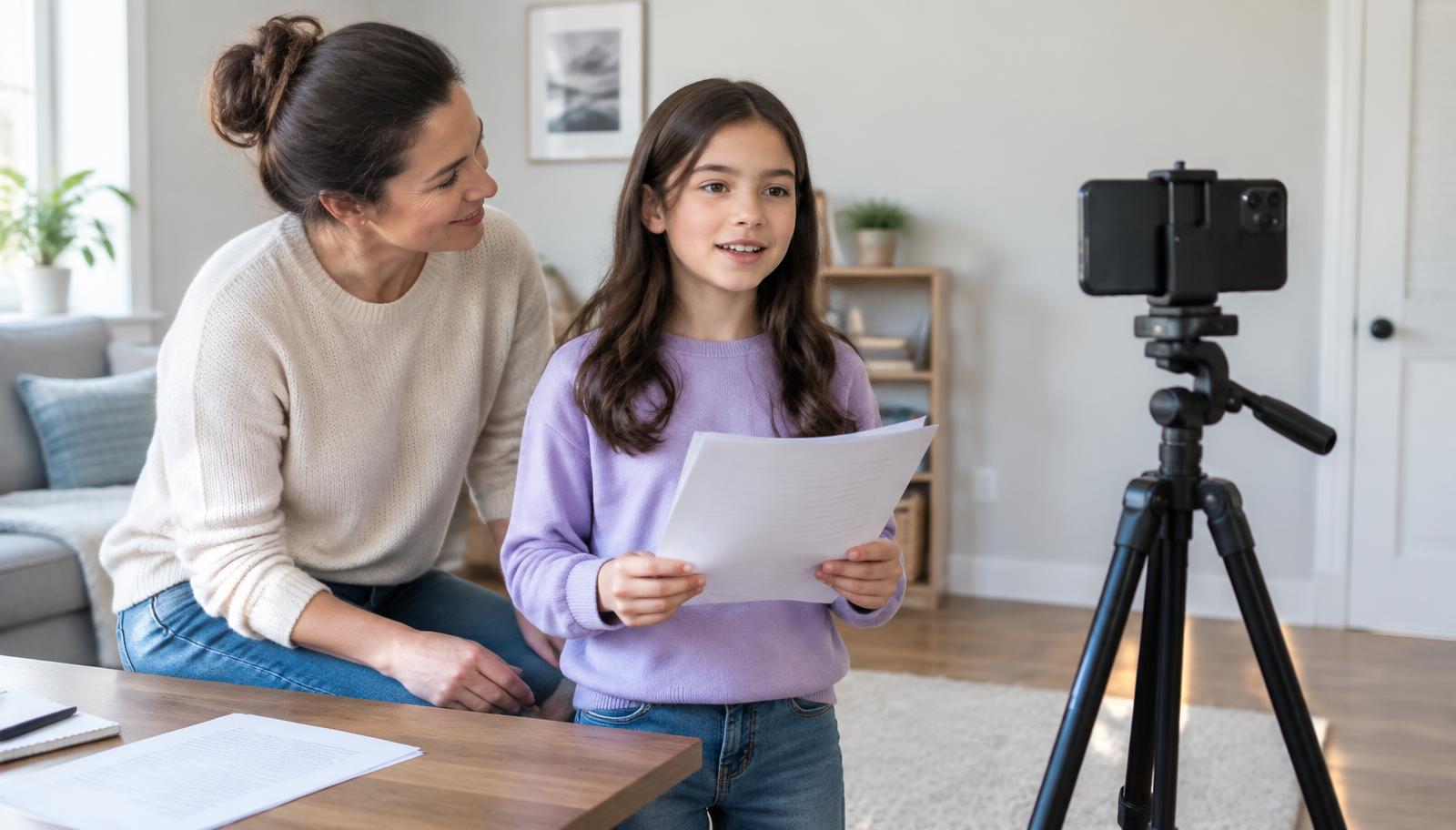
A good child-actor self-tape begins with safety, clear boundaries and a process the child can handle without unnecessary pressure. Parents should verify the project, share only the information requested, create a simple setup at the child's eye height and support the scene without trying to control every line.
The finished video matters, but the child's well-being matters more. If the session becomes upsetting, exhausting or unsafe, stop.
Verify the opportunity before recording
Read the full notice and identify who is requesting the audition, how they contacted you and where the file will be submitted. Look for clear information about the project, role, production and next steps. If anything feels inconsistent, overly urgent or unnecessarily invasive, pause and verify it through an independent source.
Do not rely only on links or contact details inside an unexpected message. Check the company's official site, the established casting platform or a known representative. The Academy checklist Is This Casting Call Real? offers practical questions to use before sending materials.
A request for a self-tape does not override a parent's judgment. You can decline, ask for clarification or seek advice from a qualified professional when a request raises concerns.
Put privacy and safety first
Share only the personal information specifically required for a legitimate submission. Do not volunteer a home address, school name, daily schedule, personal phone number or location details that are not needed. Review the background for mail, family photographs, school logos, house numbers, window views or documents that could reveal private information.
Use the submission method named in the verified instructions. Avoid posting an audition publicly unless the project explicitly requires a public submission and you understand the privacy settings. Confirm who can view a link before sending it.
A parent or guardian should manage communication and uploads. Keep copies of the notice, instructions and submitted materials. If the process advances, verify who will be present, where meetings occur and what supervision is expected before agreeing to the next step.
Rules for child performers vary by location and type of work. Check your state's requirements for permits, education, working conditions and guardian responsibilities. Do not rely on a general blog article for legal requirements.
Explain the task in age-appropriate language
Before rehearsing, tell your child what the audition is and what will happen during the session. Keep the explanation simple: you will read a scene, record a few versions and send one if it feels right. Avoid presenting the audition as a test of worth or a promise of a job.
Let the child ask questions. If the material is confusing or uncomfortable, discuss it before the camera is on. A child should not be pushed to perform content that they or their parent do not understand or accept.
Focus on the immediate activity rather than the result. The child can listen, imagine, respond and tell the story. Booking decisions involve factors outside the child's control, and the session should not suggest otherwise.
Prepare the sides without drilling the life out of them
Read the scene together and establish the basic facts: who the child is talking to, what just happened and what the child wants. Explain unfamiliar words without prescribing an exact emotion for every sentence.
Give enough preparation for confidence, but avoid repeating the scene until the child delivers a memorized pattern. If memorization is not required, let the child use the sides in a way that keeps the face visible and the reading connected.
Read with your child without performing the role for them
As the reader, give clear cues and listen. Keep your volume supportive and your delivery engaged enough to create a real exchange. Do not demonstrate how the child should say the next line, copy the child's emotion or turn the reader role into a second audition.
Stay near the camera so the child's eyeline remains useful. Choose a position that lets your child connect with you without looking too far away from the lens. Keep your body still enough that you do not pull their attention around the room.
If a line gets missed, stay calm. Continue when possible, or stop and reset without criticism. Your reaction teaches the child whether mistakes are manageable. A relaxed reset protects the next take better than a detailed correction delivered in frustration.
Set the camera at the child's eye height
Many home setups are built for adults and leave a child looking upward at the camera. Lower the tripod so the lens is close to the child's eye level. Stabilize it securely and keep cords, stands and lights out of walking paths.
Follow the requested framing. If none is specified, choose a frame that keeps the child's eyes and expressions easy to see while allowing natural movement. Do not place the child so close to a wide phone lens that facial proportions become distorted.
Use a quiet, uncluttered part of the home with even light. The child should be able to stand or sit comfortably without being told to remain in an awkward mark. Record a short test, then watch and listen for focus, sound, background distractions and correct camera height.
Keep the session short and organized
Prepare the room, camera, reader and file instructions before bringing the child in. Technical delays can consume the attention you need for the scene. Have water nearby, silence notifications and know where the file will be saved.
Plan a small number of purposeful takes. The first may establish comfort, the next may incorporate one useful adjustment, and another may be available if something technical went wrong. Do not keep recording simply because more storage is available.
Give one note at a time in language the child understands. Instead of asking for a result such as “be sadder,” return to the situation: perhaps the character is trying to keep someone from leaving or hide a disappointment. Then let the child respond in their own way.
Know when to stop
Stop when the child is tired, distressed, losing focus or saying they do not want to continue. Also stop if the material or request begins to feel inappropriate. A deadline is not a reason to ignore those signals.
A usable take does not need to be mechanically perfect. A small stumble may matter less than a connected performance. If repeated corrections are making the work tighter and less natural, choose the strongest available take or step away for a real break.
Parents can protect the tone by avoiding comparisons, promises and post-session interrogation. Thank the child for the work, name something specific they handled well and move on from the outcome.
Review the submission as the responsible adult
Watch the chosen file from beginning to end before uploading. Check that it contains only the requested material and does not reveal private information. Confirm the file name, slate, framing and submission destination against the current instructions.
Review any résumé sent with the audition as carefully as the video. The Academy guide to the child actor résumé explains how to present useful experience while treating privacy seriously.
- Verify the project and contact.
- Remove private details from the frame and file.
- Check current state requirements for child performers.
- Keep the reader supportive and understated.
- Place the camera at the child's eye height.
- Use short sessions and one clear note at a time.
- Stop if the child is uncomfortable or depleted.
- Upload only through the verified destination.
Protect the child and keep the work playable
A parent does not need to become a director, camera expert and performance coach at once. Create a safe environment, understand the instructions and make it easy for the child to listen and respond.
When privacy, preparation and reasonable limits lead the process, the self-tape can show the child's work without asking the child to carry the pressure of the entire audition.