The day rate, and the mistake almost every guide makes
There are two separate numbers in this contract and most pages collapse them into one.
The strike ran from July 2024 and was settled in June 2025, then ratified on 9 July 2025 by ninety-five per cent of those voting. Performer compensation rose by 15.17 per cent on ratification, with three per cent more each November through to 2027. The agreement runs to the end of October 2028.
So the day is good. That is the last unambiguously good news on this page.
The bonus ladder, and where it stops
Game actors get no residuals. What they get instead is a bonus that climbs for ten sessions and then ends.
After the 2016 and 2017 strike, the maximum aggregate bonus was $2,100. After the 2024 and 2025 strike, it is $2,140.
Forty dollars, in eight years, across two strikes. Just under two per cent.
And unlike every wage row in the agreement, the bonus does not escalate. The three per cent annual rises do not touch it. It is flat for the whole term, which means it loses value every year until 2028.
There is one more thing in the small print. The bonus can be credited against overscale. If your agent negotiates you above minimum, the producer may offset the entire bonus against that. A well-represented actor can end up receiving none of it.
In 2017 the union asked for actual sales residuals: eight hundred and twenty-five dollars per two million copies, capped at eight million. That would have been worth up to three thousand three hundred dollars. They took the bonus ladder instead, and one trade outlet called it a quantifiable loss after a year of striking.
The independent games contract does have sales residuals. It pays a secondary amount based on each five hundred thousand units sold or subscribers gained.
The agreement covering Activision, Electronic Arts, Warner Bros, Take-Two, Epic and Disney has nothing of the kind.
So the small games share their success with the cast and the enormous ones do not. The bigger the game, the worse the back-end deal. We have not seen that written anywhere else and it is straight off the two rate sheets.
Games against anime, and against a commercial
All three of these are union voice work, and the shape of the money is completely different in each.
So the honest summary is three sentences. Games pay the most per day of any voice work you can get. A commercial session fee is a down payment on use fees that can dwarf it, and a game session fee is the whole thing. Games pay the most per day and the least per success.
What that means in practice. A three-session supporting role today is three days at $1,135 plus $375 of bonus, which is $3,780 before the agent and the tax. That matches what a working actor described to a trade outlet: three sessions on a major title, supporting rather than lead, and under four thousand dollars for the lot. A ten-session lead maxes out around $13,490 on a game that might gross a billion.
The protection everybody thinks game actors have
There is a two-hour limit on vocally stressful sessions. It is not in the contract the big studios sign.
The union agreements define vocally stressful work in identical words across several contracts: yelling, shouting, screaming, fighting sounds, death sounds, battle cries, creature sounds, unnatural vocal textures, extensive whispering and high-pitched sounds. Anything that risks damage or undue strain.
The dubbing agreement has it. Sessions that predominantly contain vocally stressful work will be no longer than two hours. That is the contract that covers anime.
The independent games agreement has it, and in stronger words. Sessions that contain vocally stressful work may not exceed two hours. Not predominantly. Contain.
The agreement covering the biggest game studios does not appear to have it at all. It is not in the union's own published summary of what the strike won. It is not in the interim agreement. The producers' guide defines vocal stress and attaches no limit to the definition.
So on a major title, a vocally stressful session can run the full four or six hour day. What you get is a five-minute rest period for each hour of recording once you are engaged beyond the first hour.
It was asked for and lost before. In 2017 actors sought two-hour limits on intense vocal sessions and came away with a commitment to keep discussing it. Nine years later there is still nothing.
The harm is measured, not anecdotal. A Canadian union surveyed its members about game voice work and got two hundred and sixty-four responses. Nearly three quarters said sessions very often or almost always involved loud, aggressive or vocally extreme work. More than four in ten said their voice took two or more days to recover. More than a quarter had considered turning down a session for fear of what it would do to them.
That union asked for ten-minute breaks per hour of vocal stunt work, and for sessions to be spaced at least forty-eight hours apart.
The agreement gives five minutes, and says nothing about spacing.
There is one more number worth knowing. Producers must warn you at the time of the offer if vocally stressful work is expected. On the independent agreement, the penalty for failing to warn you is a hundred dollars.
One director who runs these sessions describes the reality plainly: a single pass can be a hundred and fifty to three hundred individual lines, cycling through pain reactions, callouts, taunts, death lines and effort grunts, with eight to twenty variations of each. Her warning is that the voice fatigues long before the list does, which shows up as flat reads by line two hundred if nobody is managing the pacing.
What the strike actually won
It was not about the money. It was about consent, and on that the contract is genuinely strong.
Then something happened that nobody predicted. In October 2025 a studio shipped a well-reviewed multiplayer game using synthetic voice lines. The actors had consented and had been paid for the licence. The objection was not consent. It was quality.
They re-recorded the AI-generated lines with human actors and said they would keep bringing more of them back as the game was updated.
The chief executive's explanation is the most useful sentence in this whole subject, because of who said it. There is a quality difference. A real professional actor is better than AI. That is just how it is.
That is not an actor's advocacy or a union press release. It is the head of the studio that shipped the most prominent AI-voiced game of the cycle, explaining why he stopped.
Meanwhile the industry's own mood has moved. In a survey of more than two thousand three hundred game professionals published in January 2026, fifty-two per cent said generative AI was having a negative effect on the industry, up from thirty per cent a year earlier. Seven per cent said it was positive.
California voids a digital replica clause when it stands in for work you would have done in person, lacks a specific description of the intended uses, and you had neither a lawyer nor a union agreement covering replicas.
Read that last condition again. Being covered by the union agreement removes the statute's protection, because the agreement expressly addresses replicas. The statute is a non-union backstop. The two do not stack, and neither is a substitute for the other.
And the statute only voids a clause. It does not create a payment floor. It gives you no session fee per three hundred lines and no seven-and-a-half-times minimum. A non-union actor with a well-drafted clause and a lawyer has simply signed a valid contract.
Who casts games, and what an audition looks like
Not the game studio's own casting department. A small number of specialist audio houses, and you reach them through an agent.
The names worth knowing are a handful of casting and audio production companies rather than the publishers whose logos are on the box. Two of them were named as struck employers in the dispute, which tells you something useful: they are the employer of record, not middlemen. Actors struck the people who hire them.
What arrives
The formatSides sent through your agent, usually in volume, with a non-disclosure agreement to sign first.
The disguiseA code name and a placeholder character. The contract itself institutionalises this, because replica consent has to specify the code name.
The clockOften twenty-four to forty-eight hours to record and submit.
What you will not be told
Since 2017You must be told the genre, whether it is an existing franchise, and whether there is profanity, slurs, sexual or violent content, or stunts.
Still missingThe actual title of the game. The union sought that in 2017 and did not get it, and it is standard practice everywhere else in this industry.
What that meansYou will know the shape of the job and not the name of it, nine years and two strikes later.
What happens in the room
RewritesLines get changed on the spot and you incorporate them as you go.
DirectionFast and telegraphic. More winded. Less angry, more tired. Same energy, half a second faster.
PaceRoughly fifty lines an hour on barks, far fewer on cinematics.
Do you need an agent
FormallyNo.
In practiceYes for union work at the top. Casting houses distribute breakdowns to agencies, and if you are not on a list you never see the breakdown.
Good news for youIf you already have theatrical representation, the ask is a voice over department rather than representation from nothing.
The route in that nobody writes about
What it isUnion independent game work, on the tiered budget agreement.
Why it mattersIt counts toward union eligibility, and it permits the mechanism that gets a non-member onto a union job.
What it paysBetween $374.53 and $907.96 a day depending on the game's budget, which is a third of the top rate and a real contract.
On non-union work, the community rate guide most people use puts a commercial indie release at two hundred to two hundred and fifty dollars an hour, or five dollars a line with a two hundred dollar minimum. Compare that to $567.50 for a single union hour and the difference is roughly two and a third times, before the seventeen per cent that goes to the health and pension funds.
If you already act on camera, read this section first
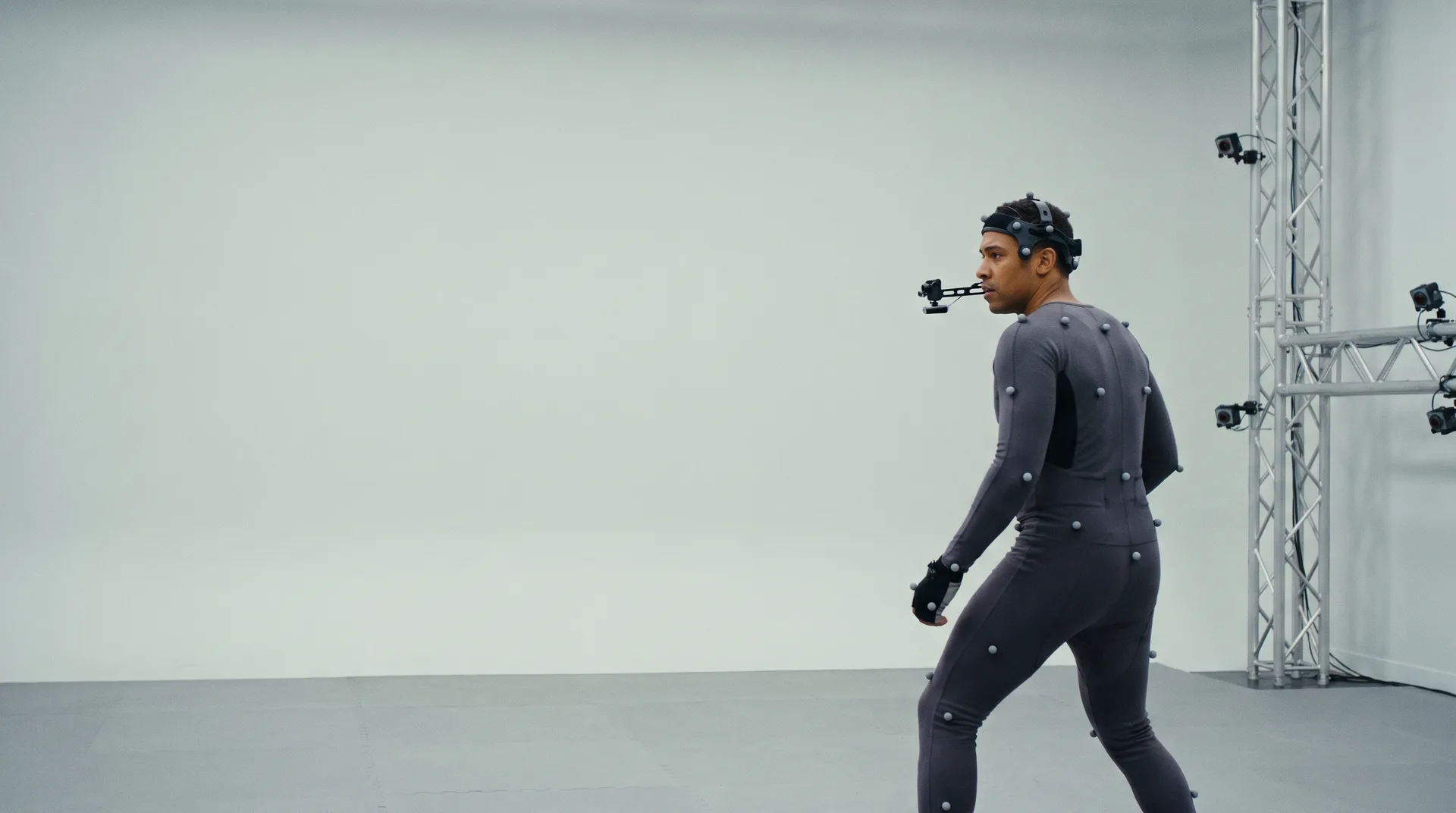
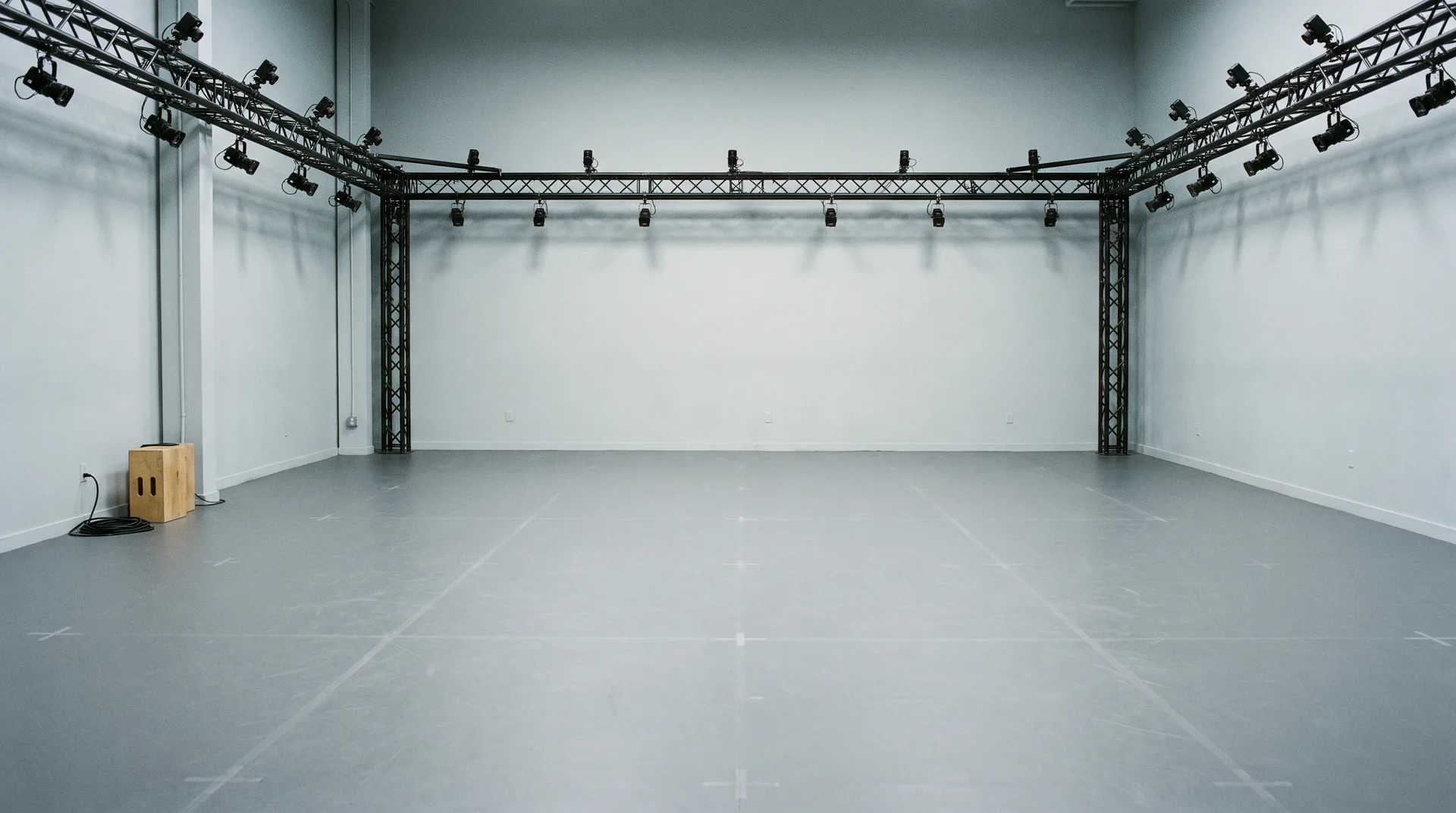
Performance capture is the one part of this business that wants exactly what you already have, and the contract treats it differently in a way almost nobody notices.
The union is unambiguous that this is covered work. Performance capture is union work, performers are defined as those who speak, act, sing or in any other manner perform whether on camera or off, and the union describes it as highly skilled performance work rather than as a technical service.
One. It is the only game work with a genuine back end. When a movement or facial performance is reused in a later game, a secondary payment is due: a hundred and twenty-five per cent of scale if paid within ninety days, a hundred and thirty-five per cent after. Voice-only work has no equivalent. The actor with a body owns an asset that can pay again. The actor with only a voice does not.
Two. The voice is more exposed to synthesis than the body. Under the agreement, visual replicas cover scripted cinematic scenes only. Vocal replicas cover everything, in the game and in the cinematics. The contract itself treats your voice as the more substitutable half.
Three. The skills are precisely the ones a booth wastes. One voice agent's line for it is that the stiffer the body, the stiffer the read. Voice actors have to be taught to use their bodies standing at a microphone. You have been doing it for years, in front of people, on a clock.
Four. It is a shoot day. Eight hours, scheduled, often multi-day, on a stage with a director. That is a shape you already know how to work and already know how to sell yourself for.
One caution on scale. Capture is standard for cinematic sequences on large games, and we could not find a credible published figure for what share of the work it represents. We are not going to invent one. What we can say is that it exists, it is contractually better on reuse, and it is the least crowded door in this business for somebody who arrives with a body and a face they already know how to use.
Grading the sources
Several claims here contradict what is widely published, so here is where each of them comes from.
Where we differ from the standard account
What does a game session pay?
Commonly saidAround eight hundred and fifty dollars, or a session bonus figure mistaken for the fee.
What we found$1,135 for a four-hour off-camera day as of September 2026. The bonus is a separate, smaller thing paid on top.
Do game actors get residuals?
Commonly saidRarely addressed at all.
What we foundNot on the big contract. The bonus caps at $2,140 and stops after ten sessions, however many copies sell.
Which contract treats actors better?
Commonly saidAssumed to be the one covering the biggest studios.
What we foundThe independent games agreement has sales residuals and a two-hour cap on vocally stressful work. The big one has neither.
Are screaming sessions capped at two hours?
Commonly saidYes, repeated confidently across voice over writing.
What we foundThat cap belongs to the dubbing agreement and the independent games agreement. It does not appear in any published version of the main one.
Did the strike win a pay rise?
Commonly saidReported as a win on compensation.
What we foundFifteen per cent on session fees, which is real. The lifetime bonus ceiling moved forty dollars in eight years and does not rise with inflation.
Was the strike about AI?
Commonly saidYes, and this one is right.
What we foundConsent must be separately signed, replicas pay per three hundred lines, and consent suspends automatically during a strike. That last clause is the strongest thing in the contract.
Is AI taking game voice work?
Commonly saidTreated as inevitable.
What we foundOne studio shipped it with paid consent, then re-recorded with human actors. Its chief executive said a real professional actor is simply better.
Is voice-only the way in?
Commonly saidPresented as the whole job.
What we foundPerformance capture is union work, it is the only game work with a reuse payment, and it needs the skills a booth throws away.
So the day rate is the best in voice over and the ceiling is the lowest, and both of those facts are on the same rate sheet. Take the work for the day it pays and never for the royalty it will not. And if you already know how to carry a scene with your whole body, walk toward the capture volume rather than the booth, because that is the one room in this business where the thing you already are is the thing they cannot generate.