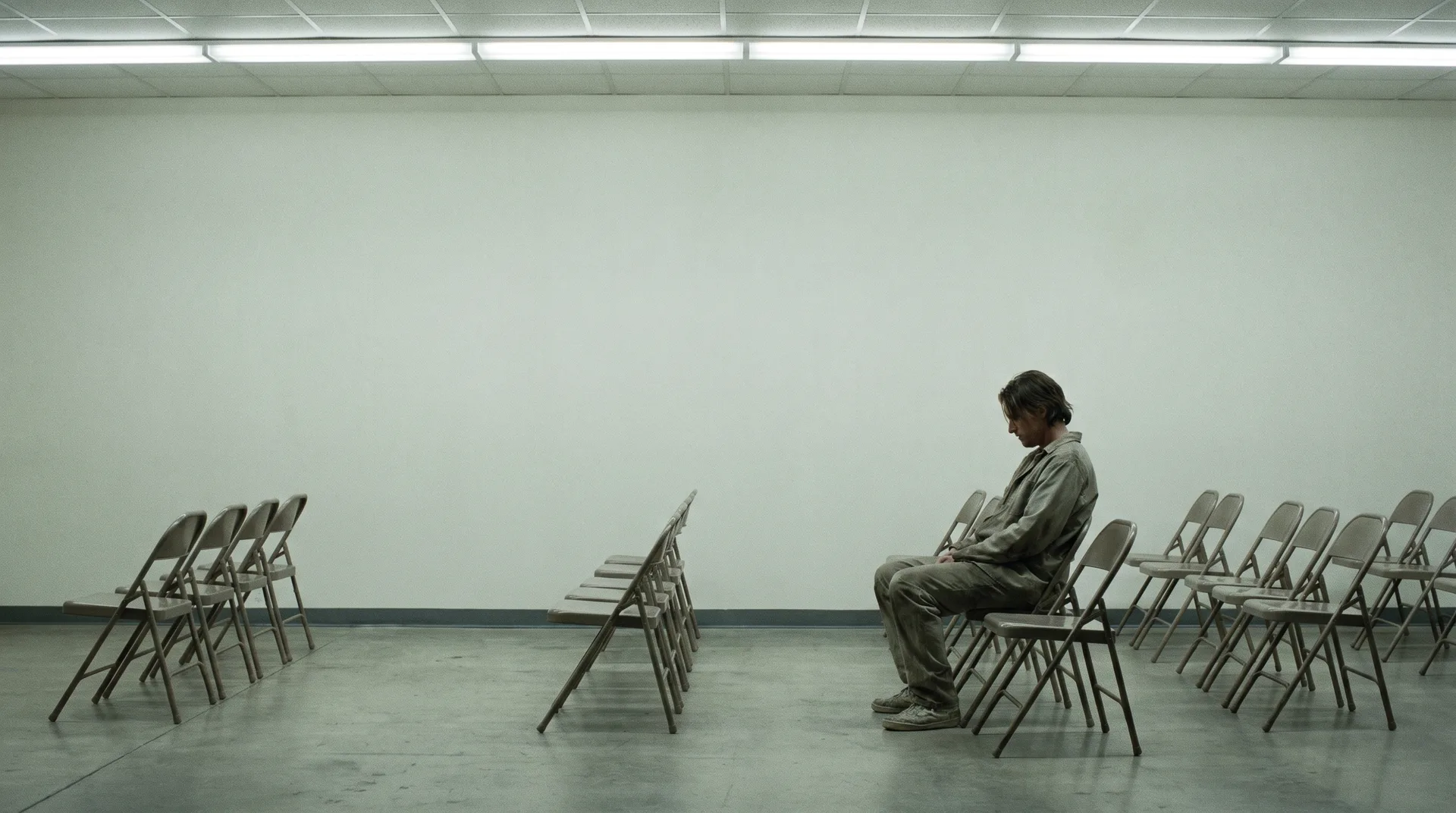
The union only covers background actors in seven places
This is the fact that reorders the entire subject, and zero of the twenty-five pages we read mentions it. Every rate below is conditional on it.
Background actors are covered by minimums only inside defined geographic zones. Outside those zones a background actor on a signatory production has no minimum, no benefit contributions and no protections.
The union says so plainly. It will not be able to assist you if a problem arises, and your earnings will not be reported to the plans. The work also counts toward nothing for joining.
It has nothing to do with right to work laws. The union states in terms that the location of the zones has nothing to do with those laws. It is purely what was bargained, and a member may work non-covered background without breaking Global Rule One.
Second, coverage is capped by headcount even inside a zone. The producer must cover the first 26 background actors on television and the first 85 on a large theatrical picture, rising to 27 in 2029.
Everybody hired past that number, on the same set, on the same day, doing identical work, is uncovered. Two people standing next to each other in a crowd can be on completely different terms.
So the first question is never what background pays. It is whether the agreement reaches you at all where you are standing.
What it pays, across every agreement
There is no single background rate. There are at least seven, they differ by a factor of three, and one agreement excludes background actors entirely by definition.
Start with the main one. Theatrical and television background is $231 for eight hours from 1 July 2026, under an agreement running to 2030 with three per cent added each July.
Principals take a deep discount on low budget agreements. A moderate low budget picture pays performers thirty-five per cent of the basic rate, and an ultra low budget principal gets $125 a day.
Background does not get discounted. The low budget rate sheet says minimum rates for background actors shall equal the rates in Schedules X-I and X-II.
So a background actor on a small independent film earns the same $231 as one on a studio tentpole. The producer’s saving is on the principals, not on you.

The day, and where the money actually is
The base rate is the least important number on this page. Five of twenty-five pages state the overtime structure correctly and four state it wrongly, which costs a reader real money.
The union day is eight consecutive hours excluding meals. Hours nine and ten pay time and a half, and hour eleven onward pays double time, both in six minute units.
Note where the boundaries sit, because two well ranked pages move them. Hour eight is straight time, not time and a half, and double time starts at eleven rather than twelve.
The ladder is worth holding in your head. Eight hours is $231, ten is $317.63, twelve is $433.13, fourteen is $548.63 and sixteen is $664.13.
Past sixteen the rule changes shape entirely. Every hour or part hour beyond sixteen costs a full day’s pay, so hour seventeen adds another $231. That is designed to be prohibitive rather than to be earned.
Background actors now get the same per diem as principals, which they previously did not. That is $16 for breakfast, $22 for lunch and $37 for dinner, so $75 a day, rising to $80 in 2028.
And the fitting minimum rose from two hours to three. A quarter check now covers the first three hours of a fitting, which is a fifty per cent increase in the floor for a fitting day.
Being fitted also carries a guarantee that is worth knowing. If you are fitted, you are guaranteed at least one day of work on that production.
A few other premiums sit in the same family. A sixth consecutive day pays one and a half times and a seventh pays double at a studio, and a worked holiday pays double.
There is one real gap worth stating plainly. Schedule X has no general turnaround provision for background actors at all. The twelve hour rest minimum with its $20 hourly penalty exists only under the Network Code.
Every bump, and the distinction that decides what they are worth
Eight of twenty-five pages give any bump with a dollar figure. The full list is published, and one structural point about it matters more than any individual number.
Adjustments are pensionable, count toward health eligibility, and go into the overtime base. The $150 photographic doubling and stand-in rehearsal adjustments are the main ones.
Allowances are none of those things. Wardrobe, mileage, props, vehicles and per diem are all allowances. So are meal penalties and late payment damages.
Put concretely: five hundred dollars of meal penalties and mileage does nothing for your health insurance. Five hundred dollars of overtime does.
Two things worth correcting because they circulate widely. There is no truck rate and no golf cart rate. A pickup is paid at the auto rate, and anyone publishing a golf cart figure has invented it.
There is also no scripted dialogue bump, despite what several pages say. Dialogue does not pay you extra as a background actor. It makes you a principal, and the claim has a strict ninety day filing limit.
On haircuts the protection is notice rather than money. A haircut cannot be demanded more than two working days ahead, and if you were not told at booking you may refuse without penalty.
What a voucher is, and what it does not prove
Two separate things get confused here, and confusing them will delay a union application by months.
A voucher is the on set pay document. It records your call time, your wrap time, your meals taken and missed, and every bump you are claiming. It is how your day becomes money.
That makes reviewing it the highest value five minutes of the day. If the wardrobe change, the wet work and the meal penalty are not on the voucher when you approve it at wrap, they are very hard to recover afterwards.
Eligibility comes from three days of background work under a union agreement, against one day as a principal. That part is real and widely reported correctly.
But the union states flatly that background vouchers are not acceptable as proof of work, and that submitting them will delay verification.
The reconciliation is simple once you see it. The work counts. The voucher does not prove it. What the union accepts is pay stubs, the original performer contract or a payroll printout, each showing dates, your name, the production, the signatory company and wages. So work your three covered days and keep the stubs, not the vouchers.
On the rumour that vouchers get bought and sold, we looked specifically and found nothing. No enforcement action, no trade investigation, no union bulletin. We are not going to assert a market we cannot document.
What is documented is adjacent and more useful. A major casting company was made to stop charging background performers photo fees after regulatory pressure, and as of this July the agreement bans casting access fees outright.
The rule that follows is clean. A legitimate background casting company never charges you to register, to submit or to be seen. Agency fees on background work are paid by the producer, not deducted from your rate.
How you get paid, and why there is no back end
One page in twenty-five states the residuals answer correctly and one states the opposite. It is the single most consequential thing to understand about background pay.
Background actors receive no residuals. The union’s own residuals guidance restricts eligibility to principal performers, with singers also qualifying. Background appears nowhere in the structure.
The precise way to put it is that your day rate is a complete buyout. You are paid once, for the day, and the production may exhibit that footage forever in every market without owing you anything further.
That is why the day rate, the overtime and the bumps are the entire economic proposition. There is no back end to wait for.
The absence of a back end is exactly why the new digital replica protections matter more for background than for anybody else. With no residual stream, a scanned likeness reused indefinitely is pure uncompensated loss.
The 2026 agreement extends real protection here. No nude or simulated sex replicas, no biometric collection beyond on set security, and an articulable business reason required before scanning a background actor at all.
The realistic year, and what health cover actually costs in days
Every salary aggregator publishes an annual figure for this job. All of them are structurally wrong, and the real number is not close.
The best data comes from the largest casting company’s own reporting. Around 200,000 people are registered, more than 20,000 join each year, and about 3,000 are placed a day.
Do the arithmetic nobody publishes. At roughly 250 production days a year that is about 750,000 placements across 200,000 registrants. An average of about 3.75 days a person a year.
It is our own calculation from published placement and registration figures, not a survey. No survey of background actor annual workdays exists that we could find.
It is also not evenly spread. A small core of reliable, well cast, quick to respond people work a great deal more, and a long tail never works at all. The average is dragged down by everyone who registered once and stopped.
But it does demolish the premise of the salary pages. One aggregator gives $56,903 a year and names Nome, Alaska as the top paying city, which is not a background market. Those figures are scraped job title text annualised as though this were salaried work.
Health cover is the more useful calculation, and background work does count toward it. Covered background work generates employer contributions, which is what makes earnings count.
There are two routes and they do not cost the same. The dollar route needs $28,090 in a four quarter period for 2026. The days route needs 108 eligibility days.
The plan defines an eligibility day as covered earnings divided by the minimum daily rate for the covered agreement, which is based on the type of production.
We could not confirm whether that divisor is the background minimum of $231 or the principal day rate. If it is the principal rate, the days route becomes much harder and the arithmetic inverts.
We have used the background rate because the plan’s wording points to a per production divisor rather than a per role one. Ring the plan before you rely on it.
Twenty-eight pages, and how far behind they are
We opened every page ranking for this question and its variants and checked each figure against the rate sheet it should have come from. The staleness here is the worst we have measured on any subject.
The stale figures deserve naming as a pattern rather than individually. We found $114, $170, $174, $178, $182, $187, $216 and $224 all presented as the current rate.
The highest authority consumer source is two cycles behind at $216. The best maintained calculator is one cycle behind at $224. The correct figure has been $231 since July.
Grading the sources
This page publishes rates from seven agreements and does two pieces of arithmetic that nobody else does. Here is where each one stands.
Where we differ from the standard account
What does background work pay?
Commonly saidA single union day rate, given as anything from $114 to $224 across the pages we read.
What we found$231 on theatrical and television, but seven different rates across seven agreements, and no rate at all on two of them.
Am I covered on a union production?
Commonly saidNever addressed. Zero of twenty-five pages mention geographic coverage in any form.
What we foundOnly in seven zones. Georgia, Louisiana, Illinois, New Mexico and Texas are all outside them for theatrical and television.
When does overtime start?
Commonly saidHours eight to ten at time and a half, or double time from twelve, on four ranking pages.
What we foundHour eight is straight time. Time and a half is nine and ten, and double time starts at eleven.
What is a long day worth?
Commonly saidRarely worked out. Most pages give a day rate and stop there.
What we foundA fourteen hour day pays $548.63 in wages, which is 2.37 times the eight hour rate.
Do background actors get residuals?
Commonly saidOne page lists them among union background benefits and most do not address it.
What we foundNone, on any agreement. The day rate is a complete buyout with no back end whatsoever.
Do I collect vouchers to join?
Commonly saidYes, collect three, stated on several well ranked pages as the route in.
What we foundThe union says vouchers are not acceptable proof and that submitting them delays verification. Keep the pay stubs.
Does an indie film pay background less?
Commonly saidAssumed yes, by analogy with the principal discount, on every page that mentions low budget work.
What we foundNo. Low budget agreements pay background full scale. Only the principals take the discount.
What does this pay in a year?
Commonly said$42,838 and $56,903 on two aggregators, one of which names Nome, Alaska as a top paying city.
What we foundAbout 3.75 days a person a year on the published placement figures, which is a few hundred dollars.
So the real answer has two halves and most pages give neither. The first is that the rate is meaningless until you know whether the agreement reaches you, because a background day in Atlanta and a background day in Burbank are not the same job under the law even when they are the same job on the day. The second is that the base rate is not where the money is. It is in the ninth hour, the eleventh hour, the second wardrobe change and the car you drove to set, and every one of those has to be on the voucher before you sign it at wrap. Learn the ladder, check the voucher, keep the stubs, and know that whatever you shot will be exhibited forever without paying you again.