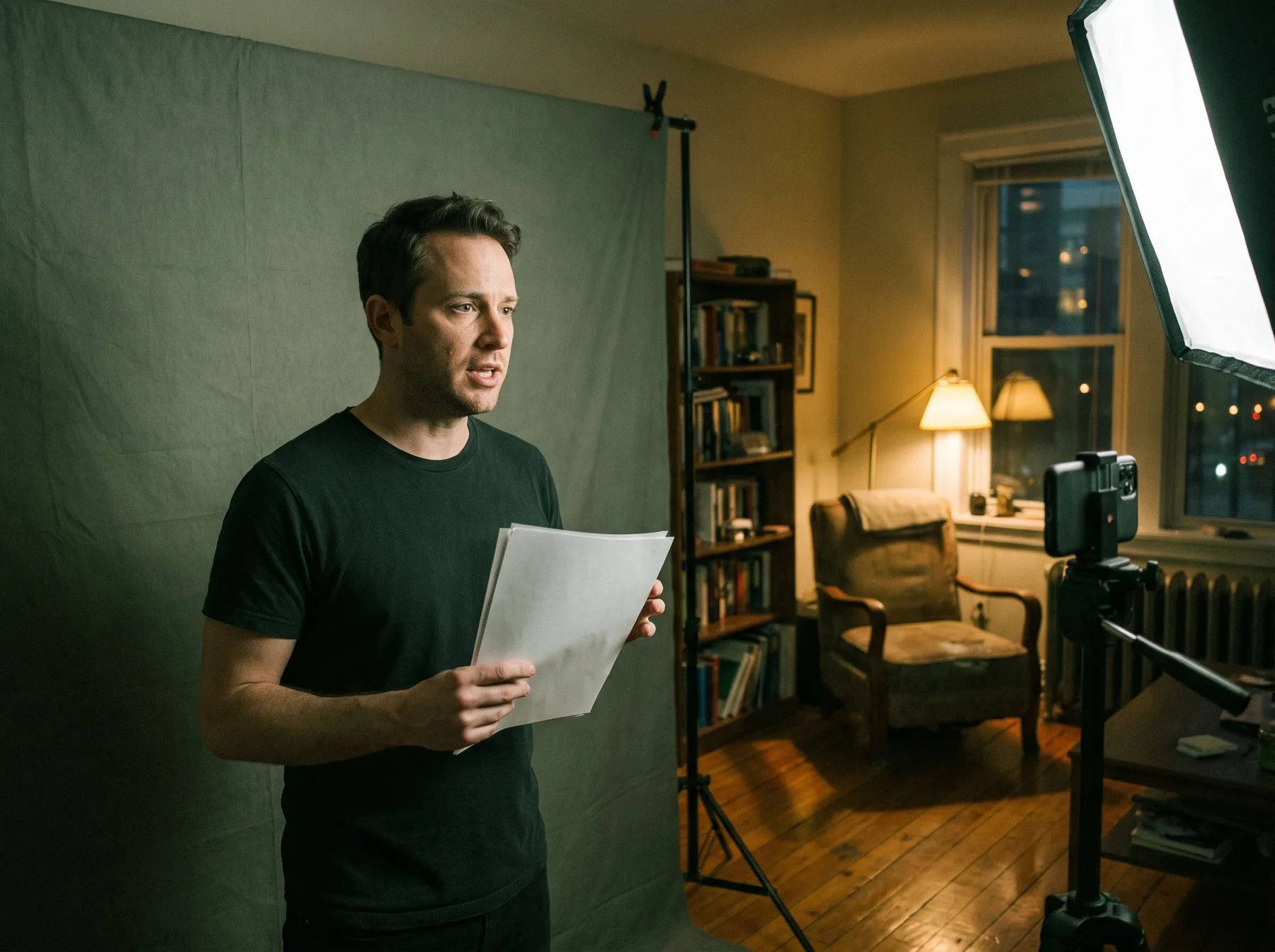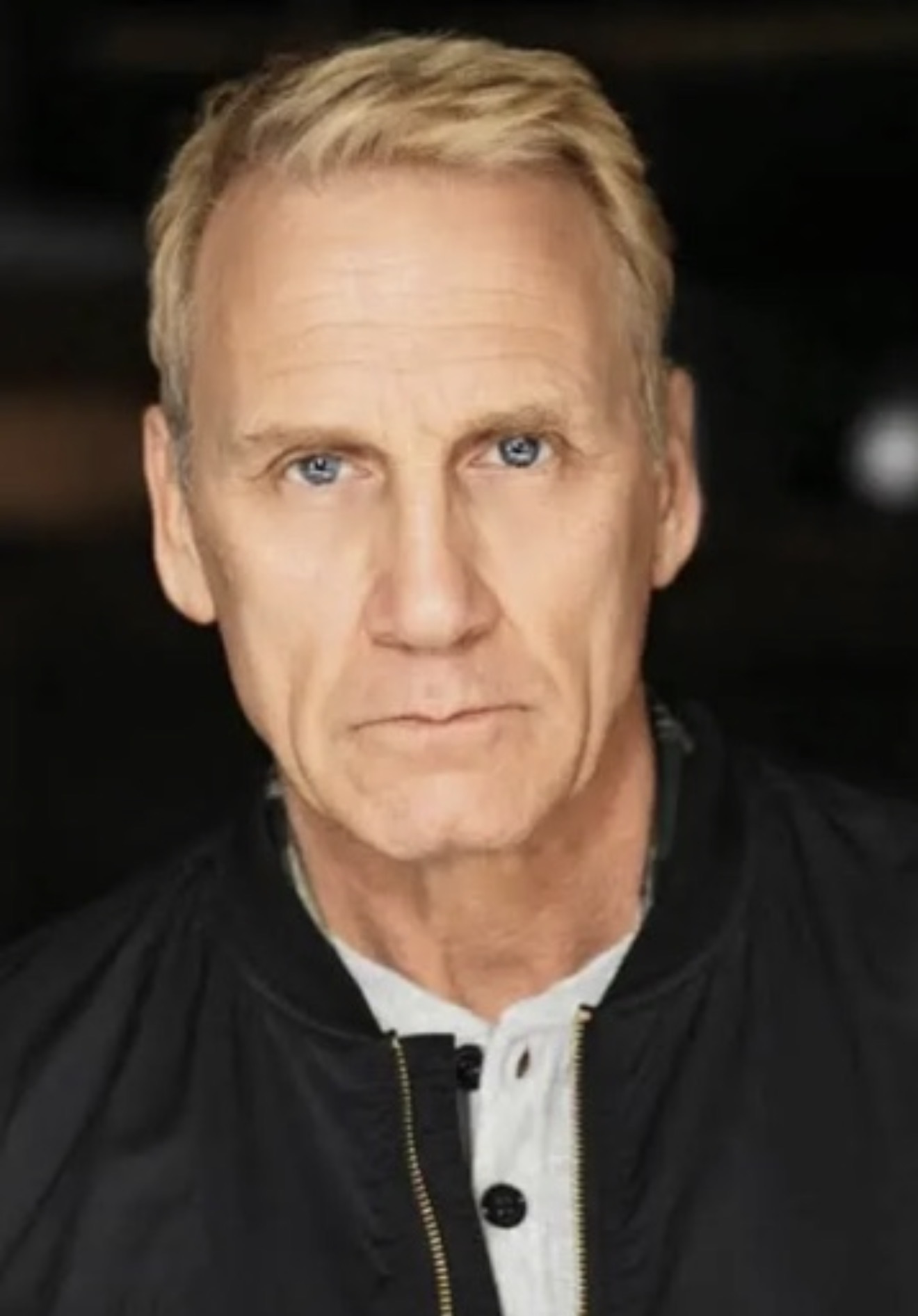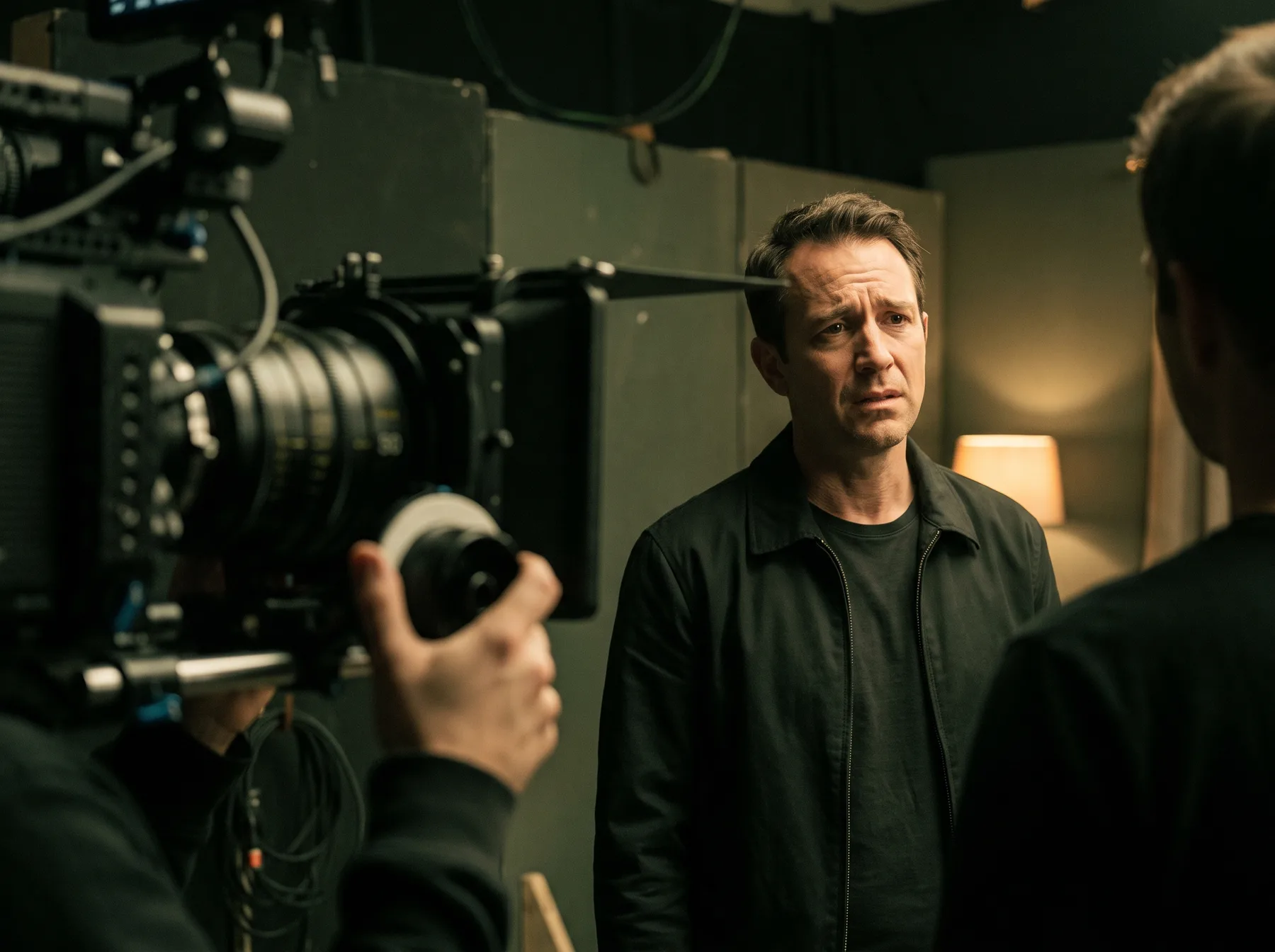
On Camera — The Actor's Complete Guide to Screen Performance
What the camera sees, what directors need, and how to build a screen career that lasts. 20 chapters written from the set by an actor who's lived every frame of this.
"The camera doesn't lie. It doesn't have the courtesy to hide your mistakes. It walks right up to your face and asks you one simple question: Are you really there?"
The first time I watched myself on camera in a real scene, I wanted to quit acting. Not because I was bad — though I certainly was — but because what I saw on that monitor had nothing to do with what I felt I was doing. I was working. I was committed. And on screen, I looked like someone doing a school play in a gymnasium. Everything in this guide is the translation I wish someone had handed me then.
All 20 Chapters
The Camera Is Not Your Enemy
Most actors treat it like one. The ones who book treat it like a partner. Understanding the fundamental relationship between actor and lens.
→Scale
The biggest misunderstanding in screen acting. It's not about doing less — it's about matching the size of your performance to the size of the frame.
→The Close-Up — Your Greatest Opportunity
Your greatest opportunity on camera. Casting directors call it the money shot. Here's why most actors blow it — and exactly how not to.
→Eye Lines
Where you look is what they see. Get this wrong and the whole performance falls apart. Get it right and nobody notices — which is exactly the goal.
→The Art of Listening
Most actors wait for their cue. The camera is watching you while the other person talks. It knows the difference — and so does the editor.
→Stillness That Breathes
There's a difference between stillness and emptiness. One is a powerful choice. The other is a failure of nerve. Learning which is which.
→Truth Over Technique
Technique is what you use to find the truth. The moment technique becomes the point, the truth leaves — and the camera catches every second of it.
→Breaking Down Your Script
The work you do before you walk on set determines everything that happens when you get there. Script analysis built for the camera, not the stage.
→Cold Reading
The skill nobody teaches. If you're auditioning seriously, you'll cold read constantly. Most actors are terrible at it. Here's the protocol that changes that.
→The Technical Discipline
Marks, continuity, coverage. The boring stuff nobody wants to learn and everybody needs to know — and how to make it invisible in your performance.
→Working With Directors
A great actor-director relationship is a genuine collaboration. How to build one — and how to protect your work when the relationship is harder.
→On Set
The rules nobody wrote down. The film set has a culture and a hierarchy. Understand it and you become someone every crew wants to work with again.
→Formats
Film, TV, streaming — and what actually changes between them. The screen is the screen, but not all screens are the same. Know the difference before you walk on set.
→Building Character for Camera
The character you build in rehearsal has to survive in close-up. That changes everything about how you build it — from the inside out, not the outside in.
→The Audition Is the Performance
Most actors treat the audition as a tryout. The actors who book treat it as the job itself. Here's the distinction that changes everything about how you walk in the room.
→The Self-Tape
Your audition room, anytime. The self-tape has changed the landscape permanently. Actors who master it have a massive advantage over those who don't.
→My Methodology
Putting it all together. This is how I work — from breakdown to set, from preparation to the moment after the director calls cut. Build your own version from here.
→How to Memorize a Script
Memorization for camera is different. The lines are the floor, not the ceiling — and true mastery means the words disappear and the scene takes over.
→Your Actor Demo Reel
Your demo reel is the first audition you never have to be in the room for. Ninety seconds. Your best work first. Nothing else that isn't at that level.
→How to Get Auditions
The craft only matters if you're in the room. Representation, self-submission, making yourself findable, and creating your own opportunities in the permissionless era.
→