One variable explains nearly everything
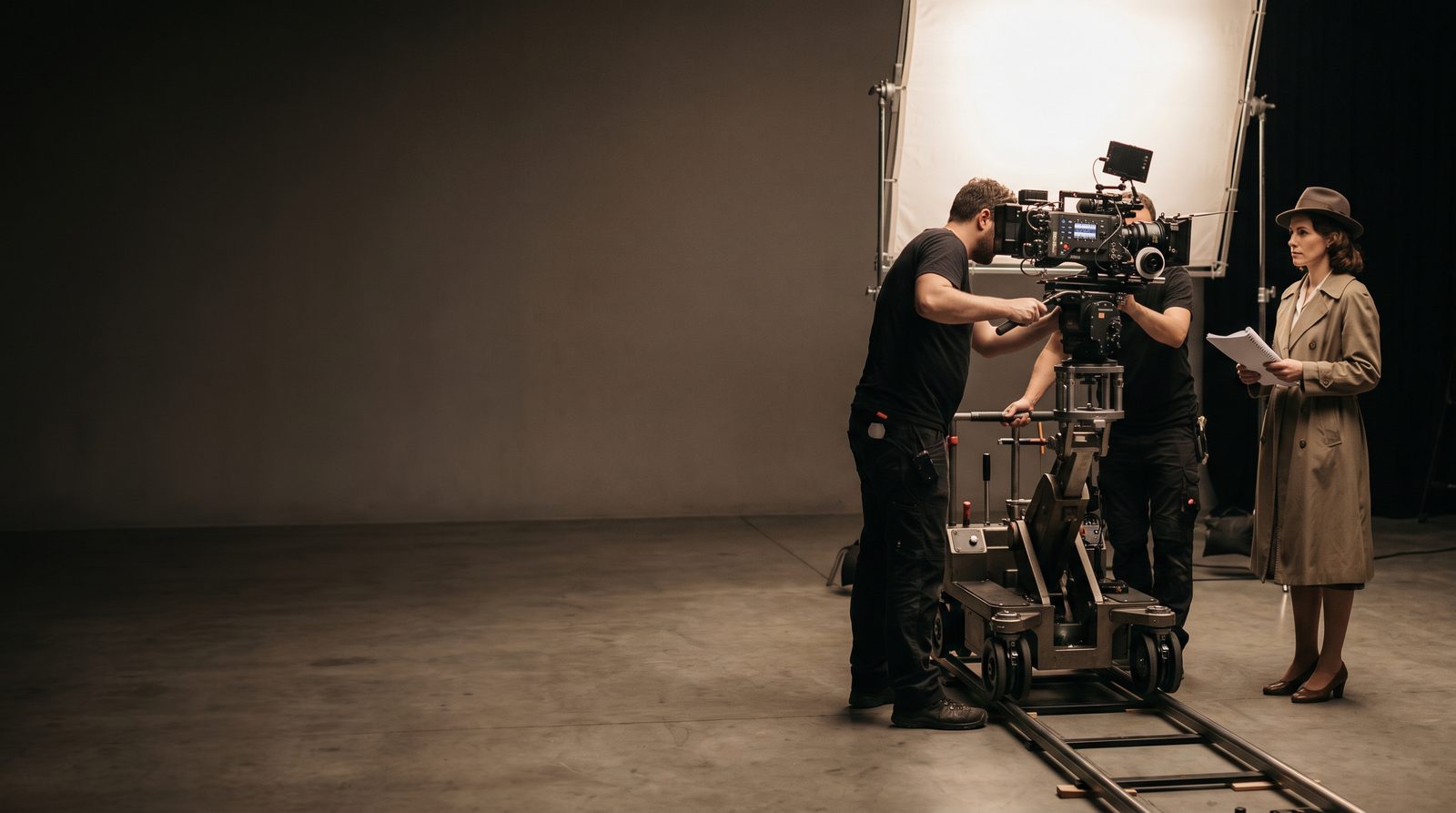
Almost every article on this subject treats it as a question of size — film is subtle, television is broader. That was arguable in 1985. It is not the useful distinction now, and it has never been the one that affects your day.
The useful distinction is time. Here is the same scene, in the formats you might actually be cast in.
Streaming does not add a sixth category, whatever the marketing says. Structurally it is single-camera television with two practical differences that reach the actor. Series are usually shot in blocks, with one director covering two or more episodes. The person directing you may be responsible for a chunk of the story rather than a single hour. And with no commercial breaks the act structure is looser, which changes the shape of scenes more than it changes your job in them.
The one genuine warning about the table above is that the second row is the least certain. Seven to ten days per hour of drama is a figure that gets repeated everywhere and traces back to a single interview from 2015. Block shooting has made the per-episode arithmetic murkier since, so treat it as the historical shape of things rather than a current guarantee.
What has actually closed
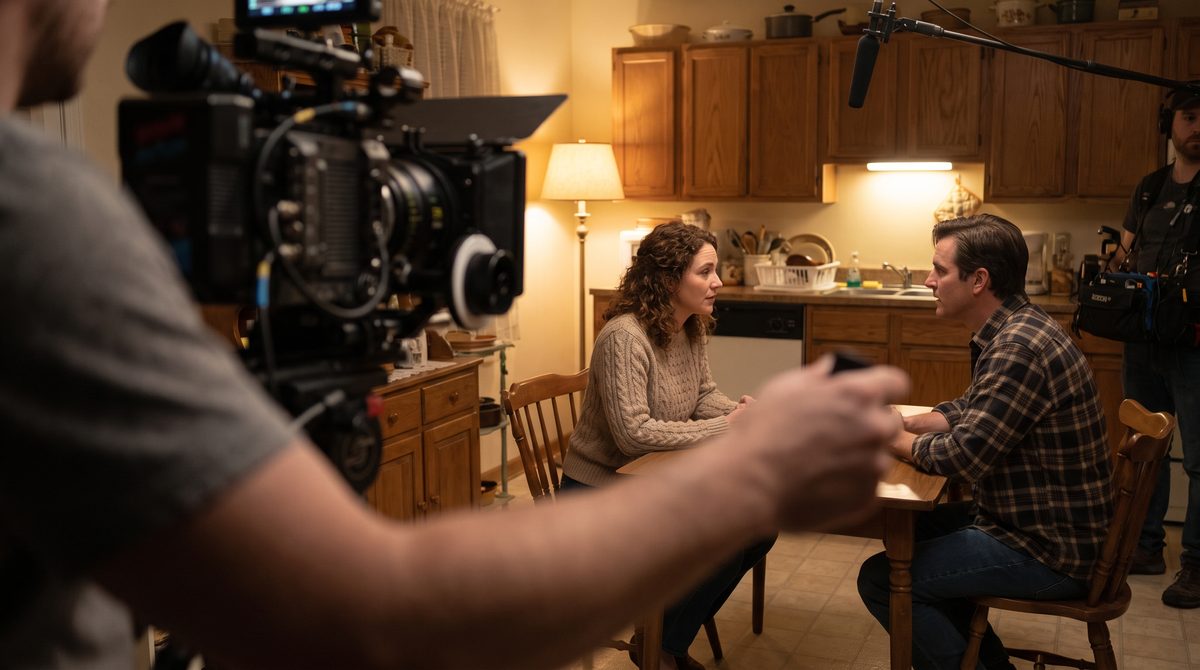
This is the part no guide to formats includes, and it is the part that changes what you should do. The landscape described in most articles about screen acting has contracted sharply in the last two years.
None of that means stop training for screen. It means the entry-level door that most British actors used to walk through has closed, and nobody has replaced it. If your plan involved a year on a continuing drama to learn the camera, the plan needs revisiting.
What replaces it is less tidy and more within your control. Short films, student films, online drama, corporate work and your own self-tapes are now where most people accumulate their early hours in front of a lens. None of them come with a producer teaching you the etiquette. The particular thing continuing drama gave people was volume under pressure, with professionals watching. You now have to assemble that yourself, out of smaller pieces.
Inside a continuing drama
This remains the most demanding volume work in television, and it is described almost nowhere from the actor's side. Here is what one Coronation Street actor says the day actually involves.
Not mostly off-book. Off-book. There is no rehearsal period in which to get there, and nobody is going to give you one.
You walk the scene through briefly with the crew so the cameras know where you are going. That is the rehearsal.
Coverage is captured simultaneously rather than shot by shot, which is what makes the speed possible at all.
More only if something has genuinely gone wrong. You do not get to work your way into it.
Everything happening in one location is shot together regardless of where it falls in the story. You need to know where you are emotionally at all times.
An EastEnders actor described the load as around thirty pages of script a day. Jake Wood, who played Max Branning for over a decade, put it plainly: it is like cramming for exams constantly.
How anyone learns that volume is the question actors always ask, and there is a good on-record answer. Seamus Dever, who did around fifty episodes of an American daytime drama, started by recording the other characters' lines and rehearsing against himself. He then abandoned that for something picked up working on scenes at the Actors Studio. He simply read the script through again and again, until by the third or fourth pass he realised he had absorbed large sections without trying. His summary was that your brain picks things up naturally. That is a working actor arriving independently at the same conclusion as the cognitive research on how actors retain text. Meaning-based repeated engagement beats deliberate memorizing, and it is the most useful thing in this whole section.
One related point that ought to be said without embarrassment. Dialogue coaches and prompting screens exist on fast productions and always have. The union rules for self-tape auditions in the current American agreement state plainly that memorization is not required. The private practice of this industry has always been more forgiving than its public mythology, and treating your memory as a moral test helps nobody.
If you are British, the American model does not apply
Almost everything written about how television works is written about American television, and one difference matters more than the rest.
The practical consequence of all that is small and worth carrying onto a set. If your question is about where the character is going rather than about the scene in front of you, the director may honestly not know. On a British production it may be the writer or a producer who does. Asking a good question is welcomed everywhere. Asking the right person is what makes it useful rather than awkward.
One take, four episodes
The most interesting recent development in screen acting runs directly against everything above. It is worth knowing about, even though it is currently one show rather than a movement.
Adolescence went out on Netflix in March 2025. Each of its four episodes is a single continuous take, with no hidden cuts. Its cinematographer put it flatly: there is no stitching of takes together, it was one entire shot, whether I wanted it to be or not.
Episode one is take two. Episode two is take thirteen, with three hundred and seventy extras in it. Episode three is take eleven. Episode four is take sixteen. A technical fault at any point meant starting the whole hour again from zero — and several times it did.
The director's account of the preparation is the part relevant to you. Months of preparation and weeks of rehearsal, with the camera moves worked through alongside the cast like choreography, shot in story order. This is the one screen format that gives you a theatre rehearsal process and a theatre-length run at the scene. If it becomes a trend, the stage half of your training gets considerably more valuable.
We are calling it one show rather than a movement on purpose. Long unbroken takes have a real history in cinema. Sustaining one across a whole hour of television, four times over, is genuinely new. One production does not make a working pattern you should train for. It is worth watching because of what it implies rather than what it has already changed.
Grading the numbers
This page is arithmetic, so the arithmetic has to be right. Two of the figures every article repeats turned out to be fine once you know what they measure; two others could not be stood up at all. This takes our running count of claims that trace to a blog, a forum post or marketing copy to thirty-one.
What changes in your audition
Scene length, beat count and script formatting tell you what world you are in before anyone explains it. Then make one grounded choice that belongs there.
They are watching what happens on your face across a sustained thought. Quiet is not the same as inactive, and specificity beats intensity.
A clear first choice and an obviously different second one. They are partly assessing whether you can be redirected, because there will be no time to discover it on the day.
Genuinely. The format runs on two takes and first-thought work, so a tape that reads as heavily worked is arguably the wrong signal. Clean, warm, immediately playable.
If you send an alternate take, change the relationship, the tactic or what is being concealed. Louder is not a different choice.
Twenty-minute analysis, meaning-based memorizing, directability, and being alive on take two. Those four cover every format on this page, and you cannot know in advance which one will call.
Where we differ from the standard account
Is film acting smaller than TV acting?
Commonly saidFilm is subtle, television is broader.
What we foundA dated distinction. The real difference is time per page, and a close-up in a sitcom is still a close-up.
Do those two page-count figures contradict each other?
Commonly saidOne of them must be wrong.
What we foundNeither. One is a whole production's daily output in 2015, the other one actor's load in 2001. Same show, different units.
Is continuing drama a reliable way in?
Commonly saidThe classic first television credit.
What we foundIt was. Doctors ended in 2024, Hollyoaks cut back in 2024, and the two big ITV soaps cut an hour a week between them from January 2026.
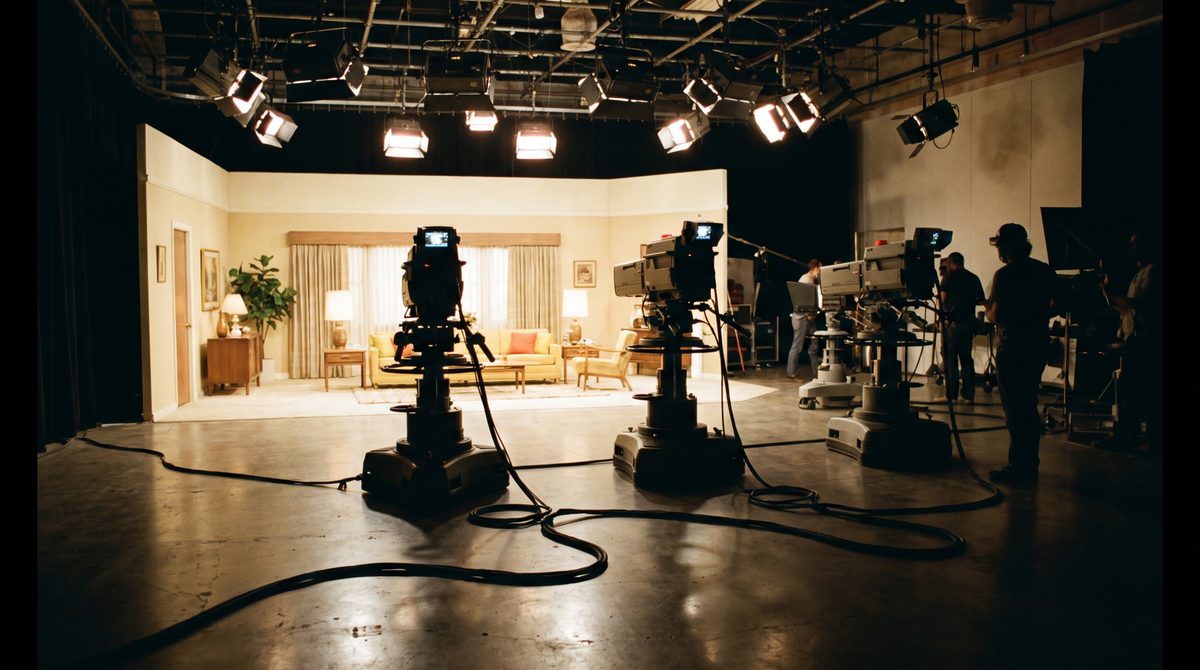
Is the studio sitcom a screen format worth training for?
Commonly saidA standard category alongside single-camera.
What we foundTwo are still in production in Britain. The skills matter; you will mostly use them on stage.
Who is in charge on a British drama?
Commonly saidThe showrunner, as in America.
What we foundUsually a single writer or writer-producer with non-writing executives. The showrunner role here is informal and recent.
Is two takes a disadvantage?
Commonly saidNot enough chances to get it right.
What we foundIt forces first-thought work, which is what casting says it is looking for. The real risk is learning to deliver rather than discover.
Does anything still give you rehearsal?
Commonly saidScreen work means no rehearsal.
What we foundOne-take television does. Adolescence had months of preparation and weeks of rehearsal, shot in story order.
Take the sides you have now and time yourself preparing them properly in twenty minutes. That is the actual skill every format on this page is testing, and the only one that transfers between all of them.