
The famous statistic, and where it actually comes from
Our research handed us a clean set of ratios and told us to build the page on them. We went to find who measured them. Nobody did.
The figure you will have seen is that actors book roughly one audition in twenty, with a range from one in twenty to one in a hundred, and that agents expect something like one in fifteen to one in twenty-five. It appears everywhere, always in the same shape.
We looked properly for real figures. No union, no government body and no casting platform publishes audition-to-booking data anywhere that we could find, in Britain or America. That is a genuine absence rather than an oversight in the research, and it is worth knowing that the number everyone quotes at you has never been measured.
What the people who actually counted report
Real numbers do exist. They come from casting directors describing their own sessions, and they are much larger than the tidy version.
The casting director Bonnie Gillespie published the full funnel from one of her own sessions. Three and a half thousand submissions for nine roles. About five hundred selected, roughly two hundred scheduled to read, thirty-five brought back to callback for six of the parts.
Other named casting directors have given numbers for individual roles in interviews, and they run higher still. Twelve thousand submissions for a single role on one major series. Between five and seven and a half thousand per character on two others. A commercial pipeline described as four thousand submissions producing a hundred and fifty auditions.
The one thing the coaching material got right is the most important thing on this page, and it survives everything above. Every actor in every one of those piles has professional photographs and a professional agent. The yeses and the noes are indistinguishable on paper. Most of the losing happens before a single person watches you act.
Stop auditioning to get a job
The arithmetic our research wanted is not available. The conclusion it was reaching for survives anyway, and the bigger real numbers make it stronger.
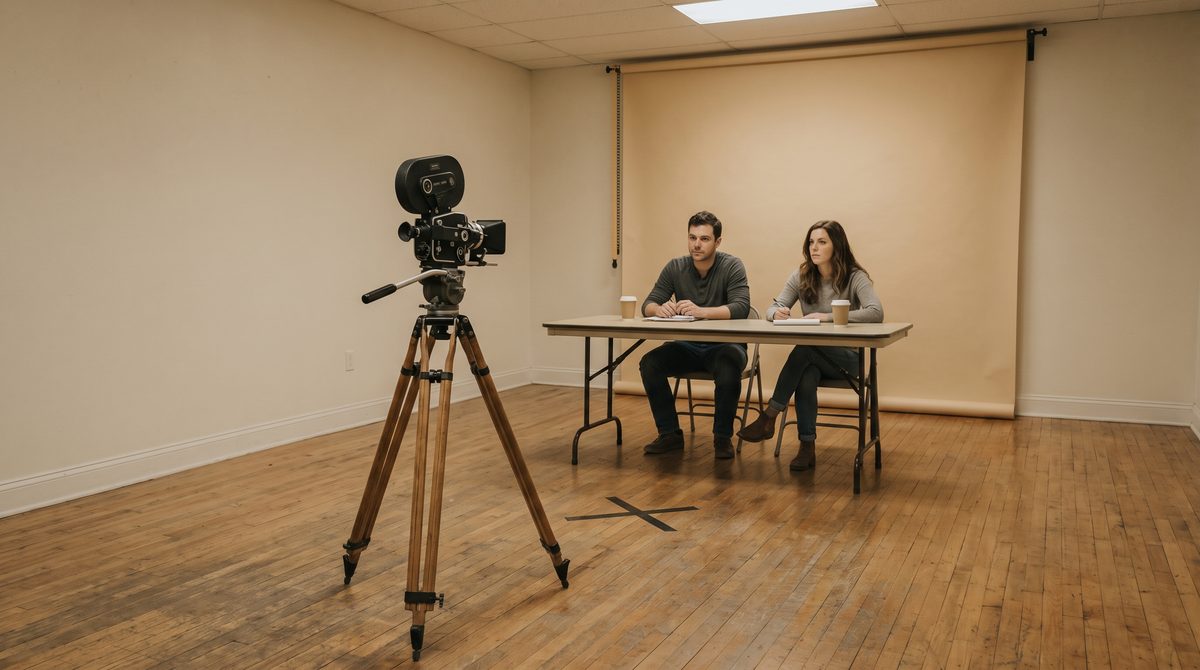
The standard model treats an audition as an application. You present yourself, they judge you, and the outcome is a verdict on whether you should be doing this at all. Run that model at any of the ratios on this page and you have signed up for a long series of small referendums against yourself.
Bryan Cranston has described the alternative for a long time, and there is a dated version of it worth having in his own words. Speaking to Backstage in 2001, he put it like this. “I really only focus on things I can control. I can control an audition. I can control what I do in a room. And then once I’m done, I’m done. I literally forget about it.”
Put the two halves together and it stops being an attitude and becomes the only rational response. Almost none of the outcome is yours. The twenty minutes in the room entirely is. And if the odds are anything like the real numbers, this is very probably the only time you will ever play this part. So play it, rather than presenting evidence that you could.
What they are actually assessing
Across everything this Academy has read, the casting-side list is remarkably consistent, and none of it is what nervous actors think it is.
There is one thing you can do too much of, and it is the thing anxious actors reach for. Mike Page, a working casting director, describes it precisely. “We can tell that they’ve done 20-plus takes or whatever, and they’ve ironed out all of the humanity.” His own recommendation is no more than three takes unless you genuinely ruined one.
Why you are not booking
There is a diagnostic that turns a feeling of failure into a piece of information. It is reasoning rather than research, and it is still the most useful thing here.
Asking for a person instead of a self-tape
Our research told us that American actors are entitled to a live virtual audition. That was true, it is the section we are most glad we checked, and the rule changed this year.
Under the 2023 agreement, a performer asked for a self-tape had to be offered the opportunity of a live virtual audition or an in-person one instead, scheduled at the producer’s discretion, on a first-come basis.
On the first of July 2026 that was replaced. The current provision requires producers to make a good faith attempt to accommodate a performer who asks for a virtual interview — and it applies to a defined list of roles: series regulars, recurring roles, major role performers, modified deal performers and modified guest performers.
An audition does not only resolve into yes or no
There is a well-known story about a role being written for an actor who did not get the part. It is true, and one detail in the version we were given is not.
The showrunner Joseph Mallozzi wrote it up on his own site in 2017. An actor called Ayisha Issa auditioned for his show in 2015. He thought she was terrific and not quite right for the role, so she did not get it. He filed her name away.
A year later he created a character for her — a bodyguard called Solara Shockley — and she became a recurring character on the series. The audition she lost is the reason she got a part that did not exist yet.
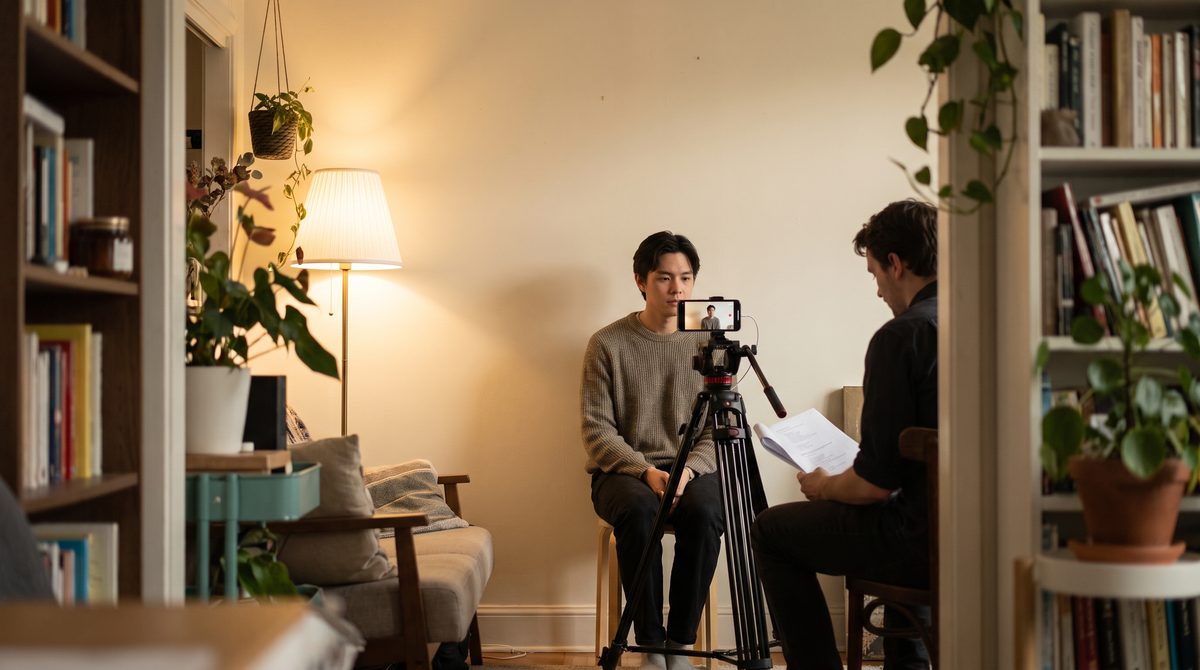
So the outcomes are wider than the two you are watching for. This job. A different job on the same production. A job in two years when somebody remembers the room. Or a relationship with a casting office, which is one of the very few things in this business that compounds.
What this actually does to people
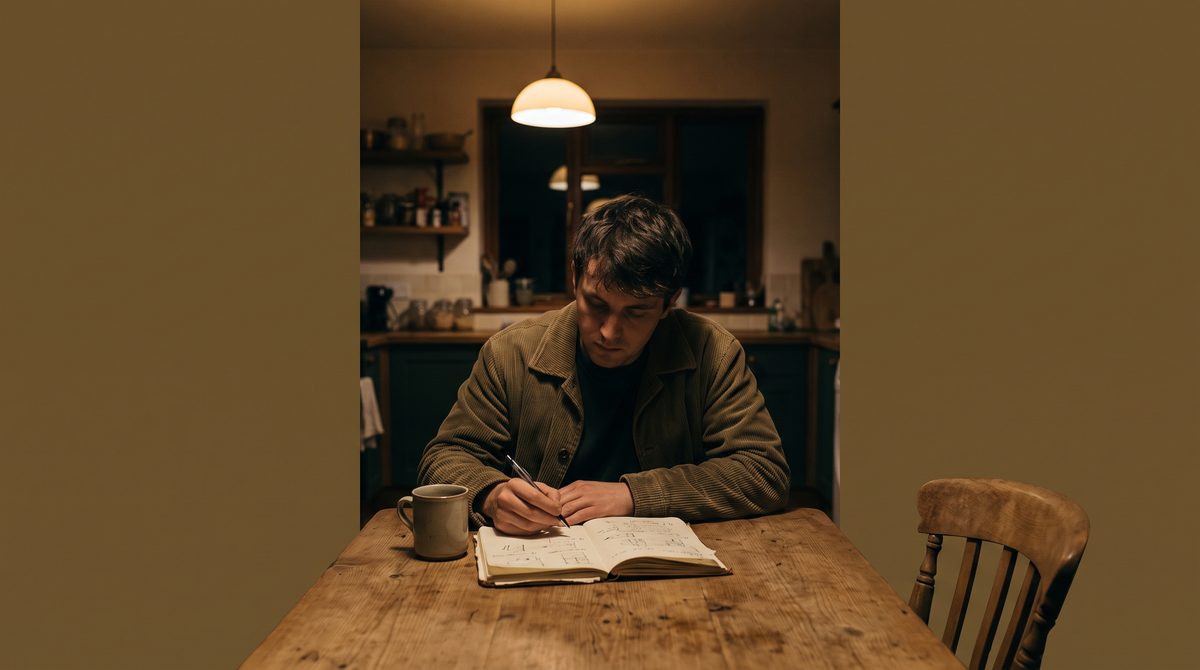
A page about repeated rejection that does not mention the cost of repeated rejection is not being honest. There is real data on this, and it is worth seeing.
The Film and TV Charity has run a large survey of people working in British film and television since 2019. In the 2024 wave, with around four thousand three hundred respondents, thirty-five per cent rated their mental health as poor or very poor, up from twenty-four per cent two years earlier. Sixty-three per cent said work had affected their mental health negatively, and sixty-four per cent had considered leaving the industry.
A 2025 review in Frontiers in Psychology looked across twenty-six studies of performing and creative artists. It identifies rejection, financial instability and appearance pressure as recurring stressors specific to performers, and notes how little targeted support has been studied for this group.
On the question of how long to keep going, the only useful move is to change the unit. A single audition carries almost no information at these numbers. A year carries some, and it is better read through callback rate and category than through bookings alone.
Grading the sources
This was the weakest set of numbers we have been given for any page. Almost every figure in the research came from coaching sites, and one attributed story had a detail added to it.
One absence worth stating plainly, because it shapes everything above. Nobody publishes audition-to-booking data. Not a union, not a government, not a casting platform, in either country. Every ratio you will ever read on this subject, including any you find here, is somebody’s estimate. The numbers that are real come from casting directors describing their own sessions, and there are not many of those.
Where we differ from the standard account
How many auditions per booking?
Commonly saidAbout one in twenty, with agents expecting one in fifteen to twenty-five.
What we foundNobody has measured it. Those figures come from coaching blogs with no data, apparently copying one another.
How many people go up for a role?
Commonly saidA few hundred, and around a fifth get seen.
What we foundCasting directors who counted report thousands per role, and one reported twelve thousand for a single part.
Will your agent drop you for a bad ratio?
Commonly saidBelow one in fifteen to twenty-five, your representation is at risk.
What we foundOne unsourced blog paragraph. No agency publishes a threshold and no agent is on the record with one.
Are you entitled to a live audition instead of a tape?
Commonly saidYes, since the 2023 agreement.
What we foundThat changed on 1 July 2026. It is now a good faith attempt, for named role categories, under a claims moratorium.
Is a bold choice a big choice?
Commonly saidGo large. Make them notice you.
What we foundThe casting director who asks for bold choices also says making one or two lines too big is a common mistake.
Is more preparation better?
Commonly saidDo as many takes as it needs.
What we foundCasting can tell at twenty takes, because the humanity has been ironed out. Three, unless you ruined one.
Is thirty auditions without a booking a bad sign?
Commonly saidIt means something is wrong with you.
What we foundAt any plausible number it is unremarkable, and most of it was decided before anyone watched you act.
Before the next one, do only this. Decide what you want from the other person, find one live human to read with you, and record three takes. Then stop, whatever the fourth take might have been. This is very probably the only time you will ever play this part, and a fourth take is not a performance. It is an apology.