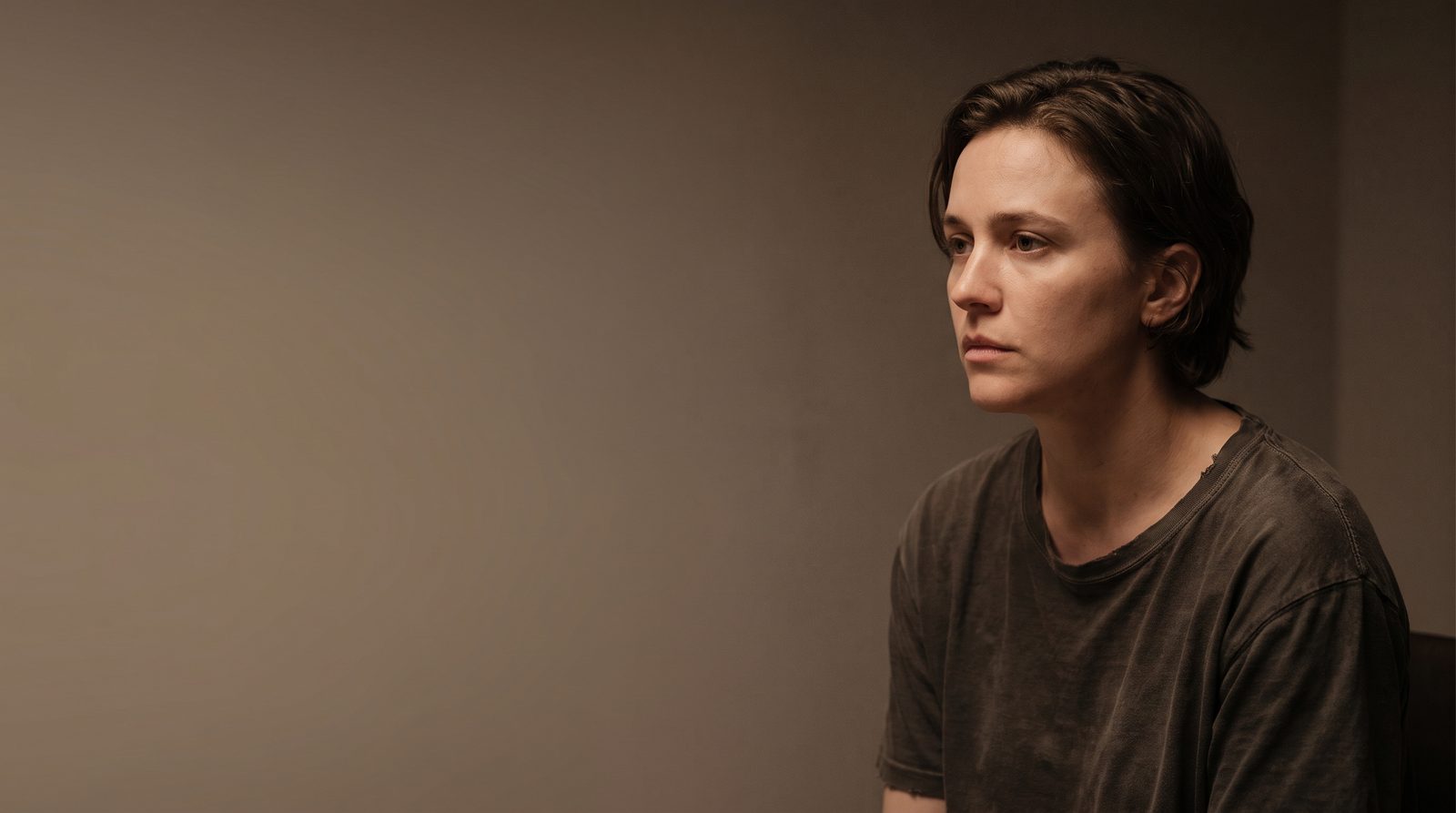
The audience finishes your close-up, and they had to learn how
This is the fact everyone half knows, usually told as though it were a law of human perception. The research is more interesting than that, and the most useful study in it is the one nobody quotes.
The claim is that a neutral face, cut against different images, will be read as different emotions. Cut it against food and the audience sees hunger. Cut it against a coffin and they see grief. Nothing about the face changed. The meaning was assembled by the viewer.
In 2018, Sermin Ildirar and Louise Ewing tested that on two groups. Experienced film viewers, and people who had never watched a film before. The result is the single most interesting thing in this literature.
The effect appeared for experienced viewers — and even then, explicitly only in the sadness condition.
For the first-time viewers it did not appear at all. In the authors’ own words, they “failed to perceive continuity between the shots”.
They did not see a person feeling something. They saw a face, and then a separate picture of something else.
That reframes the whole idea. The audience completing your face is not a hard-wired reflex. It is a convention they picked up from a lifetime of watching cuts, and it appears to be stronger for some emotions than others. Our own draft was going to say the effect had been replicated, full stop. That would have been too generous to it.
The experiment everyone cites, told properly
The story is a hundred years old, the footage is lost, and the details are not agreed on. That is more interesting than the myth, and it is checkable.
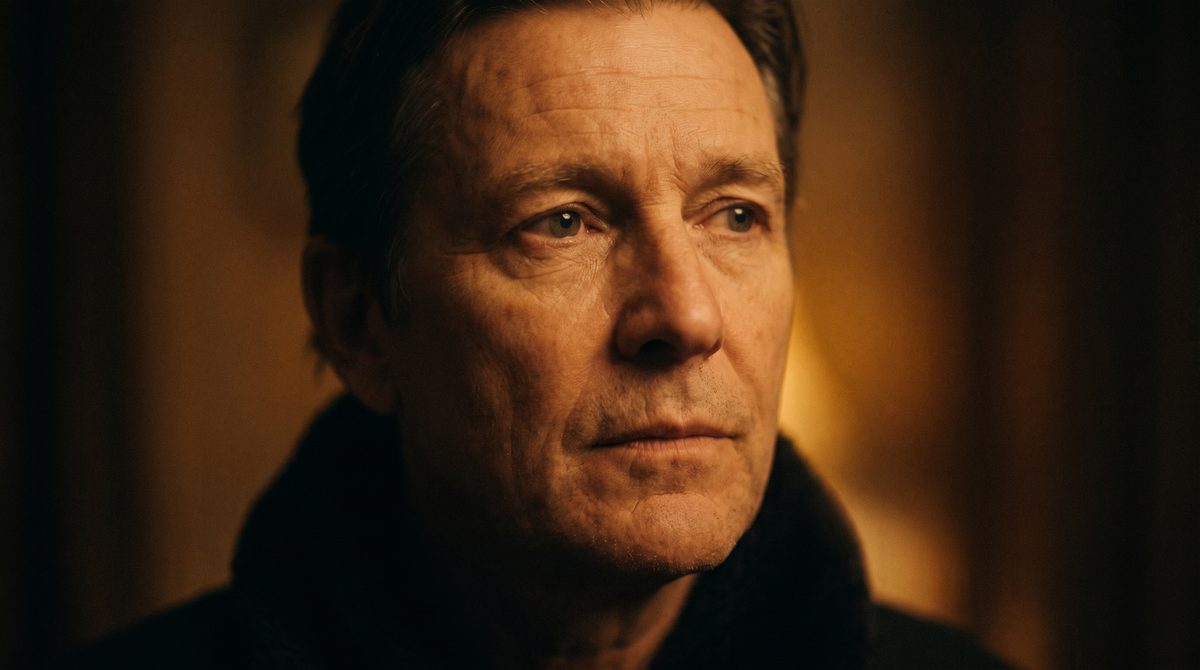
In the 1920s the Soviet filmmaker Lev Kuleshov cut a close-up of the actor Ivan Mosjoukine against a series of other images. The face was the same in every cut. Audiences, the story goes, praised his subtlety.
Then people tried to test it. In 1992, Stephen Prince and Wayne Hensley recreated it with a hundred and thirty-seven participants, and most of them perceived no emotion at all. That result stood for years as a reason to think the whole thing was folklore.
The picture changed with better designs. Barratt and colleagues, writing in Perception in 2016, concluded that “some sort of Kuleshov effect does in fact exist”. Read the hedge in their own sentence, because they put it there deliberately. Their eye-tracking data did not show the differences they expected.
And in 2024 a team published the strongest test so far. Real film footage shot by a professional director, thirty-one people rating it inside a brain scanner. The emotion viewers read on a neutral face shifted significantly depending on the scene beside it, and the shift showed up in the brain as well as in the ratings.
Something, not nothing
The Kuleshov idea gets translated into “do nothing, the edit will handle it”. Prince’s null result is the empirical version of why that is wrong, and it is the most useful thing in this whole literature.
A genuinely blank face, on its own, gave viewers nothing to complete. The effect turns up when there is real material and a real context. So the canvas metaphor is only half right. The audience will paint on it, and they will not paint on an empty one.
Decide something and do not finish deciding it. An unresolved thought is the most watchable thing a face can do, and it is exactly what invites completion.
An action whose test is in the other person. In close-up that reads as checking whether it is working, which stays live even when nothing moves.
Take in what they said and let it cost you something. Receiving is not the same as demonstrating receipt, and the camera can tell.
Cold, exhaustion, pain, being late. A physical condition reads beautifully in close-up and costs you nothing to play, because it is already true or easily made true.
Stillness is the absence of unnecessary effort. Rigidity is held effort. They look completely different on camera, and only one of them reads as presence.
An announcement. The close-up is the shot where pushing is punished most and needed least, because it is the one place the audience is actively helping.
Mel Churcher, a screen and voice coach who has worked on major features, has the complaint that sits underneath all of this. Actors keep being told that less is more, and her response is the right one: how can it be less than life? Reduced is not the same as absent, and the difference between those two words is most of screen acting.
What a close-up actually shows
A short and slightly unnerving list. Most of it is not what actors think they are being judged on.
Andrew Tsao, teaching at the University of Washington, put the medium's purpose in one line. “The camera is a device that I like to say is designed to look behind someone’s eyes.” He goes on to name why this shot in particular changed acting. “The landmark difference between acting for the screen and acting for the stage is the power of the close-up.”
Thaler also passes on the best note in this area, and it came to him from a director whose name he does not give. “Just think you’re suspicious. Don’t show me you’re suspicious. Thinking it will be enough. I will still know you’re suspicious.” That is the close-up in four sentences.
Blinking, and what Caine really said
There is a famous rule about not blinking. Our own research had a tidy, sensible version of it. The tidy version is not what he said.
The version we were given was that you should not blink through a dominant moment, because a blink reads as a break in the thought. That is a reasonable idea and we could not find him saying it.
What he actually says, in his masterclass on screen acting, is blunter and stranger. “If I keep blinking, it weakens me, but if I’m talking to you, and I don’t blink, and I just keep going, and I don’t blink, and I keep on going, and I don’t blink, you start to listen to what I’m saying.” There is no carve-out for dominant moments. It is a blanket instruction, and by his own account he kept to it so rigidly for years that people gave him a nickname for it.
Our honest advice sits slightly to the side of his. You will blink, because humans blink, and a person visibly refusing to blink produces a stare. The useful residue is about attention rather than eyelids. A blink at the moment somebody is reading you is a small interruption in the thought, and if the thought is genuinely continuous, the blinking tends to look after itself.
Why your face looks wrong, and it is not your face
Our research has flagged this gap three times and never filled it. We have filled it, and the usual explanation given for it is wrong.
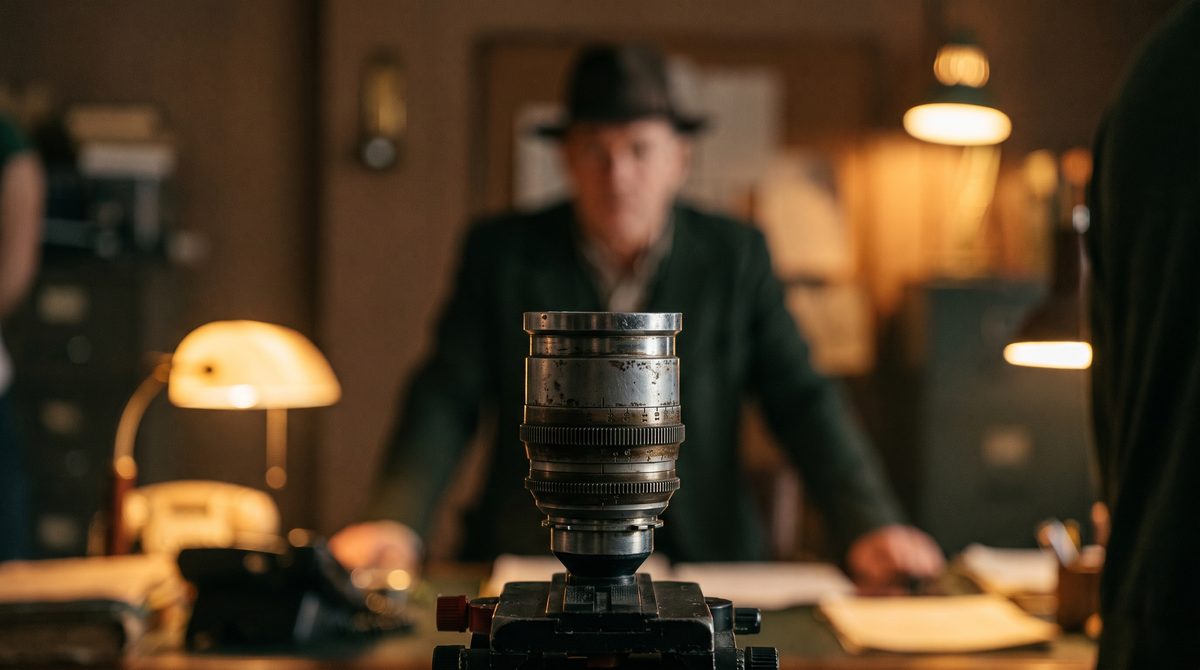
The common version is that wide lenses distort faces and long lenses flatter them. The lens is not what does it. Distance is. Perspective is a function of how far the camera is from you, and nothing else. Two different lenses at the same distance, framed the same, give you the same face.
The reason focal length gets the blame is practical. To fill a frame with a face using a wide lens, you have to bring the camera very close, and it is that closeness that enlarges whatever is nearest the lens. Your nose grows. Your ears retreat. To fill the same frame with a long lens, the camera stands well back, and the proportions settle.
A 2016 study in PLOS ONE photographed the same faces at different focal lengths, with framing kept constant so the camera distance changed.
Portraits taken at fifty millimetres, from closer in, were rated less attractive and less dominant than the same faces taken at eighty-five and a hundred and five millimetres from further back. The measured shape of the face changed too.
So the feeling that the camera has done something unkind to you is sometimes literally correct. It is a measurable optical fact and not a judgement about your face.
On a professional set this is somebody else's decision, and close-ups are conventionally shot in the range where faces behave. The place it matters to you is your own self-tape, because a phone is a wide lens and people put it close.
One further thing worth saying plainly. The close-up has never treated all faces equally, and that is bound up with lighting practices and lens choices that were developed around some faces and not others. Much of what feels like the camera disliking you is lighting that was not designed for you, which is a technical fact rather than a permanent one.
Your self-tape is a close-up, and you probably have not been treating it as one
The standard self-tape frame is chest-up. Chest-up is a close-up. Everything on this page therefore applies to a bedroom and a phone.
Which means the whole list is live in your tape. Breath, jaw tension, anticipation, the flicker of comment, the difference between receiving and performing receipt. All of it is visible at that framing, and most people record their tapes as though they were in a medium shot.
Matching still applies if there is any chance of a second take being cut against a first. Keep the physical shape the same and let the internals stay live. Scale changes between sizes. Timing does not.
Grading the sources
This page rests on four peer-reviewed studies, one masterclass, two named practitioners and a trade article. Two claims in our own research turned out to be wrong, and one of them is wrong for the third time.
One thing we still cannot give you. Nobody appears to have asked editors how they actually choose which close-up to use, which would be the most useful piece of research on this subject and is a straightforward set of interviews away. Until somebody does it, everything written about what a close-up needs, including this page, is reasoning from the outside.
Where we differ from the standard account
Does the audience read emotion into a blank face?
Commonly saidYes, automatically. It is how human perception works.
What we foundPeople who had never watched a film did not do it at all. It is a convention learned from watching cuts.
So does the edit do the acting?
Commonly saidLargely, yes. Stay out of the way and let it work.
What we foundEditing changes which emotion is read. It does not change how much. Intensity has to come from you.
What happened in the original experiment?
Commonly saidSoup, a coffin and a child, and audiences praised the performance.
What we foundThe footage is lost, accounts of the three images differ, and the vivid version is a colleague’s recollection from 1929.
How much smaller do you play a close-up?
Commonly saidThree-quarters off, per Michael Caine.
What we foundHe never wrote that. He wrote about reducing physically and not mentally, which is a different instruction.
What is his rule about blinking?
Commonly saidDo not blink through a dominant moment.
What we foundHe gives no such carve-out. And the eye advice usually quoted is the reverse of what he describes.
Why does your face look odd in close-up?
Commonly saidWide lenses distort faces.
What we foundDistance distorts faces. The lens only matters because it decides how close the camera has to stand.
Is a self-tape a close-up?
Commonly saidIt is its own separate thing with its own rules.
What we foundChest-up is a close-up, and it needs more specificity than a film one because nothing else supplies context.
Do this tonight, and it costs you ten minutes. Film thirty seconds of yourself thinking about nothing in particular, then film the same thirty seconds having decided one thing you have not finished deciding. Move the phone back and zoom in for both. Watch them with the sound off, and the whole page is in the difference.