The Tuesday morning test
You must walk into the room and look like the photo. That is the only rule casting agrees on, and every hair and makeup decision is downstream of it.
So here is the test, and it is the whole chapter: could you reproduce this face, unassisted, on a Tuesday morning, in a casting office? If the answer is no — if it took two hours, a professional, and products you do not own — then the photograph is a promise you are going to break in person.
The casting directors say it plainly, and they say it about hair and makeup specifically.
“Something honest. Don’t do big makeup and hair thing like I’ve done today.”Priscilla John, casting director (Harry Potter) — Spotlight
Debbie McWilliams, forty years on Bond: “Don’t make it too flattering.” Frank Moiselle, on the same failure from the other direction: “touched up in such a way that really it doesn’t represent you.” Note that Moiselle is talking about retouching and John is talking about makeup, and they are describing the same crime committed with different tools. Makeup is retouching you can walk around in.
Look at the photo and ask: can I make this face happen by myself, in fifteen minutes, on a bad morning? If not, you have bought a picture of somebody else.
Do you actually need a hair and makeup artist? Most actors don’t.
This is sold to you as a standard part of the package. It isn’t, and there is a hard cross-market number that says so. The photographers at YellowBelly, who run studios in London, New York and LA, told Casting Networks in June 2026:
“In the UK, it is relatively uncommon, whereas in the States we’ve found around 40% of clients choose to bring one to their session.”YellowBelly Photography, on hair and makeup artists — Casting Networks, 11 June 2026
Read what that actually says. Around sixty per cent of American actors do not bring a hair and makeup artist, and in the UK it is unusual to bring one at all. This is not a corner-cutting minority. This is the majority, on both sides of the Atlantic, and nobody tells you that when you are booking.
It is optional. It is normal to skip it. And the cost of getting it wrong — a face you cannot reproduce — is higher than the cost of skipping it entirely.
What it costs, from live pricing pages
If you do want one, know the number before you walk in, because it is frequently quoted to you as an afterthought once you are already committed.
From photographers’ own published rates: LA Photo Spot, $150–$250, scaled to the package. Steven Noreyko in Austin, $175–$225, with the artist staying for the whole session to do touch-ups. Marc Cartwright in LA, $250 for up to two looks, plus $50 for each additional look. John Gress in Chicago prices it as a menu: makeup for one look $225, hair for one look $225, both $275, up to three hours $475. Some studios — The Actor Headshot in Atlanta, for one — don’t include it at all; you pay the artist direct.
You will see “hair and makeup from $75” quoted on blogs. We went looking for a photographer actually charging it and could not find one. The verified floor of the real market is $150. Budget accordingly, and treat the $75 figure as what it is: a number somebody made up to make the total look smaller.
So the honest arithmetic: an HMU artist adds roughly $150 to $275 to a session that already costs several hundred dollars. That is real money, and the majority of working actors decide it is not worth it. See the full cost chapter before you agree to anything.
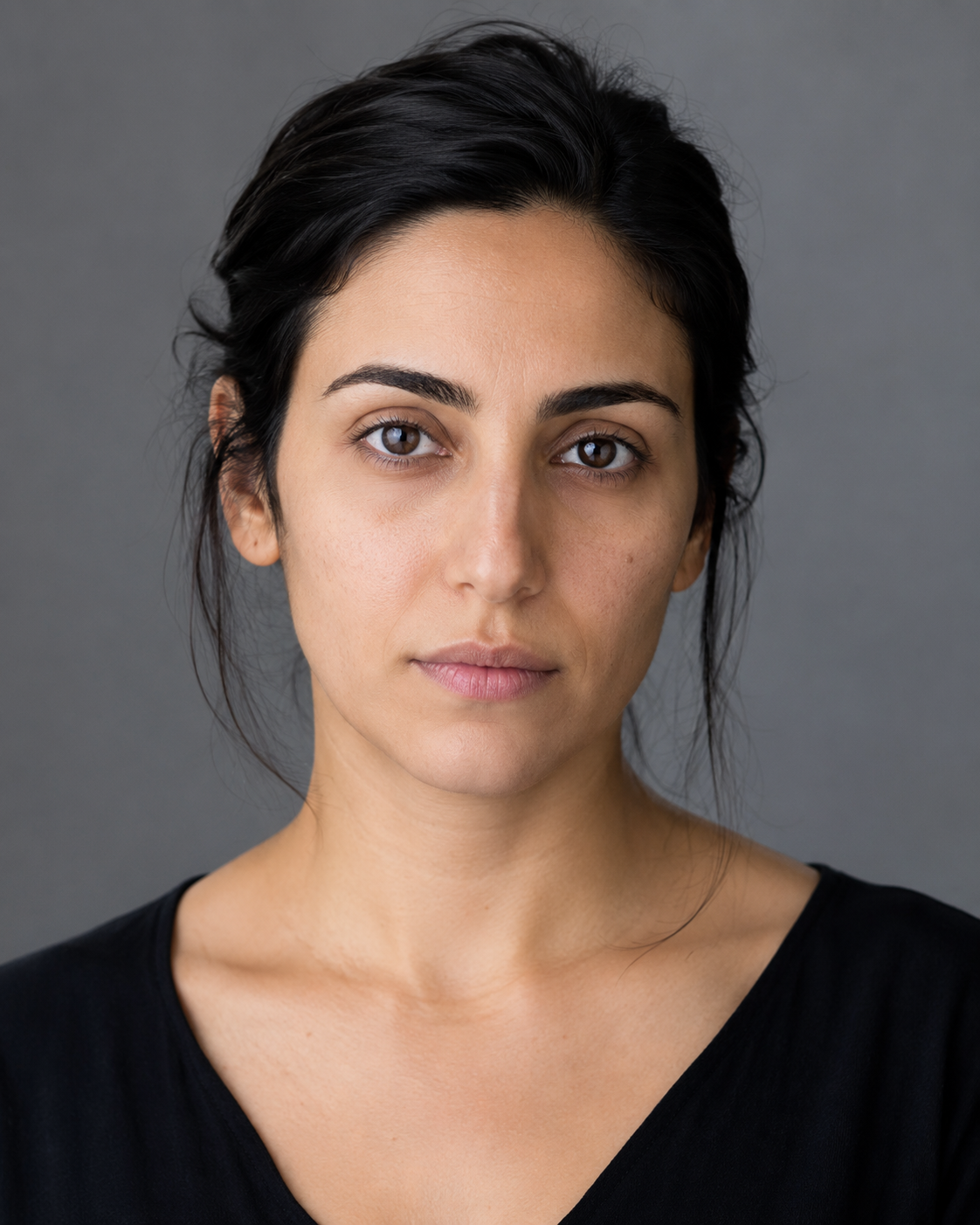
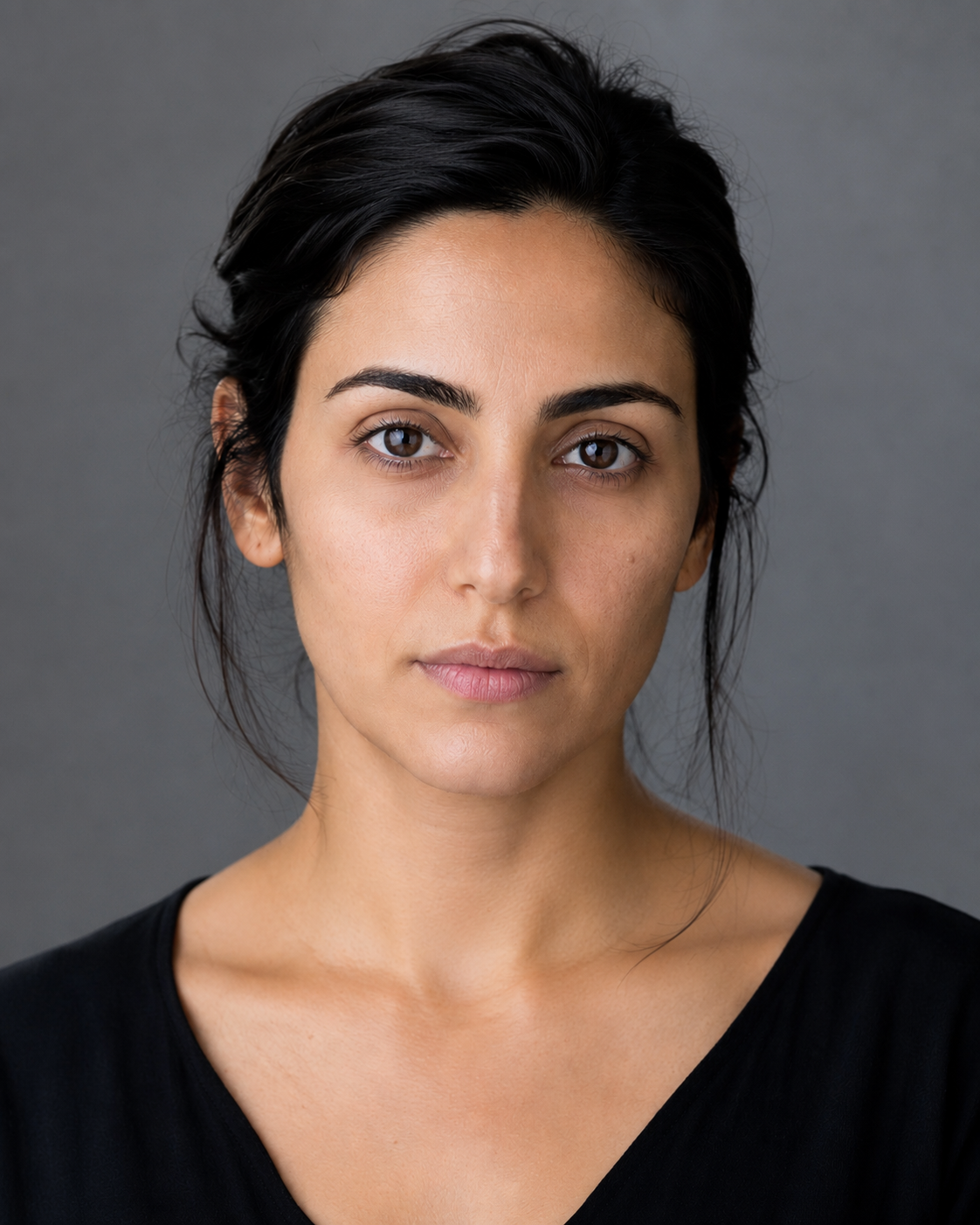
The eyes are the whole job, and heavy makeup closes them
Spotlight’s own published guidance is a single sentence and it settles most eye-makeup arguments:
“Your eyes are your most important feature, so make sure they are as visible as possible.”Spotlight, published photo guidance (modified 7 January 2025)
As visible as possible. Now hold that next to a heavy smoky eye, a thick liner all the way round, or a dark shadow packed into the socket — every one of which works by closing the eye down and shrinking the visible white and iris. That is not a taste objection. It is a direct, mechanical contradiction of the one thing the platform tells you casting is looking for.
The second mechanical point follows from the catchlight. Anything specular near your face competes with the light in your eyes. Gloss on the lips, glitter on the cheekbone, a heavy dewy highlighter, a big shiny earring — each one creates a secondary bright point in the frame, and every secondary bright point is a small theft of attention from the two that matter. Matte lip, quiet skin, live eyes.
“Powder until you’re matte” is wrong for a lot of people
This is the piece of headshot advice that gets repeated most confidently and fails hardest, and it fails along a very specific line.
The default instruction on a headshot day is powder everything flat. That instruction was calibrated on pale skin, and working cinematographers who light darker skin for a living say the opposite — out loud, on the record, for years.
“The main thing you had to worry about is the reflectivity of African-American skin. I always made sure that the makeup artists I worked with put a moisturizer on black skin so that we [got] some reflections in there.”Ernest Dickerson, cinematographer (She’s Gotta Have It) — Mic, 6 September 2017
And from the working DPs on the cinematography.net thread on lighting dark skin — a peer discussion between professionals, not a blog: “Don’t let makeup completely matte down to ‘perfection’ — that’s awful.”
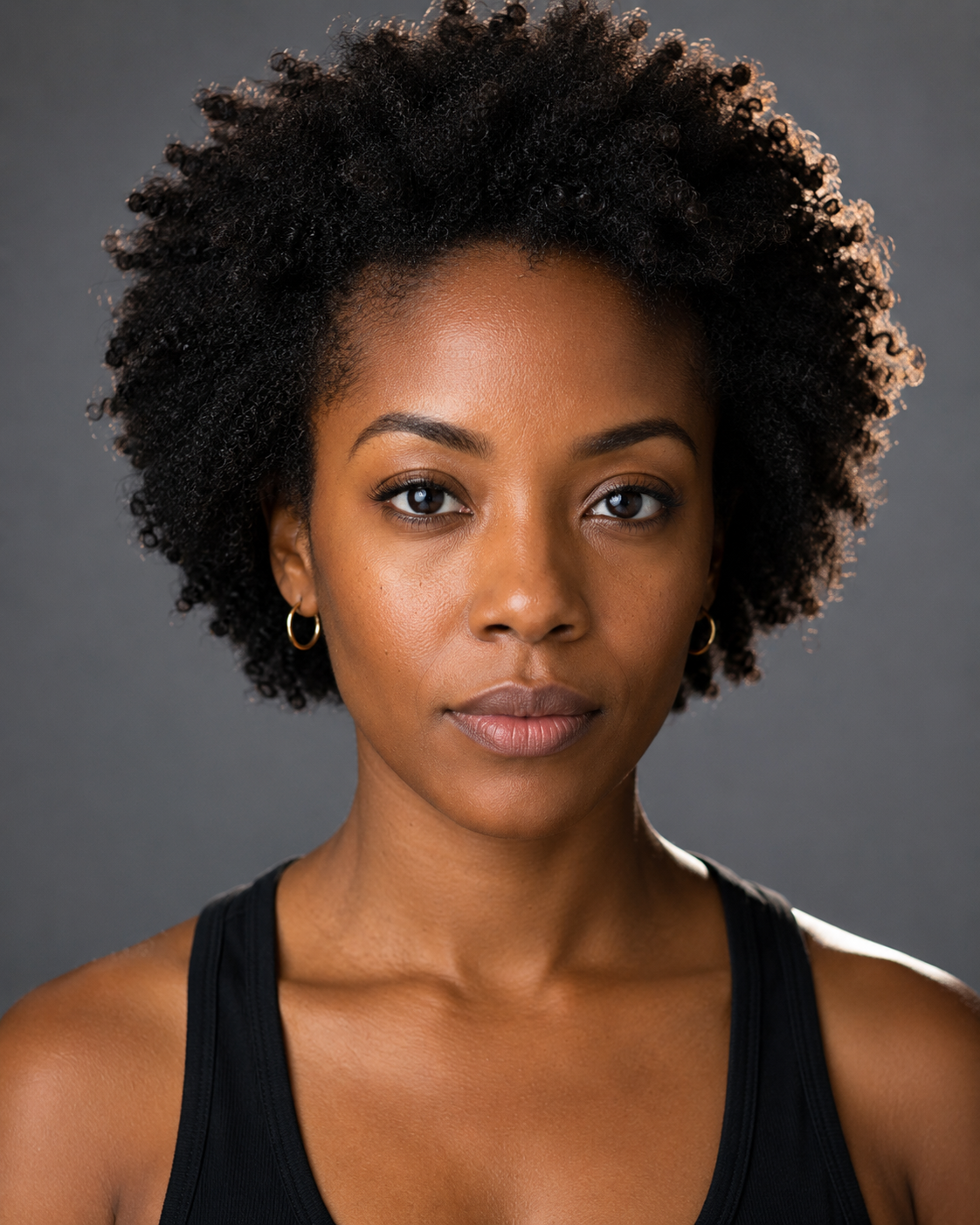
Read those two together and the real instruction appears, and it is not the one you were given. Control the shine that sits on the forehead, the nose and the point of the chin. Do not kill the specular life of the skin. What the DPs describe is shaping reflection — using it to model the face — not eliminating it. A face powdered to a dead uniform flatness has had its structure erased, and on darker skin it reads as grey and lifeless, and then somebody calls the photograph “moody” and you go home with nothing.
“Are you going to matte me completely flat?” The correct answer is no. If the answer is yes, or if you get a blank look, you have learned something useful about how your session is going to go.
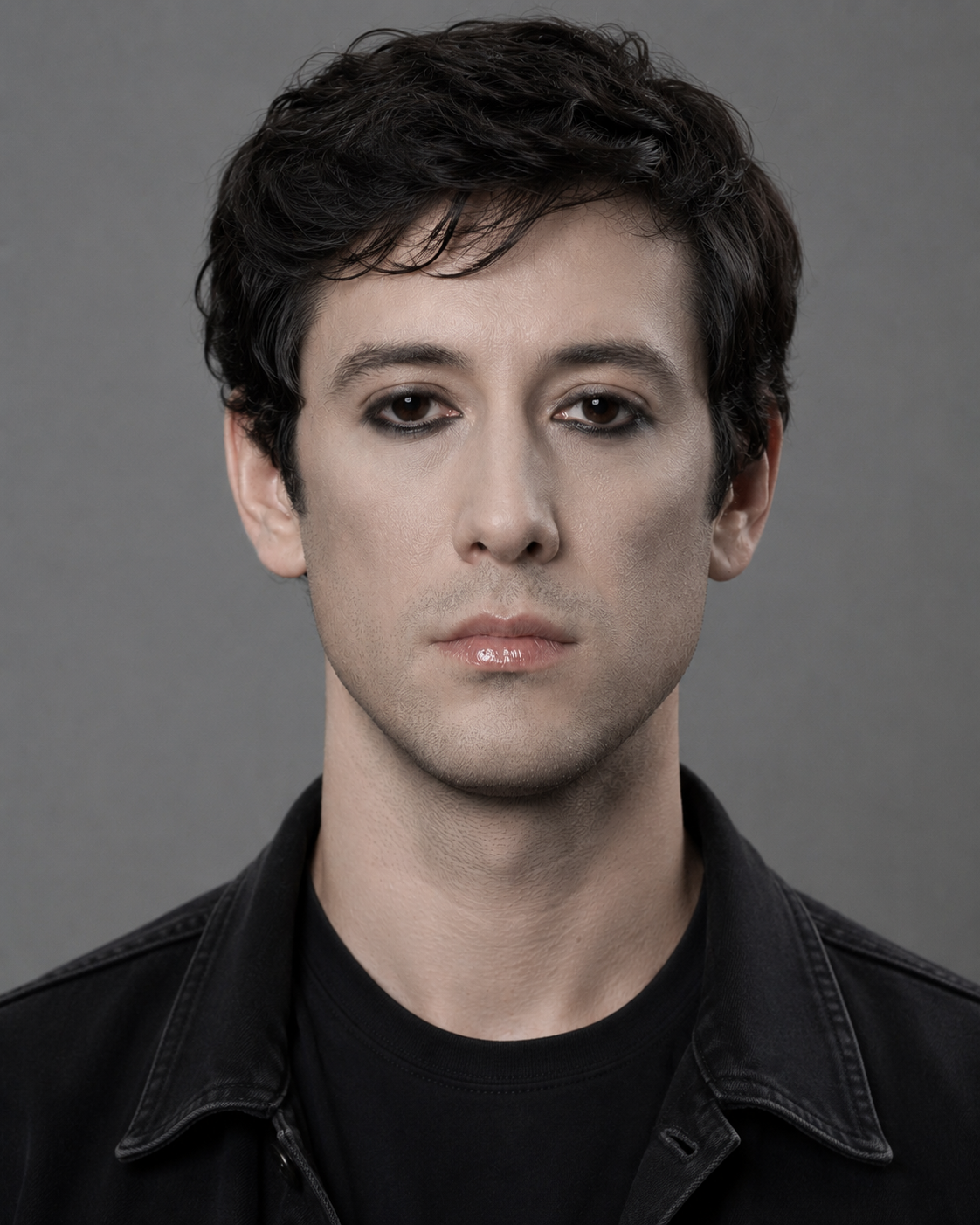
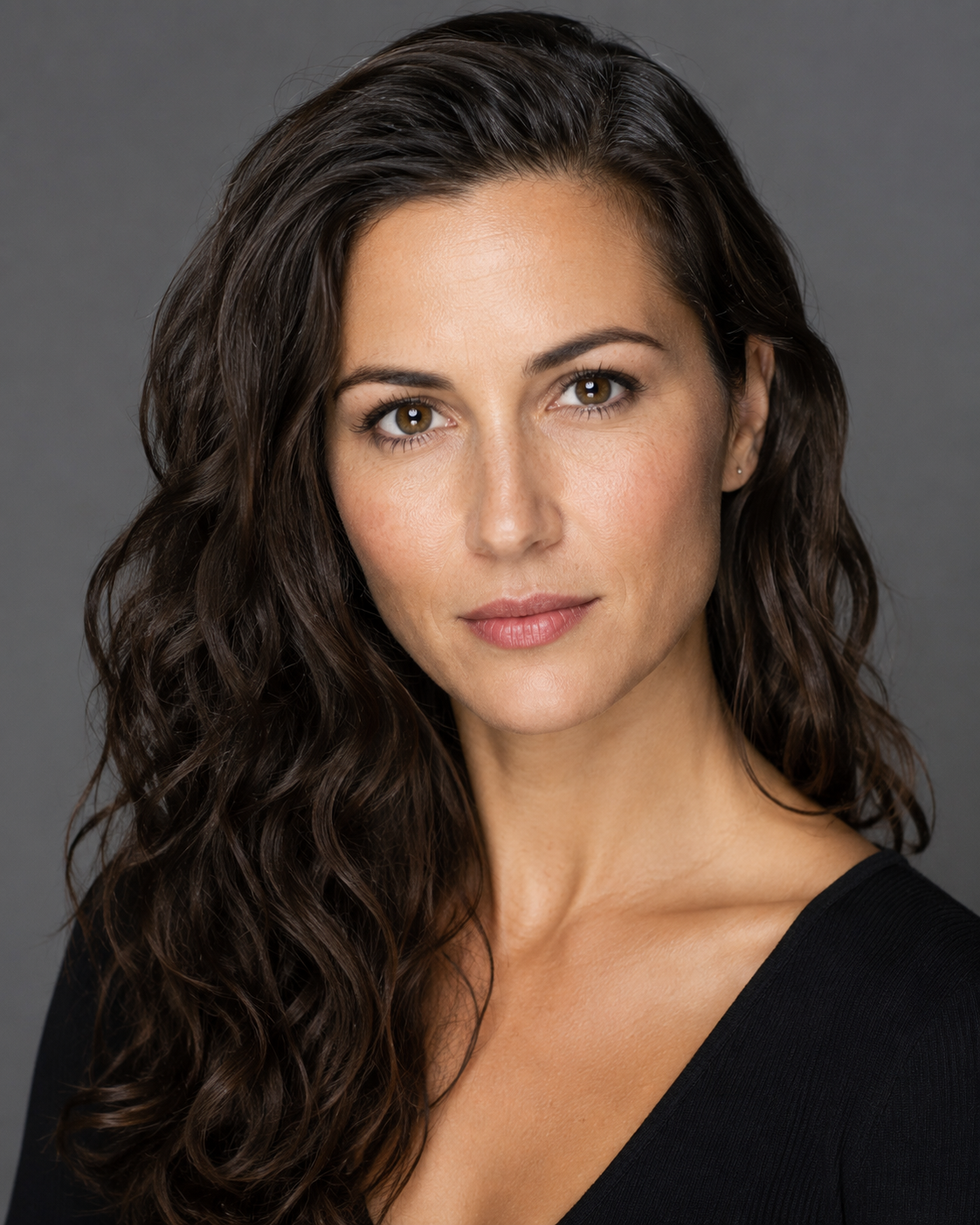
Hair: shoot it the way you actually wear it
One rule, and it is the Tuesday test again. Shoot your hair the way you wear it — not the way it looks after four hours with a stylist you will never see again.
Then there is the change problem, and Backstage is blunt about it: “Ensure that your headshots reflect your current hairstyle, and if you dramatically change your look, you need new headshots.” Which sounds like a shopping instruction and is usually delivered as one. It doesn’t have to be.
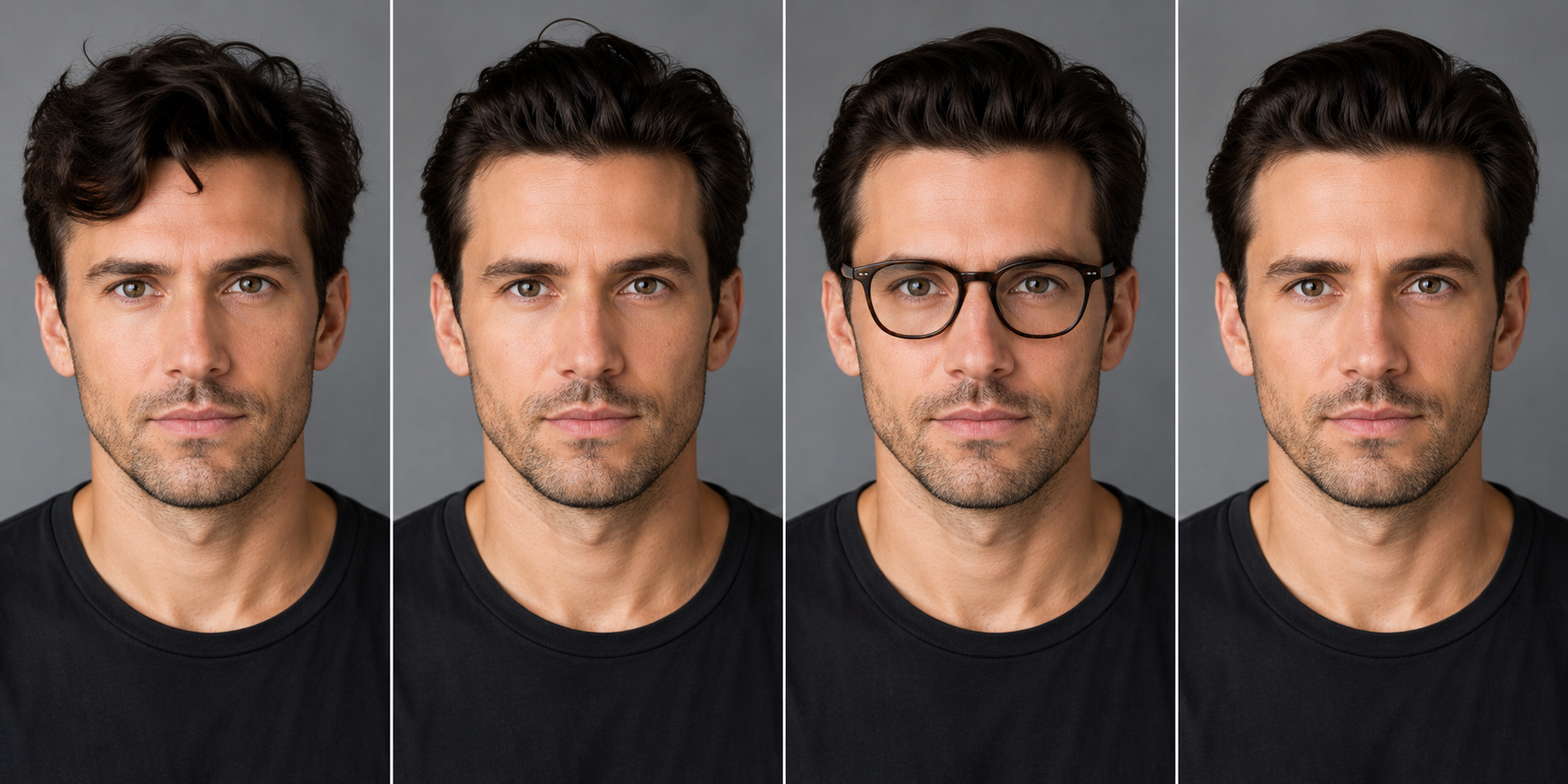
Because the UK casting directors have already given you the cheap solution, and they gave it while asking for something else entirely. Thom Hammond wants a photo “with your hair straight if it’s usually curly” and “one with and without glasses.” Emma Ashton: “If it’s a guy and he’s got a beard sometimes and not a beard, then it’s really good to have the range so we can see what he looks like without beard, because that is always asked.”
Shoot the range in one session. Hair up and hair down. Glasses and no glasses. Beard and clean. It costs nothing extra at the shoot — it is the same hour, the same light, the same photographer — and it permanently defuses the “you changed your hair, buy new headshots” problem before anyone can sell it to you. Then keep the submitted photo current and let the rest sit in the folder.
One caution: on Actors Access, only two photos are free and every additional one costs $10 to post. Shooting the range is free. Posting the range is not. Shoot it anyway — the file is yours forever, and the day you shave the beard you already have the photo.
If your hair is textured, ask the question before you book
The advice above is not the same advice for everyone, and any guide that pretends otherwise was written for one head of hair.
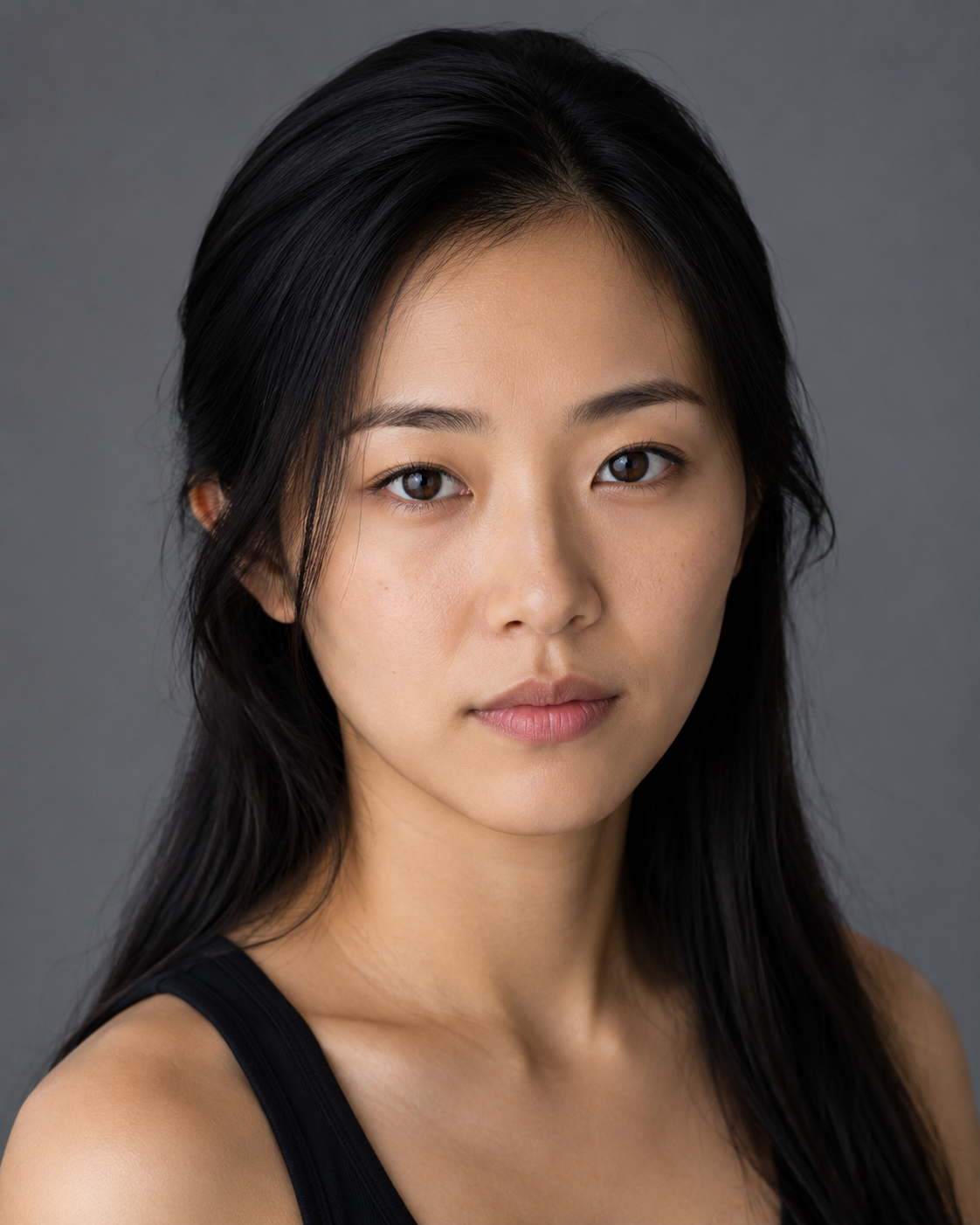
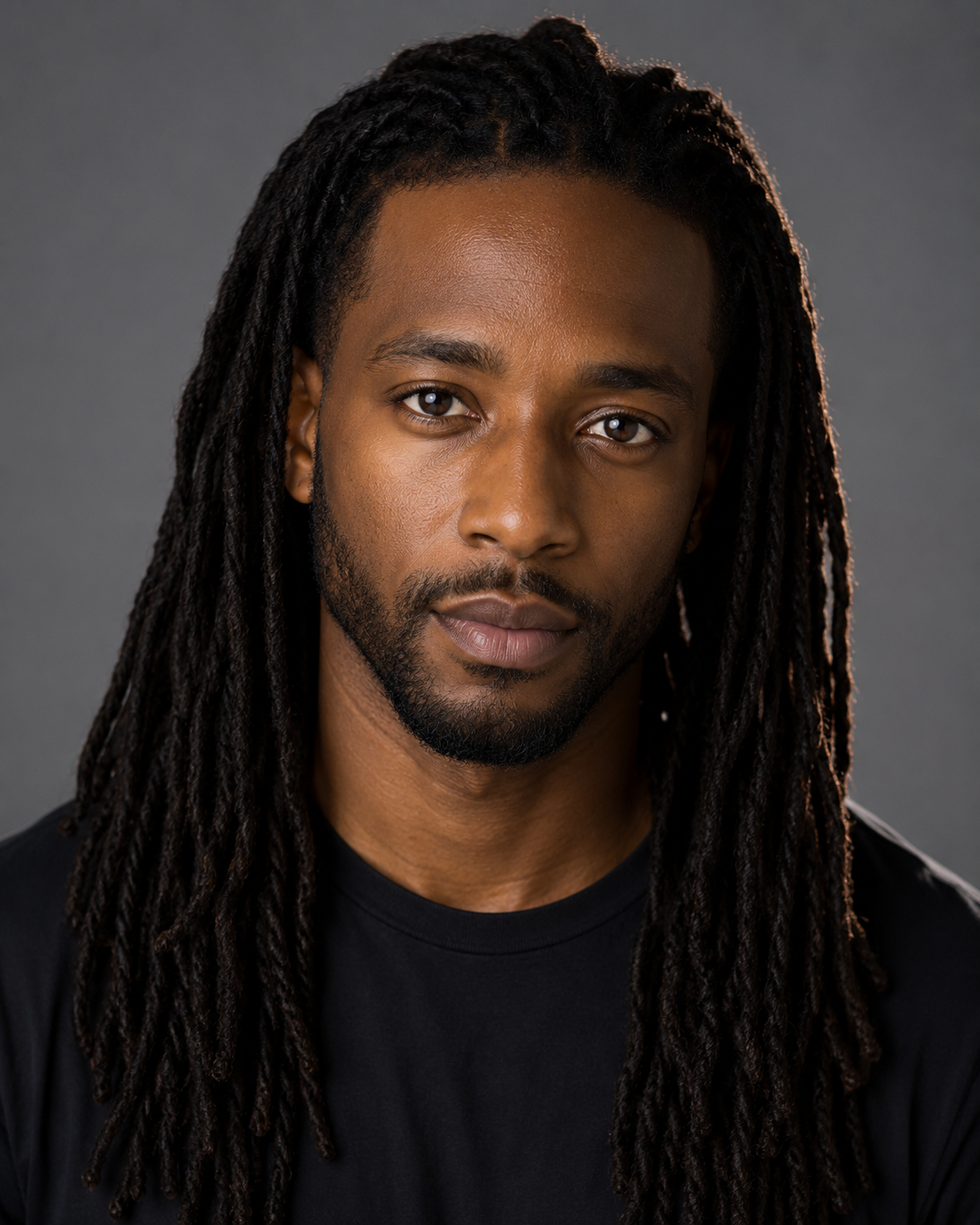
Natural hair, curls, coils, braids, locs, protective styles, head coverings — none of these are edge cases and all of them get lit, shaped and photographed differently. A stylist who has only ever worked with straight hair will do one of two things to you: nothing, or something you did not ask for. Both cost you the session.
So ask, before you pay a deposit: “Has your hair and makeup person worked with my hair texture?” If the answer is no, bring your own person, or arrive camera-ready and skip the studio’s artist entirely. That is not a diva request. It is the difference between usable frames and an afternoon you paid for and cannot use. The same audit applies to the photographer: scroll the portfolio and look for people who look like you.
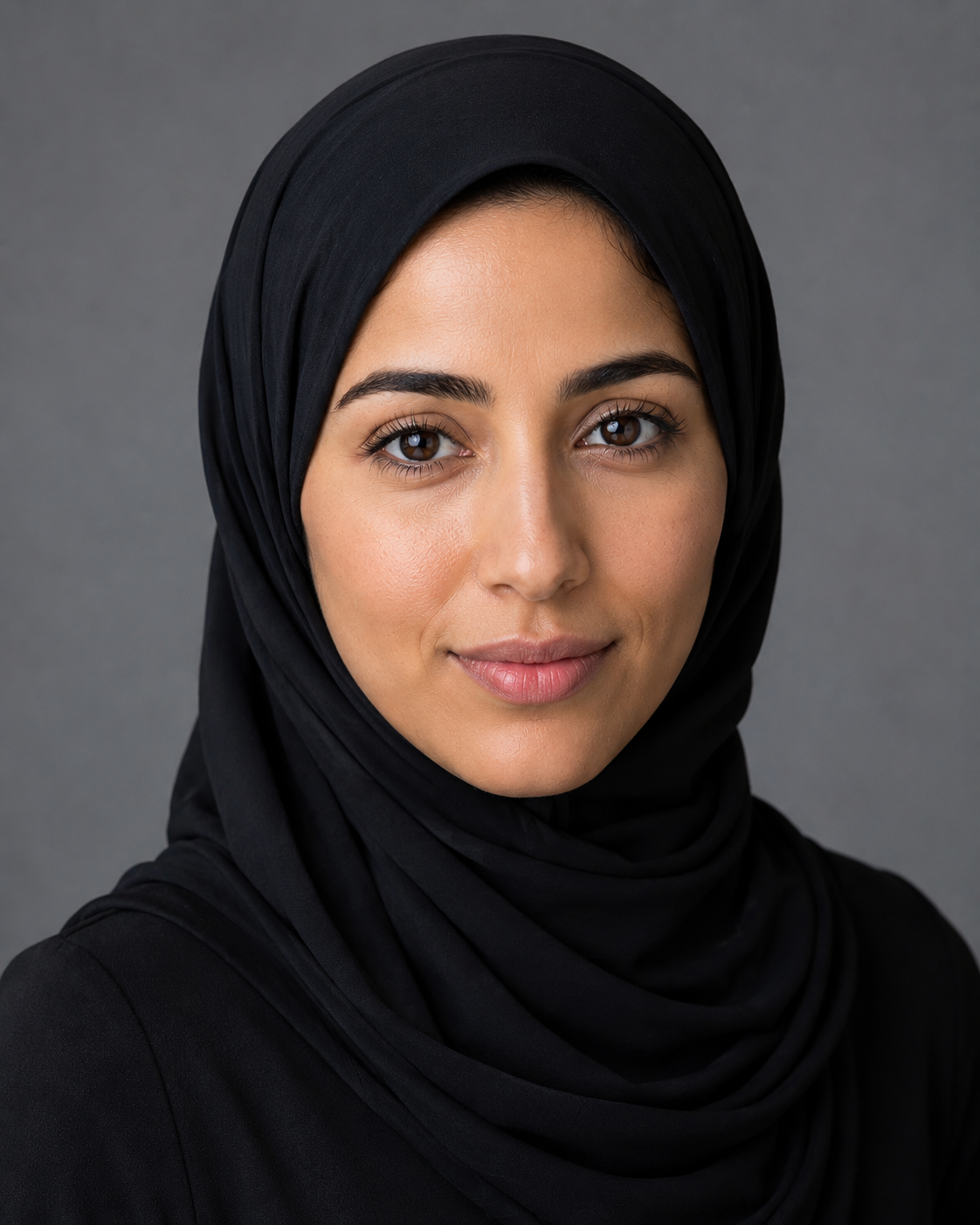
None of this is complicated. Control the shine, don’t kill the skin. Keep the eyes open. Wear your own hair. And when you look at the final frame, ask the Tuesday question — can I be this person by myself, at nine in the morning, with no help? If yes, you have a headshot. If no, you have a portrait.