
The photograph is doing more of the work than your face is
This is the finding that justifies caring about any of this, and almost nobody writing about headshots seems to know it exists.
In 2014, Alexander Todorov and Jenny Porter published a study in Psychological Science with a title that gives it away: Misleading First Impressions: Different for Different Facial Images of the Same Person. They had people rate photographs on attractiveness, competence, trustworthiness, intelligence and several other traits.
The result is the useful part. Different photographs of the same individual produced about as much variation in how they were judged as photographs of entirely different individuals did. Lighting, angle, expression and the particular moment shifted the ratings that much.
Your face is not the variable you are working with. The photograph is, and the research says a large share of the impression lives in it.
Which means a headshot that is not working is a verdict on an image rather than a verdict on you, and images can be redone.
It also means the differences this page goes on about — the light, the crop, the moment — are not photographers’ preferences. They are the mechanism.
Not three seconds. About a sixth of one.
You will read everywhere that casting directors look at a headshot for three seconds. We went looking for the source of that and there is not one. What replaces it is real, and it is worse news.
The three-second figure circulates entirely among photographers’ marketing pages and content sites, always stated as received wisdom and never traced to a casting director, a study or a publication. We could not falsify it because there is nothing there to falsify.
The commercial casting director Stuart Stone wrote something different and more defensible in Backstage in March 2016. “Within a fraction of a second, a casting director is consciously or unconsciously forming an opinion about you based on what they are seeing in your headshot.” That is a claim about how fast an impression forms, not about how long anybody looks. The two got conflated somewhere and the folklore grew out of it.

Ninety-six to a page
One sentence from one casting director organises this entire section of the Academy. It is real, it is on the record, and it has exactly one source.
Tree Petts founded and chairs the Casting Directors’ Association and has cast more than two thousand commercials. Speaking on video for Spotlight, she said this. “I think what people need to understand is that I’ll get 48 to 96 thumbnails a page. They need to have a strong, good headshot, and most importantly of all, they need to look like their headshot.”
Every rule downstream follows from that number. At that size a headshot is not a portrait. It is a very small signal in a dense field, competing with ninety-five others for a sixth of a second.
Does any of this actually work?
The same body of research that says impressions form in a tenth of a second also says those impressions are mostly wrong. Both halves are useful and most pages only publish the first.
Fast, confident and consistent between viewers is not the same as accurate. The 2006 study established the speed and stability of face-based impressions, not their truth — the researchers never checked whether the photographed people were actually trustworthy or competent.
Later work went looking for that accuracy. A meta-analysis published by Foo and colleagues found a face-level correlation of 0.14 between how trustworthy a face looks and how trustworthy the person is. A 2024 study by Jaeger and colleagues extended the scepticism to personality judgements generally, finding little accuracy and, more strikingly, little awareness among people of when their own impressions were wrong.
Put the two halves together and you get the only sane conclusion. Somebody will form a confident opinion of you from a photograph in less time than it takes to blink, and that opinion will mostly be wrong. The first half is why the photograph is worth getting right. The second half is why a headshot that is not working is not a verdict on you.
What casting actually says when you ask them
Spotlight put eleven casting directors on video and asked them about headshots. What is striking is what none of them mentions.
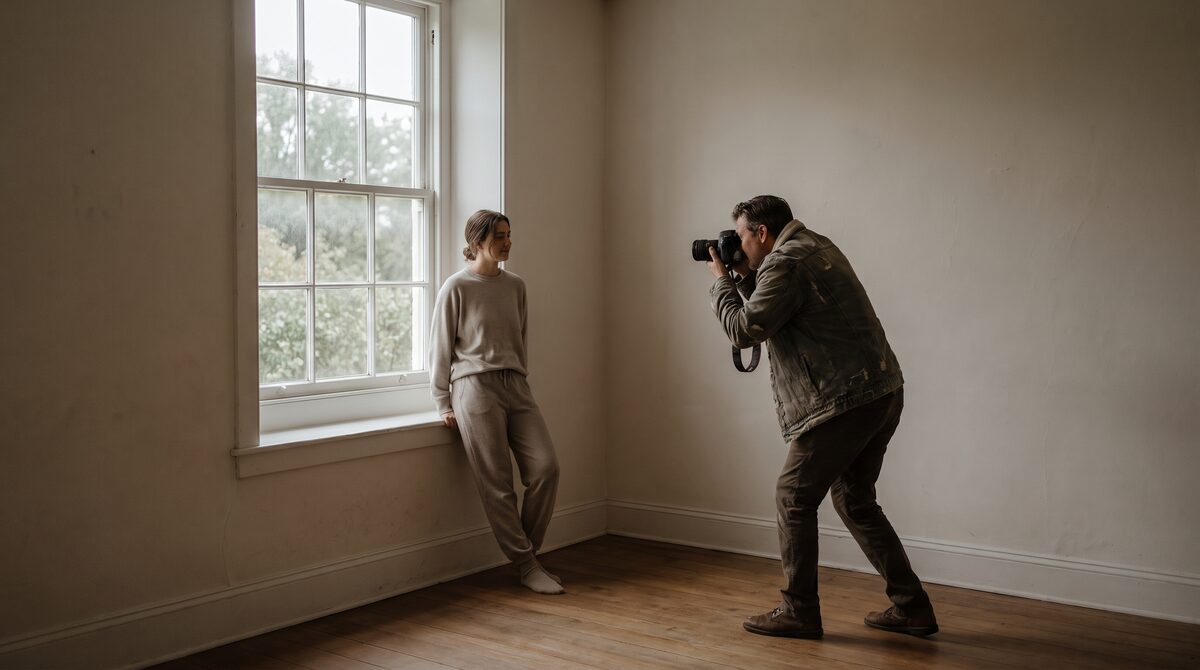
McWilliams says she does not know why outdoors works better. There is an answer, and it is just physics. Open shade and north-facing daylight are large, soft, directional light sources, which is exactly what an expensive studio softbox is built to imitate. The sky is bigger than any softbox and costs nothing.
The catchlight, and how to judge a photographer for nothing
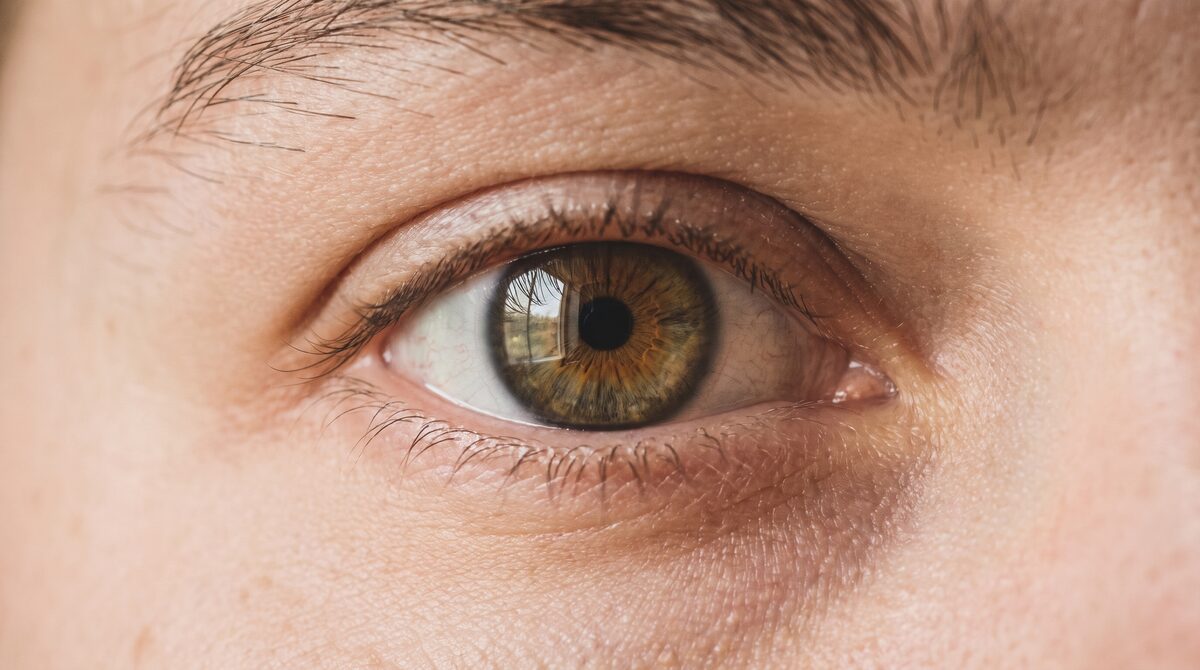
A catchlight is the reflection of the light source in the eye. It is small, it is the most useful thing on this page, and it lets you assess a portfolio in about ten seconds.
The optics are not in dispute. A catchlight is a specular reflection off the wet surface of the eye, which means its size and position in the eye directly reveal the size and position of the light that made it. A big soft catchlight means a big soft source. A tiny hard dot means a small hard one.
Open any headshot photographer’s gallery and zoom all the way into the eyes of three or four different subjects.
If there is a clear, consistent catchlight in every one, they know what they are doing with light. If the eyes are flat and dark, no amount of styling on the rest of the page will fix that.
It takes ten seconds and it is the single most useful thing you can do before spending money.
Crop and background, and a correction to our own research
The advice here is right. The evidence we were given for it turned out to be three different studies fused into one, and one of them carried a claim we were about to publish about skin tone.
The practical rule comes from a casting professional: full heads, not cut off at the top, so the shape of the head is visible. The reasoning offered to us was that when image quality drops, viewers stop being able to read internal features and fall back on the outline — head shape, hair, silhouette.
There is one more limit worth naming. All of those studies measured whether people could correctly identify a face, which is a different task from forming an impression of one. So the full-head rule is sensible and well motivated, and it is not proven by that research. We would rather you had the reasoning with its weak joint visible than a confident sentence with a hidden one.
Background follows the same logic. If the outline of your head is doing identification work, the boundary between your head and what is behind it is load-bearing. Dark hair against a dark background is fine at full size and gone at ninety-six to a page.
The seven-point test
Everything above, as something you can actually do to a photograph in two minutes.
Small enough that it is one of many on a screen. Can you still find the eyes? If not, nothing else on this list matters.
Anything brighter or sharper is competing with you, and at that size it will win.
A collar, a hand, a bright patch of background. Whatever arrives first is what the sixth of a second is spent on.
Zoom in and look. A dark flat eye at full size is an absence at thumbnail size.
Not cropped at the top. The outline is part of how somebody recognises you when the detail has gone.
Not what they are feeling. Where they belong. If nothing comes, the picture is not telling anyone anything.
This is the only test that matters at the door, and it is the one your own judgement is worst at. Ask them, do not guess.
That last point deserves saying plainly. Your judgement about your own photograph is the least reliable instrument in this entire process. You are not asking whether you look good. You are asking whether you look like yourself, small.
Grading the sources
The science on this page is strong and our research had drifted on the details of it in four separate places. Two of those drifts would have been published as facts.
That last row is worth dwelling on, because it applies to this whole page. The research is about single faces, shown alone, for controlled durations. A casting director scanning a dense grid under time pressure is doing a different task, and the closest published work — on how people form averaged impressions of crowds of faces — is not the same thing either. The transfer is our argument rather than anybody’s finding, and nobody has ever put an eye-tracker on a casting director. Somebody should.
Where we differ from the standard account
How long do they look?
Commonly saidAbout three seconds.
What we foundNo source for that anywhere. The impression is formed in about a tenth of a second, and more looking only adds confidence.
Does the photograph really matter that much?
Commonly saidYes, say the people selling photographs.
What we foundYes, and there is a study. Different pictures of one person varied about as much as pictures of different people.
Are those first impressions accurate?
Commonly saidThey feel definitive, so they must be telling us something.
What we foundMostly not. The correlations are small, and people cannot tell when their own impressions are wrong.
Is a studio the professional option?
Commonly saidObviously, and here is our lighting setup.
What we foundA Bond casting director prefers outdoors. The physics explains why, even though she says she does not know.
Is the crop a matter of taste?
Commonly saidTighter looks more modern.
What we foundThe outline of your head carries information that survives when detail does not. Do not cut the top off.
Where should the catchlight be?
Commonly saidTen or two o'clock. Stated as a rule.
What we foundA widely practised convention with no authority behind it. That a catchlight exists at all matters far more than where.
Can you judge your own headshot?
Commonly saidYou know your own face better than anyone.
What we foundYour judgement about your own image is the least reliable instrument you have. Ask someone who met you once.
Do this now and it takes two minutes. Open your headshot, shrink it until it is the size of a postage stamp, and look away for five seconds before looking back. If you cannot find your own eyes in the first instant, neither can anyone else — and they are not going to look for as long as you just did.