The American change nobody has noticed
If you are in the United States, this is the most consequential thing on the page, and every guide written before the middle of last year has it backwards.
Since 2018, employees have not been able to deduct unreimbursed work expenses. That suspension was written to expire at the end of 2025, which is why so much advice says the deduction returns in 2026.
It does not. A law signed on 4 July 2025 struck the expiry date out of the statute. The provision now reads that no such deduction is allowed for any tax year beginning after 31 December 2017, with no end date at all. It is permanent.
If you are self-employed and paid on a 1099, a headshot is an ordinary business expense on Schedule C. It reduces your income tax and your self-employment tax, which runs at 15.3 per cent.
If you are paid on a W-2, as most union film and television work is, your unreimbursed headshot cost is not deductible at all. Not this year, not next year, not on a future return.
So the deductibility of your headshot genuinely depends on what kind of jobs you booked that year. Nobody puts that on a headshot pricing page.

The British position, and a rule that does not exist
Our research told us there is a conflict about whether a headshot is claimed in one year or spread across two. We went to find which is right. Neither, because one of them was never a rule.
The UK test is that an expense must be incurred wholly and exclusively for the purposes of the trade. On that basis a headshot looks like straightforward advertising cost, in the same family as a business card or a showreel.
Now the spreading question. Several accountancy websites say a headshot should be spread over two years and a showreel over three. We could not find that rule in HMRC guidance, in legislation or in case law anywhere.
What does exist is the distinction between capital and revenue spending. Capital creates something of enduring benefit and is not deducted against income. Revenue is ordinary running cost and comes off in the year you pay it. HMRC treats building a website as capital and updating it as revenue. A photography session is much closer to the second.
Two dates worth having. You must register for self assessment by 5 October following the tax year in which you went over the allowance. Paper returns are due by 31 October and online returns by the following 31 January. And Making Tax Digital is now live for anyone whose qualifying income was over fifty thousand pounds, with thresholds dropping to thirty thousand in 2027 and twenty thousand in 2028.
Hair and makeup, and why the answer is genuinely unclear
You will be told to budget a couple of hundred for this. Whether you can claim it is a real grey area with actual case law behind it, and the principle is worth understanding rather than guessing at.
The governing idea comes from a case about a barrister who bought sober clothes she wore only for court. She lost, because the clothing also kept her warm and decent — and an expense that unavoidably serves a personal need fails the wholly-and-exclusively test even when the person’s motive was entirely professional.
HMRC applies the same reasoning to appearance. Everyday grooming has an inescapable private benefit, so it is normally not deductible. Stage or character makeup with no everyday use sits closer to costume, which is allowable.
The bill you are actually signing up for
A headshot is one payment. A profile is a yearly one, and almost nobody adds it up in one place. All of these were checked at source on 3 September 2026.
210 pounds a year, or 19.20 monthly by direct debit. Also 235 dollars or 196.50 euros. Graduates and under-18s pay 136.50. No joining fee found.
299.90 dollars a year or 29.99 monthly. In the UK 99.90 pounds or 9.99 monthly. Free tier exists with two photo slots.
68 dollars a year or 9.99 monthly, with twenty per cent off for SAG-AFTRA members. Buys submissions, not photo slots.
149.99 dollars a year or 19.99 monthly. Unchanged from what we published last time.
We had it at 150 dollars a year. The standard rate is now about 200, with a first-year offer around 85. Check before you assume.
Their site would not load for us today. The widely quoted lowest band is 198 pounds a year, from a 2025 source, so treat it as approximate and confirm it yourself.
Two platform mechanics that cost real money and are almost never explained. On Actors Access, a PLUS subscription does not include any discount on photo uploads — their own words. You get two photos free and additional ones are ten dollars each, and they cannot be swapped for free.
And on Casting Networks the free tier is a trap for the impatient. Their current wording: media “can not be swapped for new media, nor can it be deleted.” A headshot you post too early occupies a slot you cannot clear, which is a genuine financial argument for shooting later and once rather than early and often.
If the answer is that you cannot afford it
The most common reason for reading this page is not comparison shopping. It is working out whether this month is possible.
The honest hierarchy runs like this. A free window and a friend beats every paid option under about a hundred and fifty pounds, because at that price you are paying for a room rather than for skill. Above that you are buying somebody’s eye and their time, and it is worth it if you can.
Is an expensive one better?
Yes up to a point, and the point arrives earlier than the price list suggests.
The photograph genuinely matters, and there is research rather than opinion behind that. Different photographs of the same person produce about as much variation in how strangers judge them as photographs of different people do. You cannot change your face. You can change the photograph, and a large share of the impression lives there.
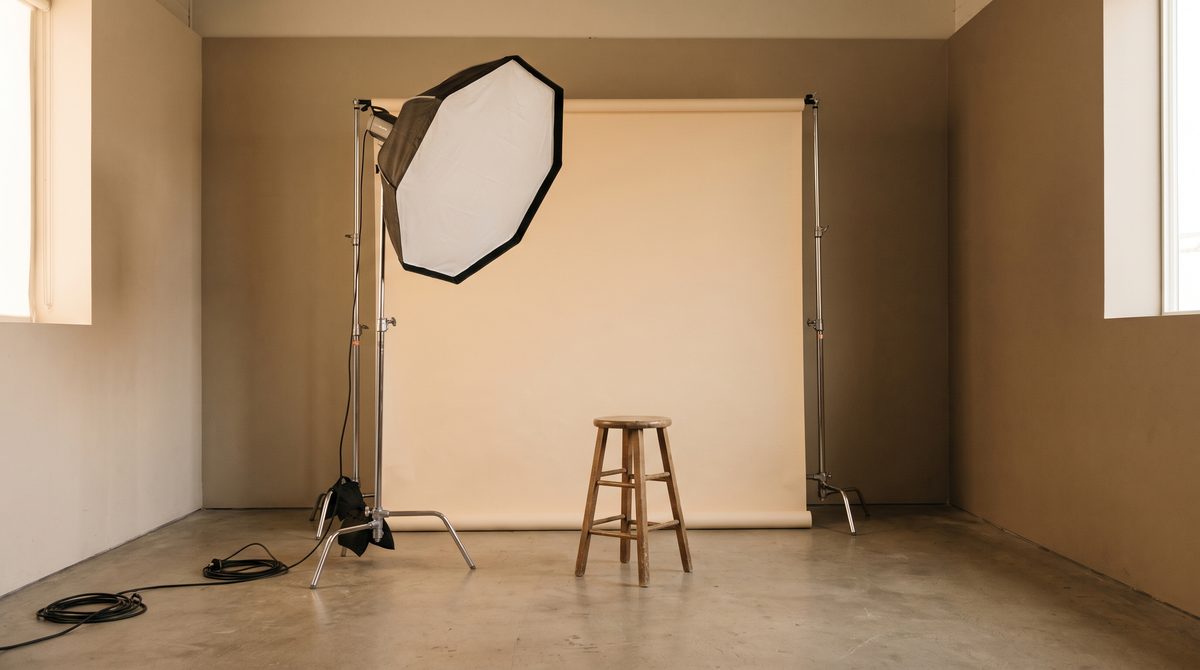
But the things that make a headshot work are not the things that scale with price. Legibility at thumbnail size, a catchlight in the eye, the whole head in frame, and a live thought behind it. None of those costs two thousand dollars.
The gap between a hundred and fifty dollar session and a two thousand dollar one is a gap in time, in the number of looks, in the camera format and in how many images get retouched. It is not a gap in whether the photograph does its job.
Grading the sources
This page carries tax material, so we went to government sources rather than accountancy marketing. Three things our research told us turned out to be wrong or unfounded.
One thing worth saying plainly. None of this is tax advice, we are not accountants, and the two places where it matters most are the two where no clean rule exists — whether a UK headshot is expensed or spread, and how your particular mix of employed and self-employed income affects what you can claim. Those are questions for somebody who works with performers and can see your actual figures.
Where we differ from the standard account
What does a headshot cost?
Commonly saidThe session fee on the photographer’s website.
What we foundRoughly sixty per cent more once retouching, hair and files are added. Then less again, if you can claim it.
Can American actors deduct it?
Commonly saidYes, and the employee version comes back in 2026.
What we foundSelf-employed yes. Employees no, permanently, since a law signed in July 2025.
Is there a break for performers?
Commonly saidRarely mentioned at all.
What we foundYes, and it caps out at sixteen thousand dollars of income, a figure untouched since 1986.
Must a UK headshot be spread over two years?
Commonly saidSeveral accountancy sites say so.
What we foundNo rule anywhere requires it. It is a convention, and your accountant may reasonably disagree.
Is retouching a small extra?
Commonly saidA minor add-on.
What we foundTwenty to a hundred and twenty-nine dollars per image, for the same line item, depending only on who you booked.
Do you own the photographs you paid for?
Commonly saidObviously.
What we foundSometimes. Three of the eight studios we checked sell the unretouched files as a separate purchase.
How often should you reshoot?
Commonly saidEvery six months, according to photographers.
What we foundNo casting director is on record recommending annual reshoots. The trigger is your face changing, not the calendar.
Do one thing before you book anything. Open the photographer’s price page and find three numbers that are not the session fee — the cost per extra retouched image, the price of the unedited files, and whether hair and makeup is included. If any of the three is not published, ask before you pay. That question is worth more than the entire rest of this page.