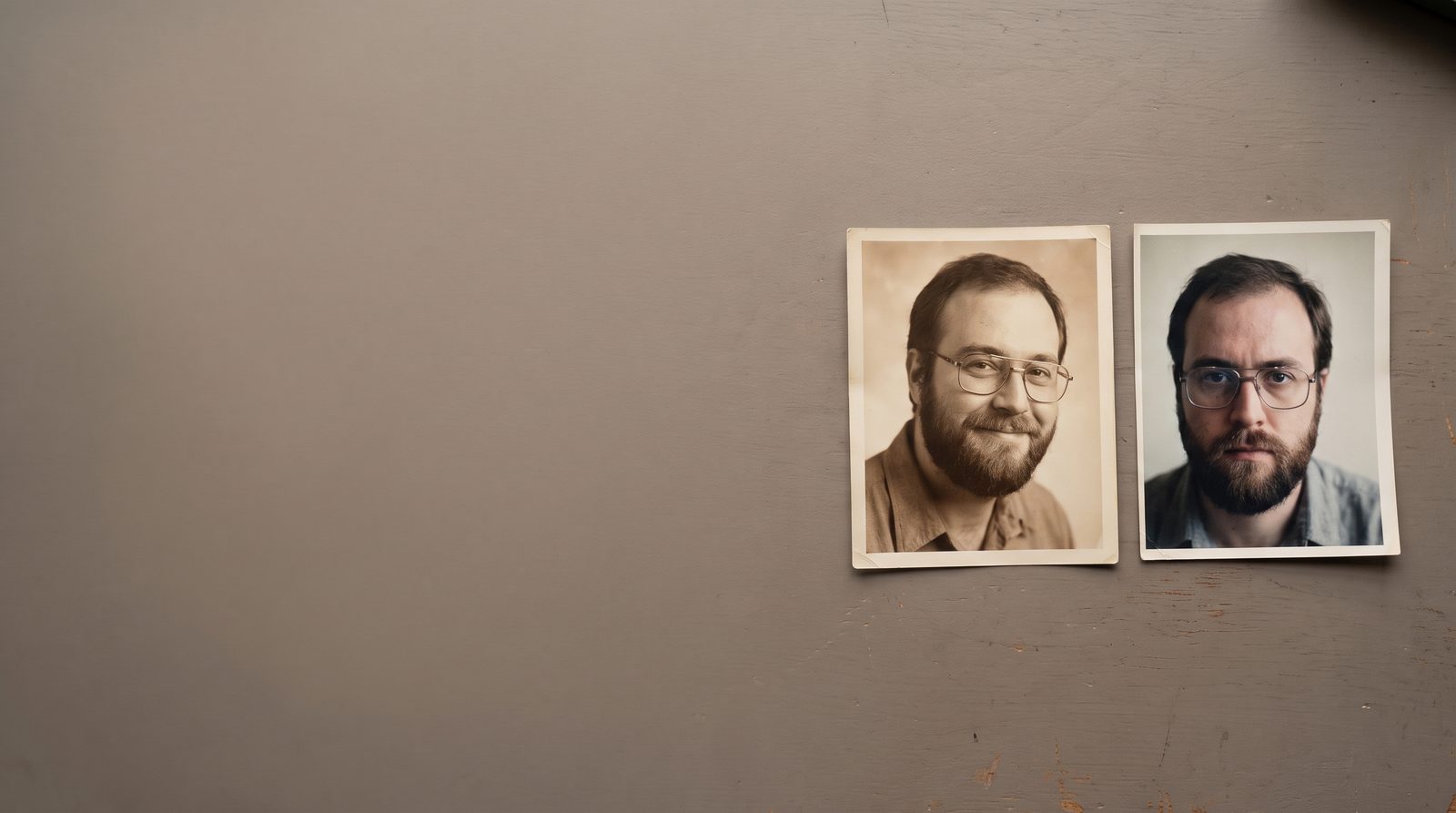
We checked what the platforms actually do
Every argument about this is conducted by photographers. Nobody had gone and looked at the thing that decides it — whether the casting platforms themselves recognise the categories at the moment you upload.
Actors Access does. Their own help documentation describes the upload flow in plain terms: “you will categorize this photo as either Commercial, Theatrical, or Other.” And the consequence is functional rather than cosmetic — “This will be the photo that is submitted first on that type of project.”
So on that one platform the distinction is not a matter of taste. It is a field, and it changes which image gets sent.
Where the distinction is genuinely real
This is the part worth conceding fully, because it is true and because conceding it isolates the part that is not.
Commercial and theatrical are real divisions in how the work is organised. Talent agencies are structured around them. Buchwald, a major agency in New York and Los Angeles, lists on its own site separate departments for Commercial, Commercial Print, and Film, Theatre and TV. Agencies exist that are branded entirely around commercial work.
Actors in America commonly have separate commercial and theatrical representation, which is discussed openly in the trade press as a normal arrangement rather than an oddity. Breakdowns are categorised. And on one platform, as above, so are your photographs.
The article the whole rule comes from
Trace the phrase “industry standard” back far enough and it stops at one piece by one Los Angeles headshot photographer, published in 2016.
Marc Cartwright wrote it for Backstage on 30 March 2016, and it carries an update date of 27 October 2022. He is a recurring contributor there and one of the most-quoted voices in that publication’s headshot coverage. That is not a smear. It is the sourcing situation.
And the interesting part is that the absolutist version everyone repeats is a corruption of his own text. His article hedges the rule twice, in his own words.
“Typically, theatrical headshots are thought of as confident expressions without a smile, but it really depends on the types of characters you’re going out for… Not all theatrical shots need to be stoic and serious.”
“The goal of your photographer should be to capture an authentic moment that feels alive, not just a plastered on smile and a head tilt.”
So the man credited with the smile-versus-no-smile rule says in the founding document that it depends, and that a smile on its own is not the point.
There is a connection worth making that Cartwright did not have the vocabulary for. An authentic moment that feels alive, rather than a plastered-on smile, is a description of the eye muscle firing rather than just the mouth. So the smile axis was never quite the right axis. The question is whether something happened behind the eyes, and that is equally true of a warm photograph and a serious one.
The people who supposedly own this category have said nothing
Every argument about commercial headshots is made by photographers. We went looking for a commercial casting director — the person actually receiving these images — and could not find one.
We searched trade publications, casting platforms’ own editorial, and interviews. Not one named American commercial casting director is on the record about headshots — about what they want, about whether a commercial look is a real thing, about whether they distinguish the two at all.
Do you need two?
The question hides four different questions inside it, and they have four different answers.
In Britain the vocabulary does not exist
This is the finding that surprises American readers and reassures British ones, and it is checkable in about ten minutes.
Spotlight published a video and article featuring eleven casting directors talking at length about headshots. We read the entire transcript. The phrases “commercial headshot” and “theatrical headshot” do not appear once. Not in the body copy, not in a single answer. A search of Spotlight’s own site turns up nothing either.
What British casting directors ask for instead is variety of a completely different kind — physical rather than tonal. Emma Ashton is specific about it. “If it’s a guy and he’s got a beard sometimes and not a beard, then it’s really good to have the range so we can see what he looks like without beard, because that is always asked when they come into a casting.”
Lucinda Syson wants the same thing and names the failure. “It’s good to have a range of photographs, but make them a range… It’s like I’ve got eight photographs on my Spotlight page that are all the same.”

How many, and a number attached to the wrong person
There is a widely quoted figure for how many headshots an actor needs. We went to check it and found it belongs to somebody other than the man it is usually credited to.
The figure is five or six. It comes from a 2017 Backstage piece by Tom Burke, an image consultant, who writes that five or six shots are the most any actor needs. It is routinely attributed to the photographer Anthony Mongiello, and it is not his.
What Mongiello actually says, in a different Backstage article from February 2023, is a considerably larger number. “If you can afford to, then you keep getting headshots every 6 months until you have 6-10 headshots that work really well for roles you usually play.”
Mongiello, an American photographer, 2023: six to ten, refreshed every six months.
Thom Hammond, a British casting director, 2022: “More than 10 is too many, less than two isn’t enough. I feel like the sweet spot is about four to six.”
One of those people sells headshots and one of them receives them. They are not describing the same job.
There is a cost side to this that settles it faster than either opinion. Actors Access gives you two free photographs and charges ten dollars for each one after that, and they cannot be swapped for free. Casting Networks gives you two on the free tier, non-swappable, with anything further locked until you upgrade. Both free tiers are sized almost exactly for two looks, which is either a coincidence or the clearest thing anyone has said about how many you need.

Which one goes where
The practical part, which most writing on this subject never reaches.
Grading the sources
The decisive evidence on this page came from reading four help centres, which took about an hour and which nobody appears to have done.
Where we differ from the standard account
Is the commercial and theatrical split real?
Commonly saidYes, it is an industry standard for headshots.
What we foundReal in agency departments, breakdown categories, and one platform's upload form. Much weaker as a description of a photograph.
Do all the casting platforms use it?
Commonly saidAssumed universally.
What we foundOne of four does. Another publishes an article saying it does while its own manual says otherwise.
Is it smiling versus not smiling?
Commonly saidThat is the whole rule.
What we foundThe photographer credited with the rule writes that not all theatrical shots need to be stoic and serious.
Do you need two sessions?
Commonly saidFrequently sold that way.
What we foundNot one source in the entire debate says so, including the rule's author and its loudest critic.
What do commercial casting directors want?
Commonly saidQuoted confidently on every headshot page.
What we foundNone of them has said. The claim is always relayed by somebody selling photographs.
Does Britain use the same system?
Commonly saidAssumed to be universal.
What we foundEleven British casting directors, thousands of words, and the phrases never occur once.
How many headshots do you need?
Commonly saidFive or six, attributed to a well-known photographer.
What we foundThat figure is somebody else's. He says six to ten. A casting director says four to six.
Before you book a second session, do the free version first. Log into whichever platform you actually submit through and look at the photo upload form. If there is a field asking you to categorise the image, the distinction is real for you and you want one of each. If there is no such field, nobody at the other end is sorting your photographs that way, and you have just saved yourself several hundred pounds.