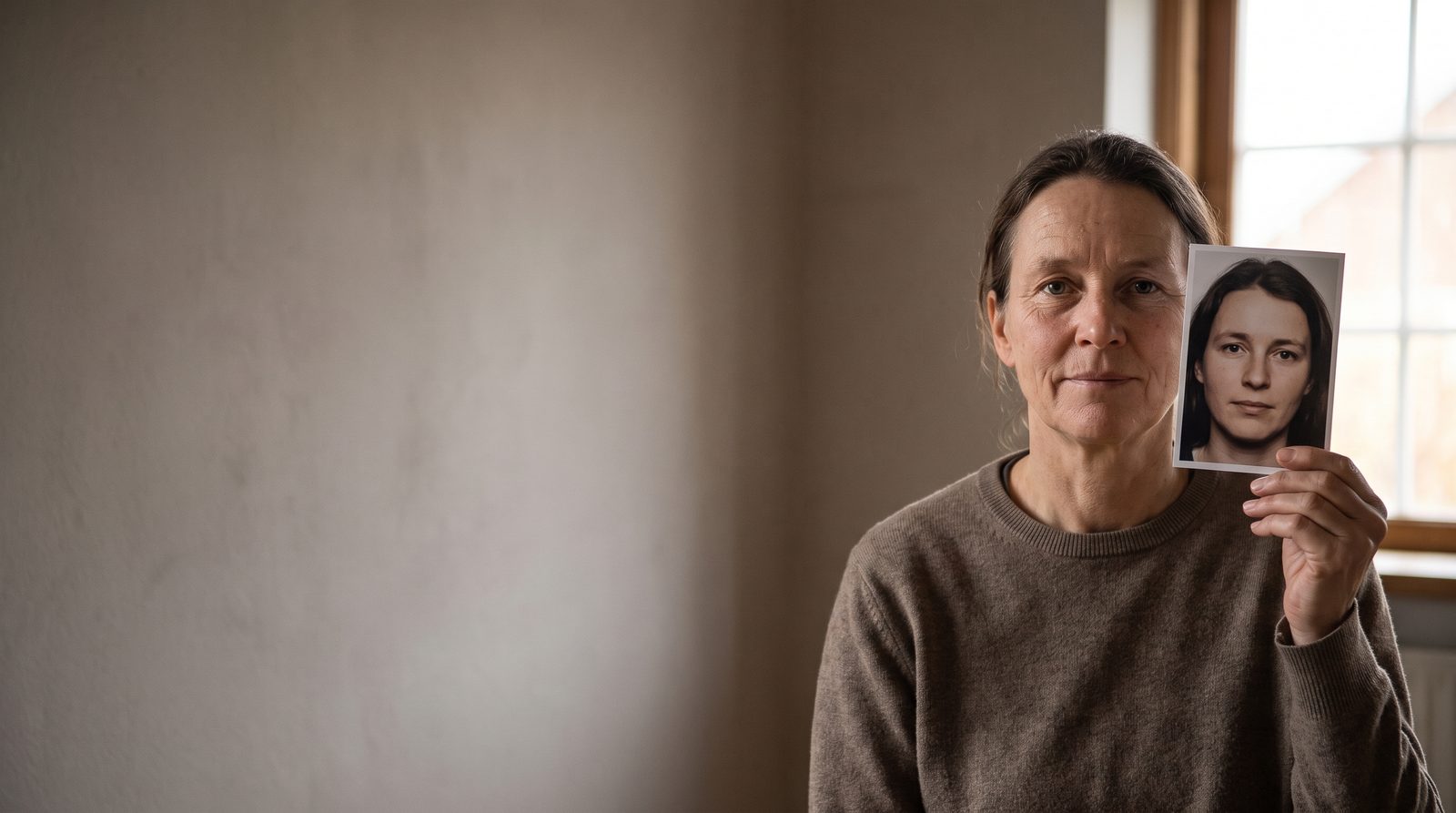
Everybody is bad at this, including the professionals
There is fifty years of psychology on matching an unfamiliar face to a photograph, and as far as we can tell no headshot page has ever cited it. The findings are consistent and they are worse than you would guess.
The baseline first. Matching two photographs of a person you do not know produces between ten and twenty-five per cent errors — with high-quality images, full-face pose, and no time limit at all. That range comes from the paper introducing the standard test used in this field.
Then it gets worse when you look at people doing it for a living.
Passport officers, tested against photographs of live card-bearers, showed a fourteen per cent false acceptance rate for fraudulent photographs. They were no more accurate than students. Length of experience and training made no difference, and a later study of over eight hundred notaries found the same.
Supermarket cashiers in a real shop, checking real credit cards with photographs on them, failed to reject a fraudulent card sixty-four per cent of the time when the bearer merely resembled the photograph.
And the number that should stop you. They still made errors on thirty-four per cent of trials where the photograph did not resemble the bearer at all. They knew they were in an experiment.
Matching a live person to a photograph is no easier than matching two photographs, which is the opposite of what everyone assumes. And the contrast that explains it: with familiar faces, performance is excellent. People identify people they know through bad lighting, odd angles and degraded footage. The failure is specific to faces you do not already know.
What that means for you, and we are labelling it as an argument rather than a finding. Nobody has ever studied face matching in casting. Every study here is about passports, credit cards, border control and laboratory tasks. So we cannot tell you that casting directors make fourteen per cent errors, and anyone who does is inventing it. What we can say is that a casting director looking from your photograph to your face is doing structurally the same task — live person, unfamiliar face, photograph — and that the underlying limitation is well established and does not care what industry you are in. The conclusion follows from the mechanism, not from a study about actors.
And the conclusion is genuinely counter-intuitive. The person checking is not going to catch a subtle discrepancy, because they are unreliable at the whole task. So “it must look like you” is not a request for technical accuracy. It is a request that the match be trivially easy — because a photograph that needs a second look has already failed, and the second look is unreliable too.
And sometimes it genuinely is not your fault
The same research answers a question actors ask privately and rarely out loud: why do people say it does not look like me when it obviously does?
In 1999 researchers ran what sounds like an unfair test. Photographs taken on the same day, in a very similar full-face pose, in good lighting — so no differences of hairstyle, weight or season. Viewers had no time limit and were told accuracy mattered.
They were right seventy per cent of the time. The only meaningful variable between the images was that they had been taken on different cameras.
Why we are putting this on a page that is otherwise telling you to be honest. Because both things are true and only one usually gets said. Some actors do submit photographs that flatter them past the point of resemblance, and casting notices. That is real and the rest of this page is about it. But it is also true that photographs of one real person vary enormously, and that a different camera alone is enough to break a match. So “that doesn’t look like you” is not always an accusation of vanity. Sometimes it is a fact about photography. Saying so does not weaken the rule. It just stops the page treating every reader as a suspect.
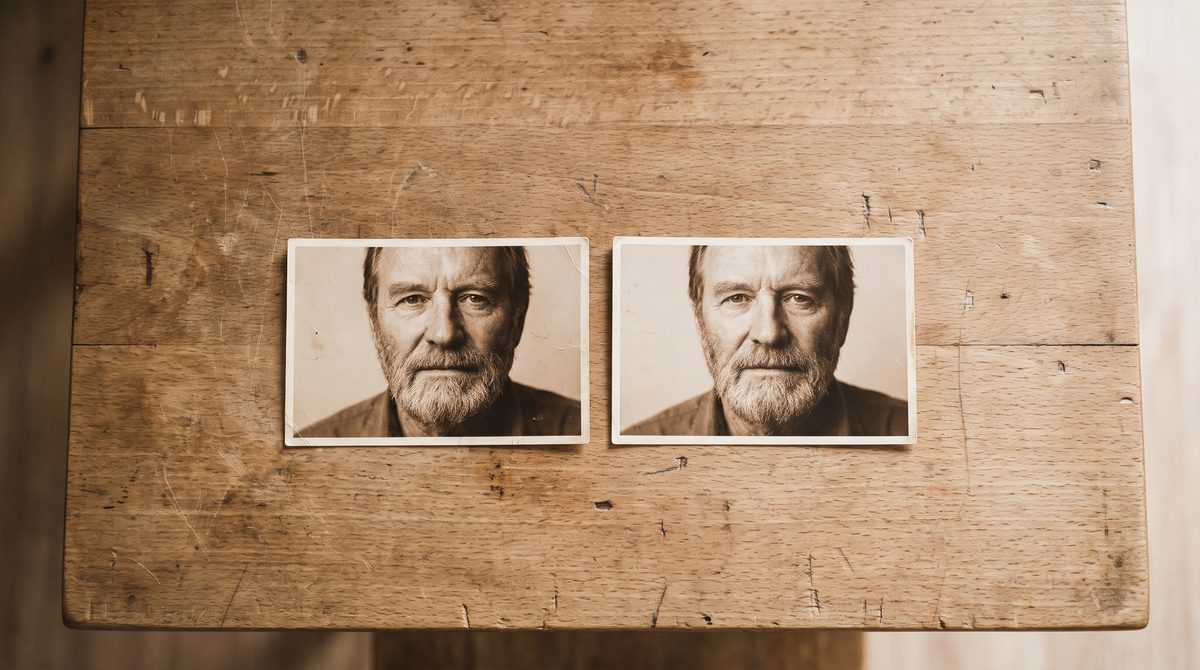
The people you would ask are the people who cannot tell you
This is the most useful thing on the page and it follows directly from the research above.
The failure is specific to unfamiliar faces. Familiar viewers are excellent — they would recognise you from a bad photograph, at a bad angle, in a hat, at low resolution.
So consider who you actually show your headshot to. Your friends. Your family. Your agent. The photographer who spent two hours looking at your face. Every one of them is a familiar viewer, and every one of them is therefore incapable of performing the task that matters.
Show it to somebody who has never met youThey are doing the unfamiliar-matching task, which is the real one. Ask whether the photograph and a recent phone snap show the same person, and watch how long they take.
Do this
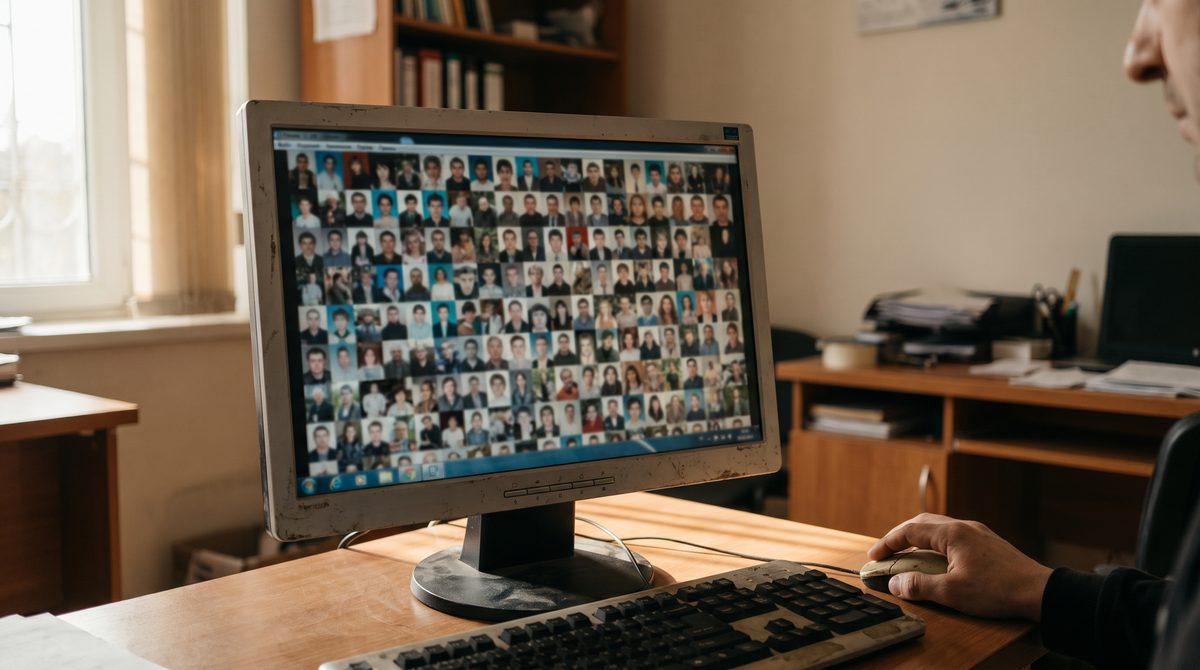
Shrink it firstJudge it at the size it will actually be seen, in a grid with dozens of others. Almost every failure is invisible at full size.
Do this
Watch for hesitation, not for the verdictIf they pause even slightly, you have your answer. Casting will be doing the same task faster, smaller, with ninety-five other faces on the screen.
Do this
Ask your friends whether it looks like youThey will say yes and they will be sincere. They are the wrong instrument, and none of this makes them dishonest.
Useless
Ask the photographerFamiliar viewer by the end of the session, and holding an interest in the answer. Two separate reasons to ask somebody else.
Useless
One thing that is not the same for everybody
The difficulty of matching an unfamiliar face is not evenly distributed, and a page about being recognised should say so carefully rather than not at all.
The best-known version of this is about memory — people are worse at remembering faces of a race other than their own, and that is a large, consistent and heavily studied finding. The version that matters here is different, because it involves no memory at all. Both images are in front of you at once.
That version has been demonstrated too. Studies with British and Egyptian participants found people performed worse matching other-race faces than own-race faces even with both images visible simultaneously. It has been replicated.
And the limits of what we can honestly tell you. The matching version of this effect is a much smaller and more recent literature than the memory version, and it has not been gathered into a meta-analysis, so we are not going to give you a number. It is fair to say the effect is moderate and has been replicated. It is not fair to imply it is as well mapped as the memory research, and we are not going to claim that training fixes it, because no study has tested whether training reduces it in a matching task specifically. What follows practically is small and worth having: if your photograph is going to be matched by somebody whose background differs from yours, the case for making that match easy rather than clever is stronger still. That is the whole of what the evidence supports.
What actually happens, and the honest state of the evidence
There is exactly one published, concrete account of the consequence of not looking like your headshot. It is from 2006, and we went looking hard for a newer one.
The casting director Bonnie Gillespie keeps a private database of every actor she has seen. She calls it her Casting Wiki, and it is visible to her and two members of staff. In a piece first published in October 2006 and updated last year, she lists the sort of note that goes into it.
Her own words, and the company the note keeps.
“Looks nothing like this headshot.”
“Showed up an hour late to the audition and was rude to my staff.”
“Superstar! Awesome! Can’t wait to cast this actor!”
That is the whole mechanism. Not a rejection. A note, filed under your name, consulted the next time.
And we searched for a current one. We went looking for any casting director, agent or platform on the record since 2020 describing what happens when an actor does not resemble their photograph. We could not find one. What is out there is advice-blog paraphrase with no named source behind it, and one photographer’s interview from 2016 which openly says the answers are paraphrased rather than quoted. So the strongest concrete evidence on this subject is twenty years old, and we would rather tell you that than dress up something newer and weaker. If you are a casting director reading this, one email would fix it permanently.
The more important point is structural, and it is the thing nobody says. There are two ways a headshot fails and only one of them leaves a trace. One is the mismatch: you arrive, you are not the person in the picture, a note gets written. The other is that the photograph never gets clicked at all, in a grid of dozens, in a fraction of a second — and no note gets written because no encounter happened. That second one is far more common and it is completely silent.
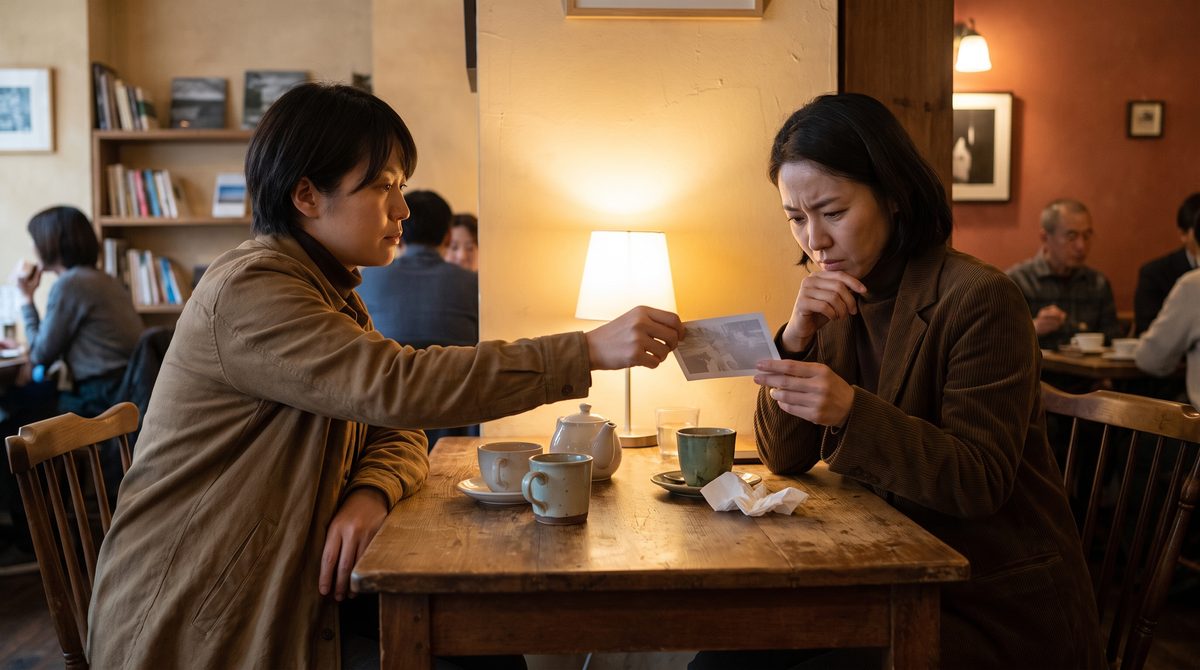
The one thing they all say
Casting directors disagree about backgrounds, colour, clothing, smiling and crop. On one point they converge, and they use almost the same words.
Debbie McWilliams
Forty years casting the Bond films. “It should look like you. That’s the most important thing. Don’t make it too flattering.” Sit with that second sentence, because it is the exact opposite of what you are being sold.
Tree Petts
“They need to have a strong, good headshot, and most importantly of all, they need to look like their headshot.” And on the failure: “you come in and I’m like, oh, well, you don’t really look like your picture.”
Frank Moiselle
“There’s no point having a headshot that is years old or [where you look] too young or touched up in such a way that really it doesn’t represent you.”
Victor Jenkins
“The actor would come in the room and you look at the photo and it’s not the same person, or it’s ten years old, or it’s just too much like a fashion photo, which doesn’t give us anything.”
One honest qualificationAll four of those are from a single Spotlight video, recorded in one session. They are four real casting directors with checkable credits saying the same thing independently of each other — and it is one article, not four separate sources. We would rather point that out than let it read as a wider survey than it is.
A correction to our own page. We have been attributing a line about actors turning up looking nothing like their headshot to the casting director Benton Whitley. It is not his. In the Backstage piece where it appears, that sentence belongs to the agent Richard Fisher, who says there is nothing worse than calling somebody in and having them show up looking nothing like their headshot advertised. Whitley’s own quote in the same article is about something adjacent but different — that he wants photographs of people rather than actors or models. Both are useful. Only one of them was correctly labelled, and it was not ours.
The five ways it goes wrong
Every one of these is a failure of the same rule, and two of them now have research behind them rather than assertion.
The failureWhat it looks likeWhy it actually matters
Retouched past resemblance
Skin like plastic, lines gone, ten years off.
You have added variance to a task the viewer is already unreliable at. An agent quoted in Backstage put it simply: you do not want it to look plastic.
A busy background
A wall with texture, a street, a doorway, foliage.
When resolution drops, viewers fall back on outline and separation. At thumbnail size a busy background destroys exactly the information they are relying on.
The top of the head cropped off
Fashionably tight. Modern. Cinematic.
Head shape is part of how you are recognised when detail is gone. Cropping it removes the thing that survives.
Dead eyes
Technically fine, correctly lit, nobody home.
Viewers look at the eye region first and hardest. A dark flat eye at full size is an absence at thumbnail size.
Dressed as a character
A costume, a strong prop, a concept.
It answers a question nobody asked and obscures the one they did. Too much like a fashion photo, which doesn’t give us anything.
The instruction underneath all five is the same. Everything in the frame that is not your face is either helping somebody recognise you or competing with the thing that would. There is no neutral third category.
Grading the sources
Three of the corrections on this page are to our own published pages, and one of them reverses something we told you twice.
The claim, and where it came fromWhat we found
Cashiers erred on 34 per cent of non-resembling photographsKemp, Towell and Pike, 1997
Primary
Read at source. The figures are 63.64 and 34.09 per cent. Only six cashiers took part, across many trials, which is worth knowing.
Passport officers show 14 per cent false acceptance and no benefit from trainingWhite and colleagues, PLOS One, 2014
Primary
All three findings verified in the paper, and independently replicated in 2018 with over eight hundred notaries.
A different camera alone breaks a face matchBruce and colleagues, 1999
Primary
Seventy per cent accuracy under near-ideal conditions. It was a one-in-ten array task rather than a simple pair, and the pose was very similar rather than identical.
The other-race effect exists in matching, not only in memoryMegreya, White and Burton; replicated 2018
Primary
Real and replicated. A much smaller literature than the memory version and not meta-analysed, which is why there is no number on this page.
Four casting directors saying it must look like youSpotlight, October 2022, updated July 2026
Good
All four verified verbatim with checkable credits. One article and one recording session, which we have said in the text rather than implying four sources.
The note that goes in the fileBonnie Gillespie, October 2006
Good
Verbatim from her own archive, originally published by a casting platform. Twenty years old, and still the only concrete published account we could find.
You don’t want it to look plasticAn agent, Backstage, 2006
Check
We reported twice that this source could not be found. That was wrong and we are correcting it. The quote is real, in a dated Backstage article, from a named agent at a real agency. What is true is that the person has left no other trace in twenty years, so we are dating it rather than presenting it as current.
Wanting full heads and open eyesAn agent, on a photographer’s marketing page
Check
The agency is real and franchised, the agent is real. The only source is an undated blog that keeps being republished, and we could find nothing better.
Actors turn up looking nothing like their headshotAttributed by us to Benton Whitley
No
Wrong person. That line belongs to an agent quoted in the same article. Whitley says something different and also useful.
People match unfamiliar humans no better than monkeysA study our research summarised
No
Only half true. It holds when confirming two images show the same individual, and not when telling two individuals apart, where humans did significantly better. Stated flatly it overreaches.
Matching improves from 38 to 85 per cent with three imagesOur research, flagged as needing tracing
No
The paper is real and the direction is right. The two figures could not be confirmed in the paywalled original and appear to have come from an automated summary. Not published here.
And a note on a phrase we used elsewhere on this site. We have quoted Spotlight as asking for “a true reflection of your current look”. Their real wording, confirmed on their own pages, is that your photo “must look like you and truly represent who you are”, and that it is vital it is “a true representation of what you look like”. Same meaning, and we should be quoting the sentence they actually wrote.
Where we differ from the standard account
Will casting spot it if your headshot flatters you?
Commonly saidYes, and you will be caught out.
What we foundThey are unreliable at the whole task. Which raises the stakes rather than lowering them.
Should a headshot flatter you?
Commonly saidObviously. That is what you are paying for.
What we foundA casting director of forty years says do not make it too flattering. She is not being poetic.
Is "it doesn't look like you" an accusation?
Commonly saidIt certainly reads as one.
What we foundSometimes it is just photography. A different camera alone broke matches under otherwise ideal conditions.
Who should judge your headshot?
Commonly saidPeople who know you well.
What we foundPrecisely the people who cannot. Familiar viewers are excellent at recognition, which disqualifies them.
Will a bad headshot get you rejected?
Commonly saidThere must be somebody saying no.
What we foundNobody rejects you. Either a note goes in a file, or more likely nothing happens at all.
Recent or accurate?
Commonly saidReshoot every year or two.
What we foundNo platform publishes any age rule at all. A three-year-old photograph that matches you beats a new one that does not.
Is the difficulty the same for everyone?
Commonly saidNever mentioned.
What we foundNo. The other-race effect has been shown in matching tasks, not only in memory, though the literature is smaller.
Do this tonight and it takes five minutes. Put your headshot beside a phone photograph somebody took of you last week, shrink both to the size of a postage stamp, and show them to one person who has never met you. Ask only whether it is the same person. If they hesitate, you have your answer — and you have just run the exact task that decides everything.