Comedic Monologues: How to Find, Learn & Nail Them
Comedic Monologues: Everything Actors Need to Nail the Laugh
By Admin
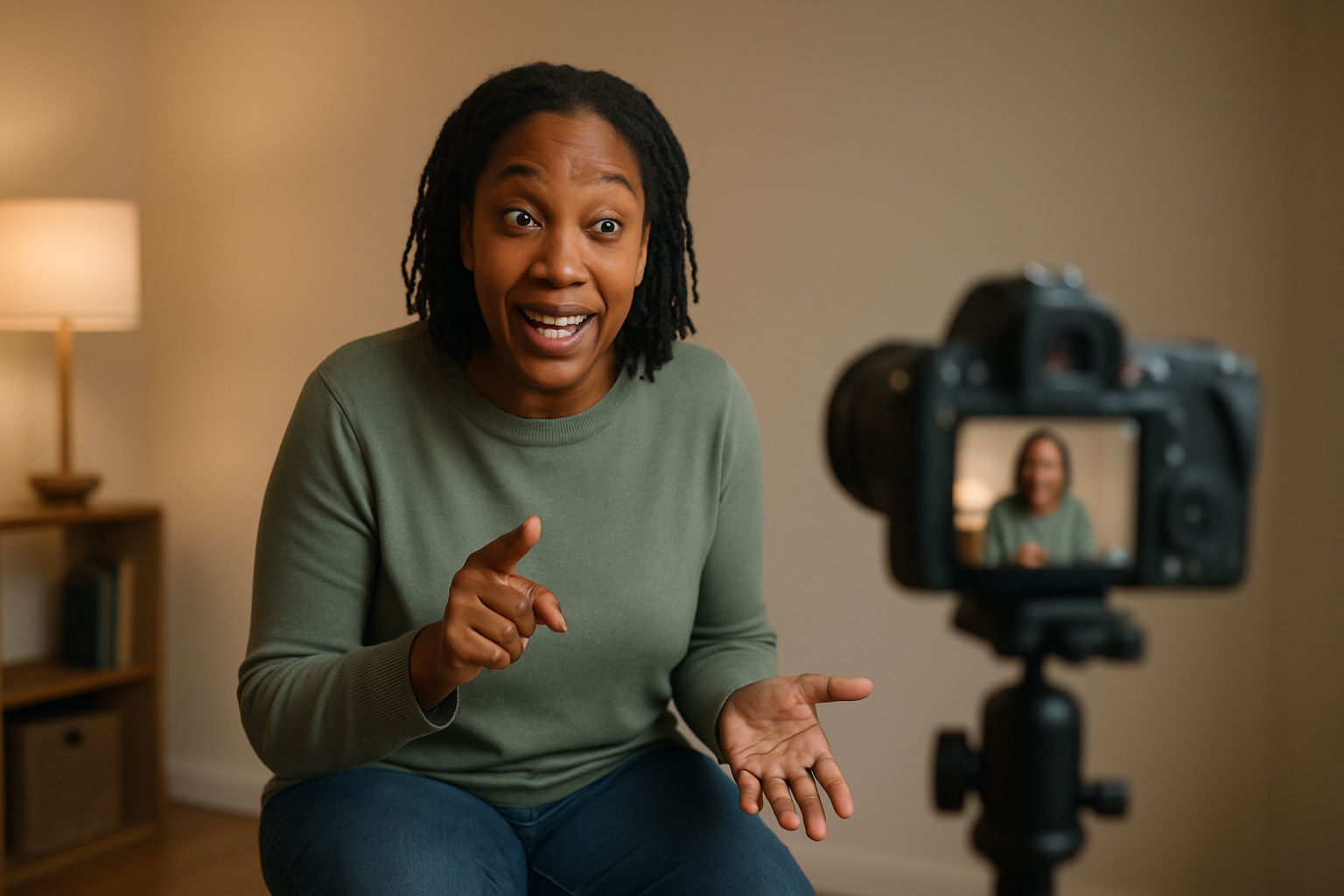
Pick up any acting class syllabus and you'll find comedic monologues treated like a warm-up exercise — something you nail in week two before moving on to the "real" work of dramatic material. That framing is backwards, and it costs actors auditions. Comedy is harder to perform than drama, harder to cast well, and — here's the part nobody says out loud — it is disproportionately under-prepared in most actors' books. The casting directors who read comedic monologues every day can spot a generic choice from across the room before you've finished your first sentence.
This is a full walkthrough of comedic monologues: how to find one that actually fits you, how to build the craft underneath the laugh, and how to perform it in an audition room — or a self-tape — so it lands clean every single time.
The 40-Second Answer: What Makes a Comedic Monologue Work?
A comedic monologue works when the character wants something desperately and is completely oblivious to how absurd their pursuit looks to everyone else. The joke is never that the character is trying to be funny. The joke is that they are dead serious. Every technique below — rhythm, specificity, the button — exists to serve that one principle.
Why Comedic Monologues Require More Specificity, Not Less
The biggest misconception actors carry into comedic material is that energy replaces specificity. You've seen this in rooms: someone cranks the volume, speeds up, uses a funny voice, and then glances at the reader expecting a reaction. Silence. The energy reads as noise because nothing underneath it is specific.
Comedy is a series of micro-promises and payoffs. Every setup is a promise. The audience's brain tracks that promise in real time. If your internal logic is fuzzy — if you don't know exactly what your character wants, exactly who they're talking to, and exactly what just happened before the monologue starts — the setup never lands and the payoff evaporates.
Before you rehearse a single line, answer these three questions in writing:
- What does my character want right now, and what do they believe will happen if they get it?
- Who is the other person in this scene, and what does my character think of them?
- What is my character's fatal blind spot — the thing they cannot see about themselves?
That blind spot is almost always where the laugh lives.
Finding a Comedic Monologue That Actually Fits You
The monologue has to fit your present type, not your aspirational type. This sounds obvious but watch how many actors in their mid-twenties pull a monologue written for a 45-year-old with three divorces. The material fights them the entire time, and they fight back, and nothing is funny.
Sources worth digging through: Samuel French (now Concord Theatricals) and Dramatists Play Service both carry enormous catalogs of contemporary plays — spend an afternoon reading actual scripts, not just audition monologue anthologies. Anthologies are overworked. If a casting director has heard a piece forty times this month, you're starting in a hole.
Look for monologues where:
- The character's voice sounds like a heightened version of how you actually talk
- The subject matter is something you find genuinely funny (if you have to explain to yourself why it's supposed to be funny, keep looking)
- The length lands between 60 and 90 seconds — long enough to develop a comic arc, short enough not to overstay the welcome
- There's a clear button — a final line or image that closes the scene with a definitive punctuation mark
Television pilot scripts are a dramatically underused source. One-hour and half-hour pilots are uploaded to various script sites legally and regularly. A guest-star scene from a sharp pilot can become a monologue with minimal editing, and the material is fresher than anything in print.
The Architecture of a Comedic Monologue: Build the Arc, Find the Button
Every strong comedic monologue has a shape. It's not just a collection of funny lines — it's a journey. Think of it in three beats.
The establish: In the first ten to fifteen seconds, we understand who this person is and what they're trying to do. Don't rush past this. Casting wants to orient themselves before they can laugh.
The escalate: The middle section is where the character doubles down. They pursue their goal with increasing urgency or logic that only makes sense inside their own head. This is where most actors plateau — they find one level and stay there. Let the stakes climb inside the character's world, even if those stakes are objectively ridiculous.
The button: This is the single most important technical element in a comedic monologue. The button is the last line or the last physical moment — it's the period at the end of the joke. It should feel inevitable in retrospect and surprising in the moment. Hold it. Don't apologize for it. Don't let your face break into "was that okay?" the second it's done. Land. Hold. Let them laugh if they're going to laugh. Then let the scene end.
The button isn't about being clever. It's about being certain. An actor who believes their last line is the right last line will always land harder than one who hopes the room agrees.
The Self-Tape Comedic Monologue: What Changes on Camera
Comedy on camera and comedy on stage operate on different frequencies. Stage comedy uses the body, the room, the shared breath of a live audience. Camera comedy is intimate. It rewards stillness around the funny thing, not more movement.
A few things shift when you're self-taping a comedic monologue — whether for a digital submission, a virtual callback, or a class:
Scale down your physical choices by about thirty percent from what feels right in a room. What reads as a perfectly calibrated physical choice onstage reads as mugging on a mid-shot. The camera is very close to your face. Let the thought be funny before you try to make the body funny.
Framing matters more than most actors realize. A comedic monologue benefits from a slightly wider shot than a dramatic piece — a loose medium or medium-wide — because physical behavior is part of the joke and you need room to let it breathe. If you're framed too tight, you've eliminated half your toolkit. Check out our guide to self-tape framing and composition before you hit record.
Lighting also affects tone. Harsh shadows or underlit setups subconsciously read as dramatic. For comedy, you want even, clean, warm-neutral light — it puts the viewer in a relaxed state that's receptive to laughing. A basic two-light setup with a key and a fill will serve you well.
Common mistakes in self-taped comedic monologues:
- Looking directly into the lens for the entire piece — this turns a monologue into a stare-down. Let your eyeline sit just off the lens, as if the other person is right next to the camera
- Rushing because you're nervous — nerves speed everything up and kill comic timing; record a warm-up take you never plan to use, just to burn off the adrenaline
- Stopping and restarting at every imperfection — submit the take where you stayed alive, not the technically clean take where you played it safe
Rehearsing Comedic Monologues: The Method That Actually Works
Learn the lines until they're completely automatic — not just mostly automatic, completely. Comedy timing lives in the space between the words. If part of your brain is retrieving text, the other part cannot listen, react, and find the rhythm. You need the words to be zero percent of your mental load.
Once you're off-book, rehearse the monologue in wildly different ways on purpose: whisper it, yell it in an empty parking lot, do it as slowly as possible, do it to a houseplant, record it on your phone and watch it without audio. Each of those exposures reveals a different layer of what you actually believe versus what you've just memorized as blocking.
Then find a real scene partner. Working through comedic material with a reader who gives you genuine reactions — even small ones — will calibrate your timing faster than solo rehearsal ever will. If finding a reliable reader is the problem, that's exactly what actors use line-memorization apps and reader services for.
The one thing not to rehearse: your laugh. Never rehearse where you expect the laugh to land. The moment you start performing for an imagined laugh, you stop living in the scene. The laugh is the audience's job. Your job is to want the thing.
Common Mistakes That Kill Comedy in the Room
A few patterns show up again and again in comedic monologue auditions:
Playing the joke instead of the objective. The character doesn't know they're in a comedy. They are in a tragedy of their own making. The second you wink at the audience, you've broken the spell.
Choosing material that requires context. If the monologue only works if the listener knows the entire play, it's the wrong monologue for an audition setting. The piece has to be self-contained.
Rushing the button. Nervous actors clip the last line. They say it on the way to silence rather than letting silence arrive after the line. That single habit kills more auditions than almost anything else.
Not adjusting for the room's energy. If a room is quiet, that does not mean you're bombing. Some casting directors sit completely still when they're engaged. Read the energy before you panic and overcorrect.
Frequently Asked Questions
How long should a comedic monologue be for an audition?
Between 60 and 90 seconds is the sweet spot for most general auditions and agent meetings. Some specific programs ask for under a minute. Always check the submission guidelines first. If no guidance is given, 75 seconds — well-paced — will almost never feel too long or too short.
Can I use a monologue from a TV show or movie instead of a play?
Yes, and increasingly casting for film and television actually prefers it. A scene from a sharp sitcom pilot or a half-hour comedy can feel more current than classical stage material. Just make sure it plays as a stand-alone piece and doesn't require the audience to know the show to follow it.
What's the difference between a comedic monologue and a comedic scene?
A monologue is written for one voice — the other person is implied or silent. A scene has two or more speaking roles. For most audition contexts, you want a true monologue, but a short scene edited into a monologue by cutting the other character's lines can work beautifully if done with care.
Should I use an accent or a character voice in a comedic monologue?
Only if you do it flawlessly and it genuinely serves the material. An inconsistent accent splits a casting director's attention — they start listening for errors instead of watching your performance. If there's any doubt, use your own voice and put everything into the character's psychology instead.
How many comedic monologues should I have ready at any given time?
Two is the minimum: one that's conversational and contemporary, one that's slightly more heightened or stylized. Three gives you real flexibility. Anything beyond three tends to mean none of them are deeply worked — depth beats variety every time.
The Booking Is on the Other Side of This
Here's what's true about comedic material: when it works, it is unforgettable. A genuinely funny, specific, fully committed comedic monologue sticks in a casting director's memory in a way that a competent dramatic piece rarely does. That is not a small thing. This industry runs partly on memory — who people remember when a role comes in, whose face surfaces when a character description goes around the office.
You don't need permission to go find extraordinary material, do the work to understand it, and walk into a room ready to be the funniest, most specific version of yourself. That's the whole game.
When you're ready to put this on camera, the technical side of your self-tape — the frame, the light, the setup — should be invisible so the performance can do the work. HowToSelfTape has everything you need to get the technical foundation right so the casting director is watching you, not your background.