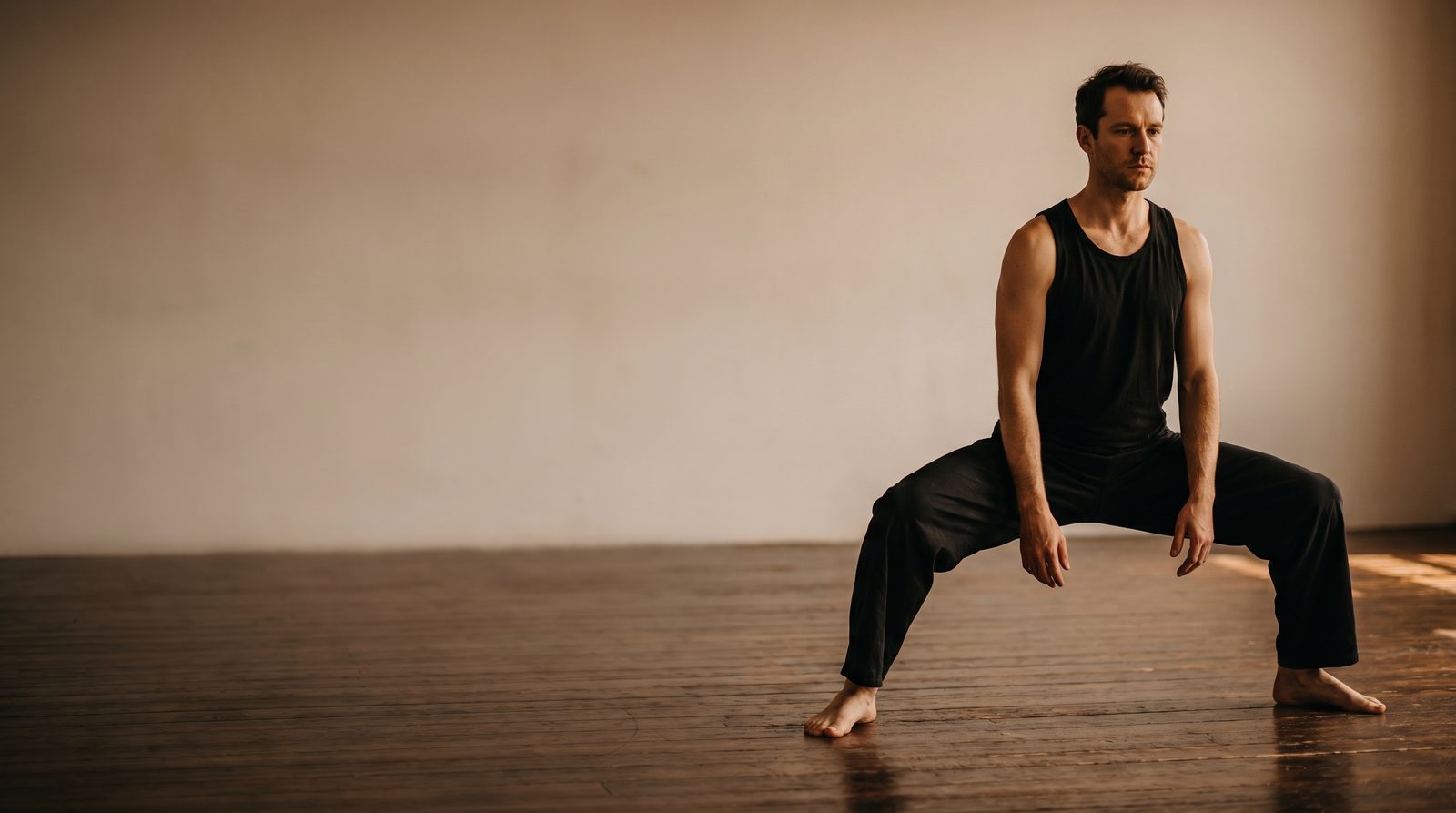
What the training actually is
Unusually for this course, we can start from the founder's own book. The Way of Acting was translated by J. Thomas Rimer and published in 1986, and it is direct about what the work is for.
The opening chapter is called The Grammar of the Feet. That is his title, not a commentator's summary, and it tells you where the whole system is pointed.
The term everyone defines wrongly
Suzuki's most quoted phrase is “animal energy”, and the definition in circulation is not his. This is a clean, checkable correction and it changes what the phrase means.
The version you will find almost everywhere calls it a psychophysical force. It is said to live in the encounter between a performer and themselves, and between a performer and an audience. That is a reasonable idea. It is not what he wrote.
Once you see the real meaning, the whole system reads differently. His complaint is that modern theatre runs on electricity, and that the body has been demoted to one element among the lighting and the sound.
The training is an argument that the actor's own physical energy should be doing the work instead. That is a bigger and stranger claim than the pleasant one about performer and audience.
The shape of a session
The vocabulary varies between companies, which is itself a finding. What follows is the structure most accounts agree on, with the caveat that exercise names differ from studio to studio.
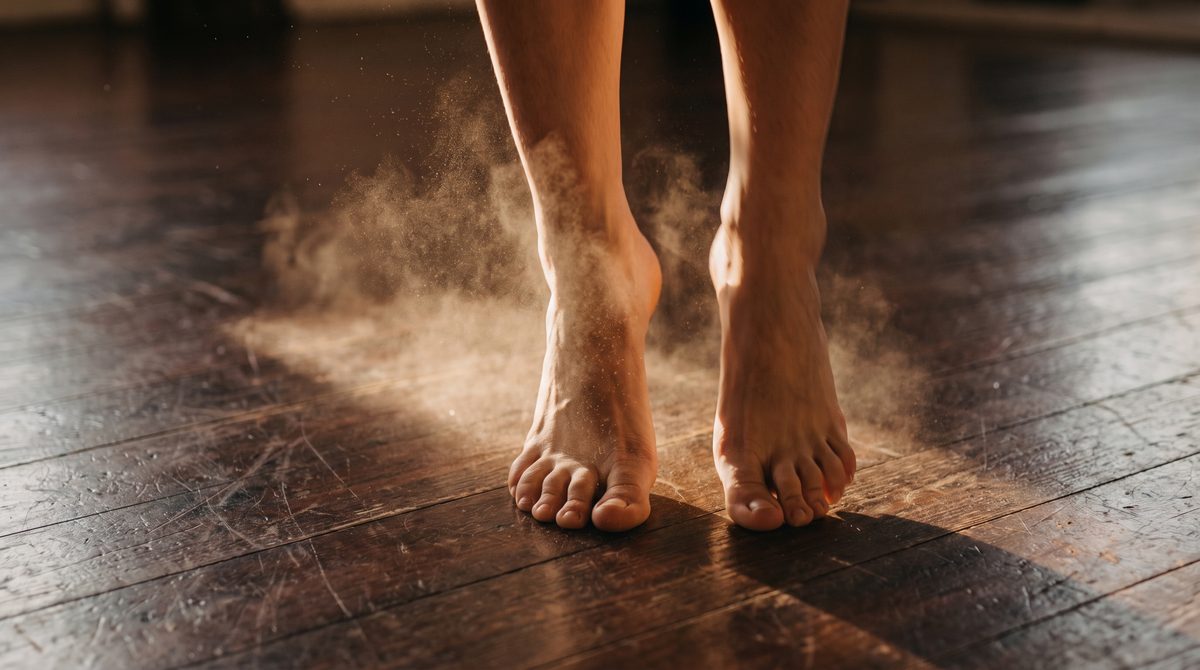
Rhythmic, hard, sustained, driven down through the whole foot, to music. It goes on well past the point of comfort. The purpose is not fitness; it is to drive the energy downwards and stop it escaping into the shoulders.
At the end of the stamping the body gives out and goes to the floor, completely still. In his own description the actors lie there as though dead, and then rise very slowly. This part is often left out of summaries, and it is half of the exercise.
A set of prescribed ways of crossing a space, each with a different relationship to the floor and a different centre. Individual studios number and name them differently, and one documented drill is simply called Basic Number Two.
Positions taken and then held, often from a very low base, sometimes reached explosively from a squat. What is being trained is the ability to arrive somewhere and stop dead without wobble or apology.
Speaking while the body is doing all of the above. The voice has to come from the centre rather than from a squeezed throat, which is the point of the whole preceding hour.
Where you can and cannot train
This is the most practically important correction on the page, because guides written before 2023 send readers to a company that no longer exists.
They are usually taught together, because SITI taught them together, and readers often come away thinking Viewpoints is part of Suzuki's method. It is not. Viewpoints was created by the choreographer Mary Overlie, out of postmodern dance. She was teaching her six of them at a New York drama school from 1978.
Anne Bogart met the work through collaborating with Overlie in the mid-1980s. She later expanded it with Tina Landau into the nine physical Viewpoints most actors are taught. To its credit, SITI's own website says plainly that it did not invent the technique and that Overlie did. There is nonetheless a live scholarly conversation about whether her name has kept up with the popularity of the version that came after.
Two things this method is not
Both of these will cost you time if you get them wrong, and one of them will cost you money.
The tradition point matters more than it sounds. Calling it traditional Japanese theatre flatters it and diminishes it at once. It makes the training look like heritage rather than argument.
It is an argument. He built it in the nineteen-seventies against what he thought modern theatre had done to the actor's body. It is meant to be contentious.
Grading what gets written about it
Twenty-seven briefs into this course, this one produced a new low, and the sentence in question was the centre of the whole chapter.
Is it dangerous?
This is the most physically demanding technique on this site, so the question deserves a straight answer with both halves of it stated.
There is no documented injury data at all. No incident reports, no case series, no epidemiology. We looked, and the absence is real rather than a failure of searching.
But a scholar writing in a peer-reviewed theatre journal in 2024 described the concerns about injury and accessibility as very real. Notably, he located the risk in the quality of the teaching rather than in the exercises.
The training is exhausting on purpose. Stamping past the point of comfort until the body gives out is the exercise. It is not a sign that something has gone wrong. Every teacher in the tradition knows that. Whether it injures people is unstudied, and anyone who tells you otherwise in either direction is going beyond the evidence.
What is within your control is who is running the room. The whole safety mechanism here is the facilitator. Someone who can adapt the work to different bodies. Someone who watches for the difference between effort and strain, and who does not treat the intensity as the point. There is no other one.
Does it work?
Nobody has looked, and here the absence is unusually well documented because somebody has now said so in print.
The systematic review of acting training published this year screened over nineteen thousand records and included thirty-two studies. It names Stanislavski, Meisner, psychodrama, mime, Greek tragedy and clown work.
Suzuki does not appear anywhere in it, including in the tables and the references. And a 2024 conference paper on the training states outright that the interaction between the physical work and cognitive perception has never been experimentally evaluated.
What to take from it
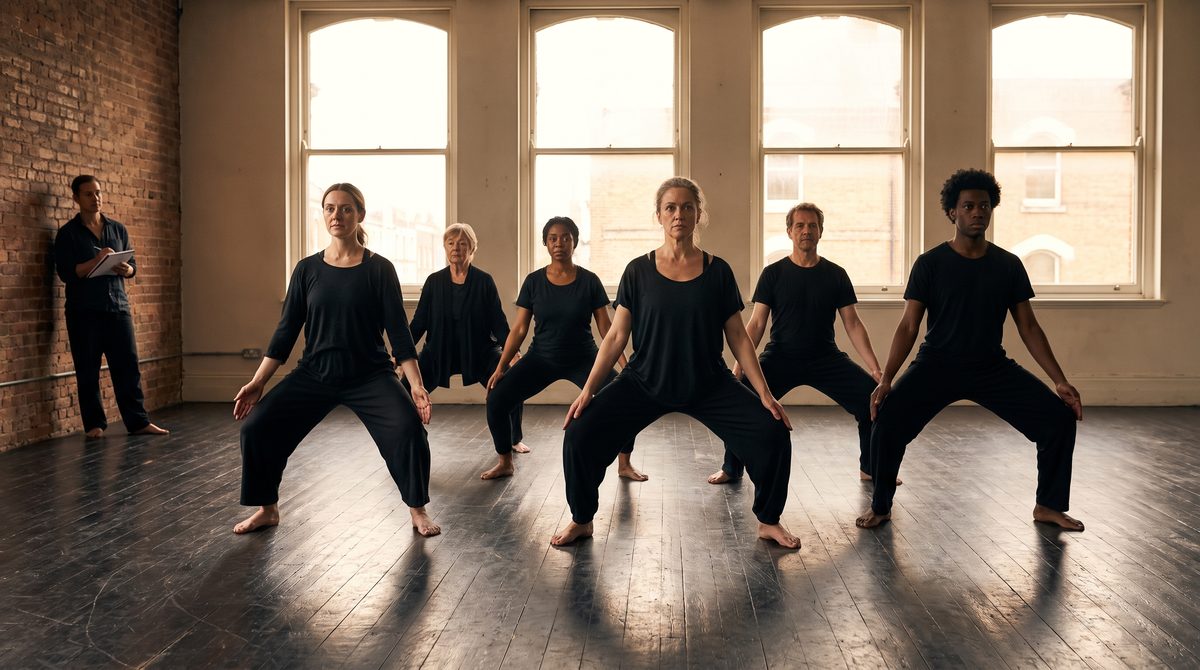
This is the least adaptable technique on this site, and pretending otherwise would be silly. Here is what genuinely transfers.
Do anything physically demanding and then speak. Watch where the tension goes: jaw, throat, shoulders, hands. That upward leak is the exact problem the whole method exists to solve, and noticing it costs nothing.
Not a posture note. Let the weight settle into the pelvis and the feet before a line rather than into the chest. A close-up will read the difference even though it cannot see your feet.
Move, then arrive somewhere and be completely still, without adjusting or apologising. Stillness that is genuinely finished is rarer than it sounds, and it is what the statues train.
His whole argument is that modern life has numbed the lower body. Rehearsing barefoot on a real floor is a free version of the least controversial part of his case.
This training builds an instrument. It does not analyse a text, find an objective, or tell you what your character wants, and it was never meant to.
Of everything on this site, this is the one that genuinely needs a room and an experienced eye. The difference between engaging the centre and clenching it is not visible to you, and getting it wrong is where injury would come from.
We can find nobody credible claiming this training helps with screen work, and we are not going to be the first. It was built for a stage, an audience and a large room, and the qualities it develops are theatrical presence and physical authority.
The one thing that does carry over is the diagnosis. If your voice tightens under pressure and your shoulders climb during a take, Suzuki's account of why that happens is the clearest anywhere. You do not need the training to benefit from the observation.
Where the sources disagree
Every page on this course ends here. On this one, most of the disagreement is between the English-language corpus and the founder's own book.
What does “animal energy” mean?
Commonly saidThe psychophysical force between performer and audience.
What we foundEnergy supplied by living bodies, as opposed to electricity and machinery. His own words, and a different argument.
Is it traditional Japanese theatre?
Commonly saidRooted in Noh and Kabuki.
What we foundA modern synthesis that borrows principles from them, plus Greek tragedy and martial arts. Scholarship is explicit about this.
Where do you train in it?
Commonly saidSITI Company in the United States.
What we foundSITI closed at the end of 2022. His own company continues at Toga, and everything else is independent practitioners.
Is Viewpoints part of the Suzuki method?
Commonly saidThey are taught together, so effectively yes.
What we foundNo. Viewpoints is Mary Overlie's, out of postmodern dance, later expanded by Anne Bogart and Tina Landau.
Does he say not to relax?
Commonly saidYes, the energy should be cultivated rather than released.
What we foundThat sentence comes from a student teaching page. His own description has the actors relax totally on the floor before rising.
Is it dangerous?
Commonly saidEither brutal or perfectly safe.
What we foundNeither is established. No injury data exists, and the one scholar who addresses it puts the risk in the teaching rather than the exercises.
Is there evidence it works?
Commonly saidLook at the companies it has produced.
What we foundA systematic review of thirty-two studies this year does not mention it once, and a paper about the method says the experiment has never been run.
A last word
There is something bracing about a technique that makes no claims about your feelings and asks instead whether you can stand up properly. It is the least psychological thing on this site by a distance.
What it deserves, and rarely gets in English, is to be described from its own book rather than from lesson plans. The material is there, it is in print, and it is better than the summaries of it.
Take your shoes off. Notice where the energy goes when you speak.