We could not find the rule this page rests on
The organising principle of this chapter has been a neat line about three weeks and three years. We went to the source we had credited it to, and it is not there.
The article is The Dos and Don’ts of Headshot Retouching, published by Backstage on 9 January 2007 and last updated on 25 March 2013. We read the whole thing. The three-weeks-and-three-years formulation appears nowhere in it, and we could not attribute it to the photographer we had credited, or to anybody else, anywhere.
What that probably is, and why we are saying so rather than quietly rewording. The rule circulates on retouching blogs with no source attached to it. Somewhere between those blogs and our page it acquired a name. It is a good rule — it is roughly how professionals describe their own practice — and it is not a quotation from anybody. We are not going to keep presenting it as one. The version below is what is actually on the record, and it is more specific.
Here is what the article does contain, from the photographer Natalie Young. “If an actor wants a smile line retouched, I don’t remove the entire line, maybe just lighten it 25 percent, making it less noticeable.” That is a real professional describing a real practice, with a number in it, and it is more useful than the rule we lost.
And the commercial argument, from Carrie Johnson, an agent at Mitchell K. Stubbs and Associates in Los Angeles. “I don’t normally recommend that actors touch up any lines or wrinkles, because you don’t want the headshot to lose character. You don’t want it to look plastic.”
And her fuller version, which is the whole argument of this chapter in one sentence.
“If you’re a character actor with interesting lines and rough skin, but your headshot is blown out, touched up, and you look like a mannequin, the difference will be obvious when you walk in the room.”
Note what she is not saying. She is not making a point about honesty. She is telling you that the lines and the rough skin were the sellable thing, and that you removed them.
A correction to something we told you on another page. We reported twice that this agent could not be found and should be removed from the site, and then corrected ourselves and gave the date as 31 October 2006. That date was also wrong. The article was published on 9 January 2007 and updated in March 2013. She is real, she is quoted on the record in a named trade publication, and this is the third time we have had to revise what we said about her. We are leaving the whole trail visible rather than tidying it up, because a page about not smoothing things out should not smooth out its own mistakes.
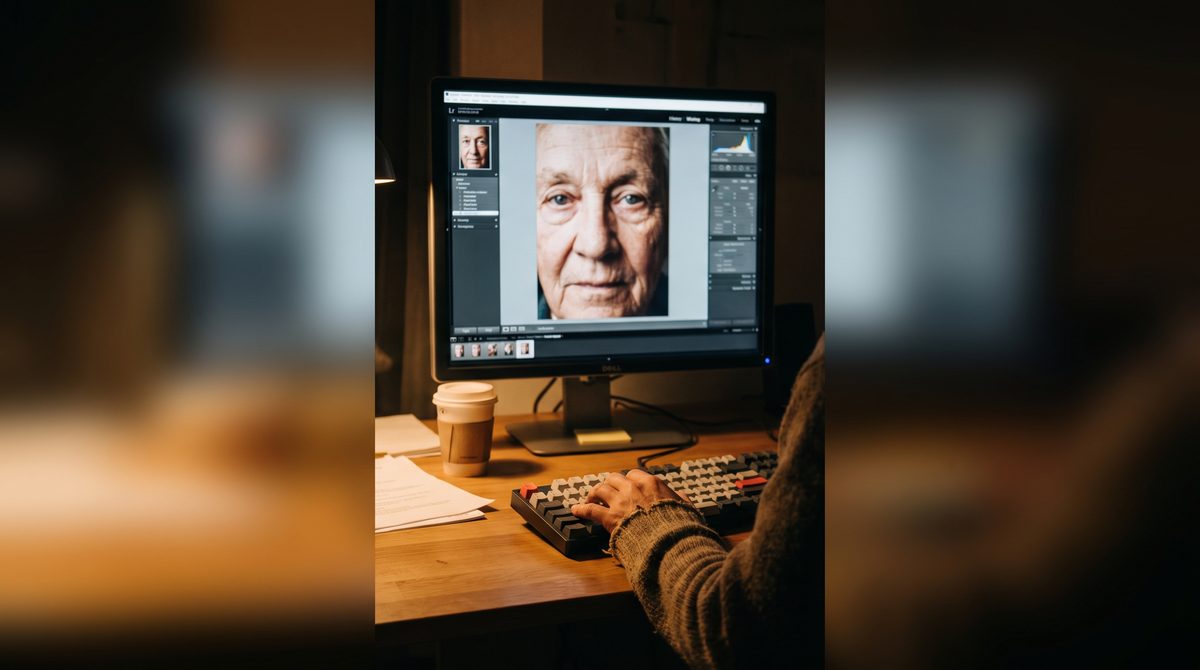
The people holding the mouse were on the record all along
Our research said the retouchers themselves were missing from this debate, and that this was the biggest hole in the page. That turned out to be wrong, and what they say is better than anything a photographer has said about it.
There are two trade articles carrying named professional retouchers, and between them they answer the question this chapter exists to ask.
Sam Tabrizi
A master retoucher in Hollywood. “Retouching is 70 percent skill and 30 percent art… Every headshot needs retouching.” Which is worth hearing before the rest — nobody in this trade thinks the answer is none at all.
Jim Lafferty
A New York photographer. “Actresses sometimes have beauty marks that are part of their appeal and should be kept in.” The word doing the work there is appeal, not authenticity.
Eric Dolgins
General manager of a New York reproduction house, and this is the most practical line anybody has offered. “A good general rule: Don’t remove something, like a scar, that cannot be completely concealed by makeup.”
Why that last one is the rule we were looking forIt is the same idea as the one we lost, and it has a mechanism instead of a metaphor. If you can cover it on the day, the photograph may cover it too. If you cannot, the photograph must not, because you will arrive without it.
And an honest note about what we told you. We wrote that the person actually doing the retouching was absent from this conversation and that their view would be the most interesting one. Six named professionals were already on the record in two articles from the same publication we were already citing. We had read one article and not the other. That is not a sourcing problem, it is a searching problem, and it is ours.
What a normal retouch actually includes
This is the question most people arrive with and it is usually answered by implication. Here it is as a list, assembled from what the professionals above describe doing.
Temporary things, removedA spot, a blemish, a scratch, a bloodshot eye, a stray hair across the face. Anything that was not there last month and will not be there next month.
Normal
Technical faults, removedSensor dust, lint on your shoulder, a distracting bright patch behind your head, shine on the forehead reduced rather than erased.
Normal
Permanent lines, lightenedNot removed. The one professional who put a number on it says about twenty-five per cent, so the line is still there and simply less loud.
Normal
Skin texture, smoothed awayPores gone, everything uniform. This is the edit that costs actors work, and it is the default on nearly every automatic tool.
Too far
Scars, birthmarks and distinctive features, removedIf makeup cannot conceal it on the day, the photograph must not conceal it either. You will arrive with it.
Too far
Teeth whitened, eyes brightened, jaw narrowedEach one small, and together they move you out of your own age bracket into one with several thousand more competitors.
Too far
One thing worth saying kindly about the comparison you are probably making. A great deal of what you are looking at is over-retouched, and by the argument above that is a commercial mistake rather than a standard. The very smooth ones are not the benchmark. They are the cautionary tale with better marketing.
Is there a rule? We were about to say no, and we were out of date
No union or casting body governs how far a headshot may be retouched. That much holds. But the argument we were going to build on it has been overtaken by events.
The plan was to say this: several countries have legislated retouching disclosure, every one of them was protecting an advertising audience rather than an actor, and nobody anywhere has regulated the specific edit — face and skin — that costs actors work. It was a good argument. It stopped being true in 2023.
France passed a second law and it covers the face. Their first, from 2016 and in force since October 2017, requires commercial photographs to carry a label when a model’s silhouette has been narrowed or thickened. It is scoped to body shape and never mentions skin, so skin smoothing falls outside it — which was going to be our neat point. But a further law in 2023, amended in late 2024, extends the requirement to modifying the appearance of the face, creates separate labels for retouched and for AI-generated images, and carries penalties an order of magnitude larger than the first. So the sentence “nobody has regulated the edit that matters to you” was accurate until three years ago and is not accurate now. We would have printed it.
What actually existsAnd what it does
Israel, 2012In force from January 2013
Law
The first anywhere. Models must meet a minimum body mass index, and retouched advertising must carry a notice covering at least seven per cent of the advertisement.
France, 2016In force October 2017
Law
Label required when the silhouette is narrowed or thickened. Thirty-seven and a half thousand euros, or up to thirty per cent of the advertising spend. Skin is not covered.
Norway, 2021In force July 2022
Law
Goes further than France: advertising must be marked where a body’s shape, size or skin has been altered. There is a proportionality carve-out for skin-only edits.
France again, 2023Amended November 2024
Law
Covers modifying the appearance of the face, not only the silhouette, with separate labels for retouched and AI-generated images. The one we did not know about.
United Kingdom, 2022Presented as an existing measure
Never law
A ten-minute rule bill, debated in January 2022 and printed the following month. It never received a second reading and lapsed with the session.
United States, 2016Presented to us as a directive to the regulator
Never law
The bill was introduced and died at the end of that Congress. It never passed, the regulator was never directed to do anything, and no report was ever produced.
The reason no casting-side rule exists is still structural rather than accidental, and it is worth stating. Advertising law protects an audience. In casting, the person misled is a professional buyer and the person harmed is the actor — who removed the thing that would have sold them. Nobody legislates a harm whose principal victim is the person committing it.
And one law that does reach into the professional relationship rather than the advertisement. New York’s Fashion Workers Act, in force since June 2025, requires written consent before a model’s digital replica is created or used — and explicitly excludes routine retouching from that requirement. It is about synthetic likeness rather than about smoothing, but it is the closest anybody has come to regulating this at the point where the work is actually agreed.

What to do when it has already happened
Most people arrive at this page holding a proof they are uneasy about, not planning a session. That reader has been underserved everywhere, including here.
1
Understand that you are allowed to askRetouching is a line item you are paying for, commonly twenty to a hundred and twenty-nine dollars an image. It is a deliverable, not a favour.
2
Ask for a specific reversal, not a feeling“Please bring back the skin texture and the lines around my eyes, and keep the blemish removal.” A retoucher can action that in five minutes. They cannot action “it looks too smooth”.
3
Set the brief before the first retouch, not the fourthAdditional images are charged individually, so the expensive moment to change your mind is after you have paid for several.
4
Ask whether you can have the unretouched filePolicies range from free, to a separate purchase of two or three hundred dollars, to not sold at all. Worth knowing before you need it.
And if you are doing it yourself, the brief is short. Crop, exposure, white balance, one spot. Nothing else. A clumsy retouch is worse than no retouch, and the tools that promise to help are the ones that smooth.
Say it in writing rather than on the day, too. The retoucher is frequently not the photographer, and a request made in a studio may never reach the person actually holding the mouse. Two lines in an email before the session, saying what to remove and what to keep, costs nothing and travels.
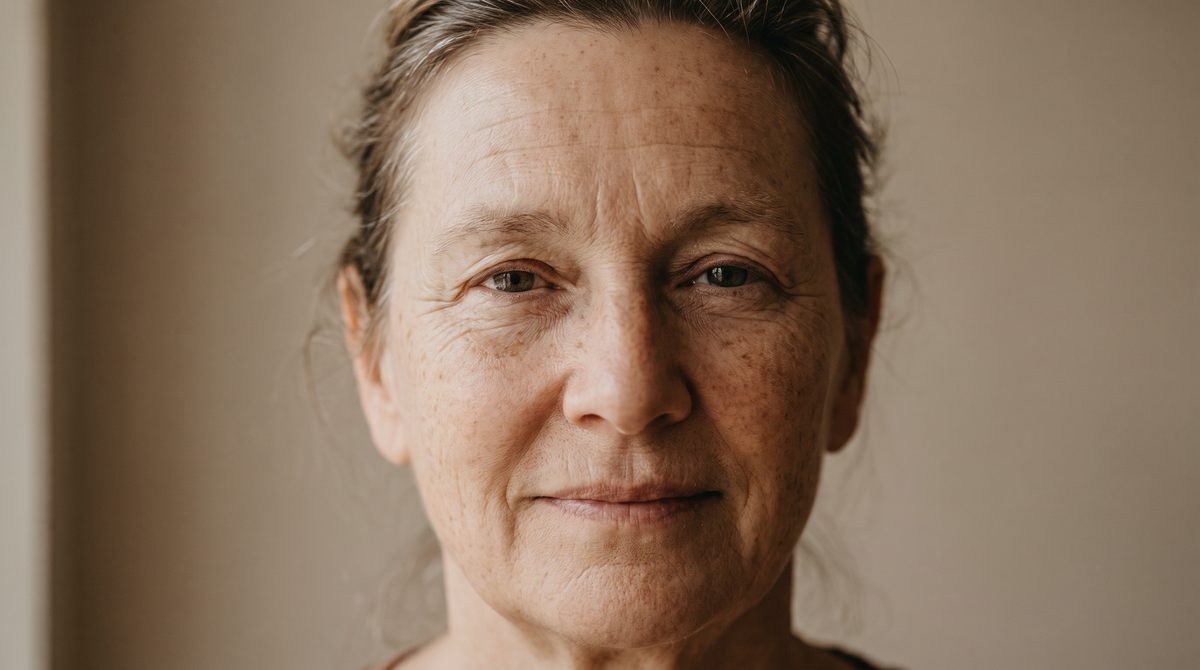
If something about your face is the reason you get cast
A scar, a birthmark, a gap between the teeth, a skin condition, a visible difference. This is the part of the chapter that matters most, and it is also where we found the emptiest shelf.
The instruction is simple and it should be given before the shutter goes. Do not remove this. It is not a flaw. It is my casting.
And there is now a craft argument for it rather than only a principled one, from the retouching side. Do not remove something that makeup could not conceal on the day — because you will walk into the room with it, and the photograph will have promised somebody a different face.
What we went looking for, and did not find. Our research suggested that organisations working on appearance diversity would have published guidance we could point you to. They have not. Changing Faces in the United Kingdom publishes careful media guidelines about language and portrayal, and nothing about photographs, headshots or retouching. Inclusive talent agencies representing performers with visible difference exist and are working well, and none we could find has published a retouching position. The American foundations working on authentic disability casting are addressing casting itself rather than the photograph. So the most important instruction in this chapter is currently supported by a retoucher’s rule of thumb and by common sense, and by no organisation whose job this is. That seems like an obvious gap for somebody to fill, and we would rather name it than dress up adjacent material as though it were the real thing.
One more reason to hold the line, from how these photographs are actually seen. At the size a casting director looks at you, the distinctive thing is doing a disproportionate amount of the work of recognising you. Removing it removes the part that survives.
How to tell whether yours has gone too far
Four checks, all free, none of which require you to know anything about editing.
The checkWhat to doWhat you are looking for
The pore test
Zoom all the way in on the cheek and the forehead.
Pores should be visible. If the skin is a uniform surface, it has been smoothed, whatever anybody told you.
Under the eyes
Look at the area directly beneath both eyes at full size.
A wiped-flat under-eye is the commonest tell there is, and the first thing most automatic tools do.
The edges
Follow the hairline and the line of the jaw.
A faint halo or a suspiciously clean boundary means heavy masking, which is what aggressive work leaves behind.
The three-year question
List everything on your face that will still be there in three years.
Then find each one in the photograph. Whatever is missing is what was taken from you.
And the comparison that settles it. Put the retouched image next to a phone photograph of you from last week and show them both to somebody who has never met you. Not a friend — friends already know your face and cannot do this task. If the stranger hesitates, the retouch has gone past the point where it helps.
Grading the sources
This is the largest set of corrections to our own work on any page in this section. Four things we published or were about to publish do not hold.
The claim, and where it came fromWhat we found
Lighten a smile line by about twenty-five per centNatalie Young, Backstage, January 2007
Primary
Verified verbatim. Specifically about a smile line rather than any permanent feature, which we had generalised.
You do not want it to look plastic, and the difference will show in the roomCarrie Johnson, same article
Primary
Both quotes verified. Correct date is 9 January 2007, updated March 2013 — the third time we have revised what we said about this source.
Four laws requiring retouching disclosureStatutes and parliamentary records
Primary
Israel, France twice and Norway, all read at source. Penalties and dates corrected, and one law we did not know existed.
Six named retouchers and photographers on the recordTwo Backstage articles
Good
Named professionals with checkable businesses. We had read one of the two articles.
Do not let a photographer airbrush out wrinklesSpotlight’s own site, updated January 2025
Good
Published guidance on their own platform. We had said no casting platform published any.
Be the optimum you, not the person with three wishesA photographer’s own blog
Check
Real person, real quote, verified on his site. The publication year could not be pinned down, and it is his own marketing.
Remove what will be gone in three weeks, keep what will be there in three yearsCredited by us to a named photographer
No
Not in the article we credited, and not attributable to anybody. It circulates unsourced on retouching blogs. It was the spine of this page.
The United States directed its regulator to examine digital alterationOur research, stated as fact
No
The bill never passed. It died at the end of that Congress, the regulator was never directed to do anything, and no report exists.
Nobody has regulated face and skin retouchingThe argument we were going to build the section on
No
France has, since 2023. True when the older laws were the whole picture, and out of date by three years.
No retoucher, no agent and no platform is on recordThree separate claims of ours
No
All three wrong. Six retouchers, one agent and one platform, all findable, several in publications we were already using.
One absence that did survive checking, and it is the one we most wanted to fill. No organisation working on appearance diversity has published guidance on headshots or retouching — not on photographs, not on what to ask a photographer, not on what to refuse. We looked properly. It is a real hole and it sits under the most important paragraph on this page.
Where we differ from the standard account
How much retouching is too much?
Commonly saidTake out what is temporary, keep what is permanent.
What we foundRight in substance, and the neat version of it has no author. The sourced version is to lighten rather than remove.
Is over-retouching dishonest?
Commonly saidThat is usually the framing.
What we foundAn agent makes it commercial instead. The lines and the rough skin were the thing somebody could sell.
Is any of this regulated?
Commonly saidNot at all, anywhere.
What we foundFour laws in three countries, and since 2023 France covers the face specifically.
Did America look at this?
Commonly saidCongress directed the regulator to examine it in 2016.
What we foundThe bill never passed. Nothing was directed and no report was ever written.
What do the retouchers think?
Commonly saidNobody asks them.
What we foundSeveral are on the record, and their rule is the most practical one available.
Should you remove a scar or a birthmark?
Commonly saidUsually assumed to be a personal choice about confidence.
What we foundIf makeup cannot conceal it on the day, the photograph must not either. You will arrive with it.
Can you push back on a retouch?
Commonly saidIt feels rude to ask.
What we foundIt is a line item you paid for. Ask for a specific reversal and it takes five minutes.
Do this before your next session, and it takes two minutes. Send the photographer two lines in an email: what you want removed, and what you want left alone by name. Not on the day and not out loud — in writing, because the person doing the retouching is often not the person taking the photograph, and a sentence said in a studio does not reach them.