
Why nobody gives you the same answer
The definitions disagree because they are all arguing about one question.
Ask ten teachers what acting is and you get ten answers. That is not because the field is vague. It is because each definition is really a restatement of that teacher’s method, and all of them are positions in a single argument that has been running for two hundred and fifty years.
The argument is simple to state. Does great acting come from feeling, or from control? Everything else — Method against Meisner, feel it against play the action, be truthful against make a choice — is a continuation of that one dispute. Learning the definitions teaches you the schools. Learning the argument teaches you the thing.
1773, and still the sharpest thing written on this
You cannot do two things at once.
Denis Diderot wrote Paradoxe sur le comédien around 1773. It was published after his death, in 1830. It is a dialogue about whether fine acting comes from sensibility or from rational self-control — and his answer was blunt.
A great actor, he argued, must not feel the emotions they are expressing. “Extreme sensitiveness makes poor actors.” The highest acting, in his account, comes from judgment and penetration without sensibility. That sounds cold until you read the argument he rests it on.
The fourth argument, which is the one that matters
“One cannot do two things at a time.”
An actor must watch their own playing, regulate its effects, check their gestures and exclamations, keep their mind on the scene and recall the part. All of that critical work, Diderot says, is incompatible with sincere emotion. When a person is genuinely stricken with grief they may sink into a chair exactly as an actor does — but they do not keep watch on themselves doing it.
He had five others, and they are better than most modern discussion of the same question.
It reframes self-consciousness. If you have ever felt that you were performing and watching yourself perform at the same time, and that the watching ruined it — Diderot says you were not being weak. You were attempting something that cannot be done. That is a category error, not a character flaw, and category errors have fixes.
Two and a half centuries later, in a scanner
Acting turned self-processing down and attention up.
In 2019, Brown, Cockett and Yuan published the first brain-imaging study of acting in Royal Society Open Science. Fifteen university actors, trained in the Stanislavski approach, were scanned while answering hypothetical questions as themselves, and then as Romeo or Juliet.
The controls matter. They also had participants answer in a British accent, and answer as a close friend — which separates acting from merely changing your voice, or imagining somebody you already know.
All university-trained in the Stanislavski approach, responding first as themselves and then in character.
Global reductions in brain activity, and specifically deactivations in the cortical midline regions tied to self and personal identity.
Alongside those deactivations, an increase in activity in areas related to paying attention. That is the crucial half.
Published in Royal Society Open Science. The authors call acting a deactivation-driven process, and describe it as perhaps a “loss of self”.
But read it beside Diderot and something interesting happens. He argued that watching yourself is incompatible with acting. The scanner shows acting characterised by turning self-processing down and attention up. Those are the same claim, reached from opposite ends of two and a half centuries.
The centre of this page
Six independent sources. One claim.
Now add the other two fields. None of these people were trying to agree with each other. Several of them would have disliked each other.
Why this is the useful part
It turns the vaguest advice in acting into instructions.
Every note in this list is one you have already been given, and every one of them is useless as stated. Read through the attention idea, each becomes something you can actually do on Tuesday.
What you get told
The unusable version
- “Be truthful.” True, and completely unactionable.
- “Don’t act.” Said by everybody, explained by nobody.
- “Be in the moment.” Which moment. How.
- “Stop being so self-conscious.” As though you had not tried.
What it actually means
The version you can do
- Put your attention on the other person and respond to what they actually did, not what you rehearsed them doing.
- Stop monitoring yourself. That is the whole instruction, and it is Diderot’s.
- Track what is happening now. The Noices note actors call this active experiencing.
- Give your attention a target. Self-consciousness is not nerves — it is attention pointed the wrong way, and the fix is a job, not a mood.
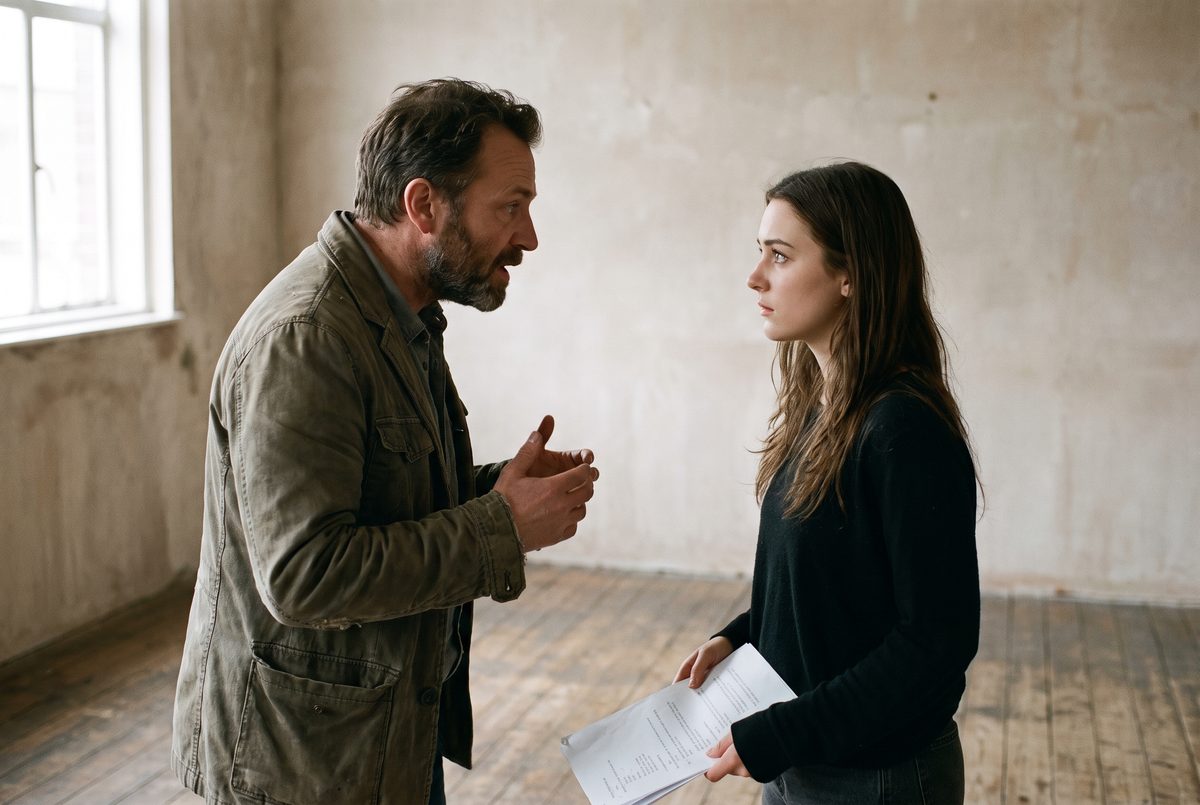
The entire idea, in one picture. One of them is talking. The interesting one is the other.
The question everybody actually arrives with
Do you have to feel it?
This is the oldest question in the field and it has a real answer, but the answer is not yes or no. The dispute is not about whether emotion is present. It is about where the emotion comes from.
The case for no
Generate nothing
- Diderot: you cannot sustain the critical work of performing while genuinely overwhelmed.
- Stella Adler — the only Group Theatre member to study with Stanislavski in person — challenged emotional memory on the ground that Stanislavski himself abandoned it, for imagination and physical action.
- Meisner moved the whole work onto the partner instead.
- The Noices: emotion is one input to memory among several, not the engine.
The case for yes
Feel it first
- The Stanislavski tradition’s central claim, and the reason the technique exists at all.
- Audiences can tell. A casting director in our research simply says of a good tape: you just believe them.
- Nobody argues that a good performance is emotionless. That is not the position.
Do you generate the emotion in advance, or does it arrive as a consequence of attending to the circumstances and the other person?
Diderot, Adler, Meisner, the memory research, the brain imaging and the casting directors all describe the second. Strasberg’s technique describes the first. That is the entire argument, stated fairly.
A question that sounds cynical and is not
Is acting just lying convincingly?
No, and the distinction is precise rather than sentimental. A lie is meant to produce a false belief in somebody who has not agreed to it. Acting runs on mutual pretence — everybody in the room knows.
The audience is not deceived about whether Romeo is real. They are being invited to attend to something as if it were. That is a different transaction, with different rules, and everyone has consented to it.
If acting were lying, the skill would be concealment. It is not. Every source on this page says the skill is attention and response, which is the opposite of concealment. That is precisely why “just be more convincing” is useless advice and “listen to what they actually said” is not.
You already do part of this
What makes acting different from everyday role-play?
You change register, posture and vocabulary a dozen times a day — as a partner, an employee, a customer talking to a salesperson. Many teachers start actor training from exactly that observation, and they are right to.
But the brain-imaging researchers draw the line carefully. All those everyday roles are facets of the self. They are personas you recruit in different social contexts, and they stay inside your own first-person perspective. Playing a character is a more comprehensive shift: portraying another person’s gestures, emotions and behaviours, and living through their circumstances. The authors call it a fictional first-person perspective.
Asked more often than you would think
Is any of this dangerous?
“Loss of self” is an alarming phrase and it deserves a proportionate answer rather than a dramatic one.
What the evidence actually shows is a neural pattern during a task, in one study of fifteen people. It is not a pathology and it does not show harm. It is consistent with the long-standing intuition that character work involves a genuine shift in perspective, and that is all it is consistent with.
The real documented concern in our research is narrower and much more actionable: techniques built on repeatedly accessing painful personal memories are criticised from inside the tradition as psychologically risky, particularly for anybody dealing with trauma. That is a specific practice you can decline, not a property of acting. And the recurring public arguments about Method acting are mostly about behaviour off set — staying in character, refusing to break — which is a separate phenomenon that a beginner will never meet in a class.
The same research programme found that a four-week acting course improved word recall and problem-solving in adults aged 65 to 90, compared with a visual-arts group and a control. The gains persisted at four months, alongside improved perceived quality of life.
Both findings are true. Publishing only the alarming one would be a choice.
Why this chapter comes first
Six things that follow, and the rest of the course is the detail.
If acting is attention directed outward, a great deal of practical advice stops being arbitrary and starts being obvious.
The reader is the instrument
Not a logistical inconvenience to be solved. If acting is attention outward, removing the thing to attend to removes the acting.
Which is why a stiff live reader beats a perfect recording, and why a fixed playback track produces a dead take.The camera goes at eye level
Because casting is watching you receive, not watching you deliver.
A bold choice is a point of view
Not volume. A point of view is useful because it gives your attention somewhere specific to go.
Learn the cue lines, not just yours
Your line is a response. A response needs an external trigger, and the trigger is in their mouth.
Over-taping kills it
A casting director in our research describes a take that has had all of the humanity ironed out of it. That is what happens when attention moves off the other person and onto your own performance.
Self-consciousness is the enemy. Nerves are not.
Nerves are physiology and everybody has them. Self-consciousness is misdirected attention. Only one of the two is fixable by technique, and it is the one that matters.
The honest state of the evidence
Where this is genuinely contested.
Do actors feel it?
YesStanislavski, Strasberg: that is the point of the whole technique.
NoDiderot: extreme sensitiveness makes poor actors. Adler: Stanislavski himself abandoned emotional memory.
Can you feel and perform at the same time?
AssumedThe Method takes it for granted that you can.
ImpossibleDiderot: you cannot do two things at a time. The critical work is incompatible with sincere emotion.
What happens in the brain?
IntuitionActing feels effortful and additive, like doing more than usual.
MeasuredGlobal reductions in activity. Deactivation-driven, with attention areas up.
Is acting lying?
PretenceIt is professional pretending, and pretending is a kind of untruth.
MutualNobody is deceived, everyone consented, and the skill is response rather than concealment.
Is it dangerous?
Sounds it“Loss of self” is a striking phrase, and the Method controversies are real.
ProportionOne 15-person study of a neural pattern. And a four-week course improved cognition and wellbeing in over-65s.
Is it different from everyday role-play?
Not reallyTeachers often begin from “you already do this every day”.
YesEveryday roles are facets of the self. A character is a fictional first-person perspective.
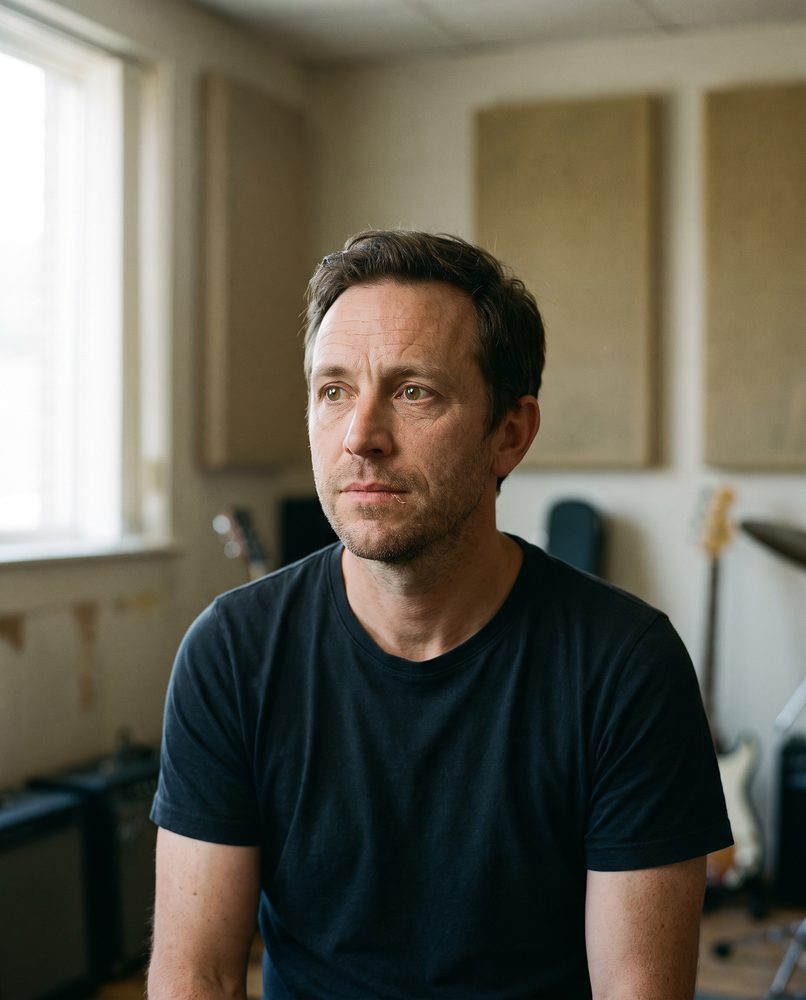
Give your attention a job.
The next time it feels impossible, the problem is almost never that you are not feeling enough. It is that you are watching yourself. Find the other person’s face and give your attention something to do there.
Everything else in this course — framing, choices, memorizing, taping — is an application of that one idea.
Continue the course