
Two pages, on purpose
Which of these are you here for?
We have deliberately split this subject in two, because the person with an audition tomorrow and the person building a career need genuinely different things.
Triage. What to do tonight, what to do in the morning, and where to put your sides so a glance stays inside the scene. Reassurance under pressure.
Open the emergency plan →Skill-building. The method, the routine that makes it a habit, and what to do when this is much harder for you than for other people. The aim is that you stop needing the page on the left.
Why this chapter sits where it does
Line learning is scene analysis, done once.
This is the load-bearing idea, and it connects backwards to both chapters before it.
Chapter one found four independent fields agreeing that acting is attention directed outward. Chapter three said you cannot play an emotion, only an action. Put those together and you get the mechanism.
If you learn “I said I would be there” as a string of six words, the only route back to it is inside your own head — and that is the route anxiety closes first.
If you learn it as what you say when she looks away and does not answer you, everything changes. Her looking away is a cue. Your wanting an answer is a cue. The words have several roads home. That is why actors who genuinely listen forget fewer lines, and it is why the same analysis that gives you an action gives you the encoding for free.
Which is the real point of putting this chapter here rather than at the start of the course. You are not doing memory work and then acting work. You are doing the acting work, and the memory is what falls out of it.
The research, and it is more interesting than the advice
Actors are not better at remembering things.
This is the finding that should change how you think about the whole task, and almost nobody knows it.
When asked to memorize a passage from an encyclopedia, they did not recall the text better than a control group of nonactor college students.Backstage, reporting Helga and Tony Noice's research on how actors remember
Take away the scene and the actor's advantage disappears completely. So whatever is happening when somebody holds a two-hour play in their head, it is not a superior memory. It is a method — which means it can be learned, and it means being “bad at memorizing” is not a verdict on whether you can do this job.
The Noices call the method active experiencing. You encode material by using your physical, mental and emotional channels to communicate its meaning to another person. Not repeating it. Doing something with it, at somebody.
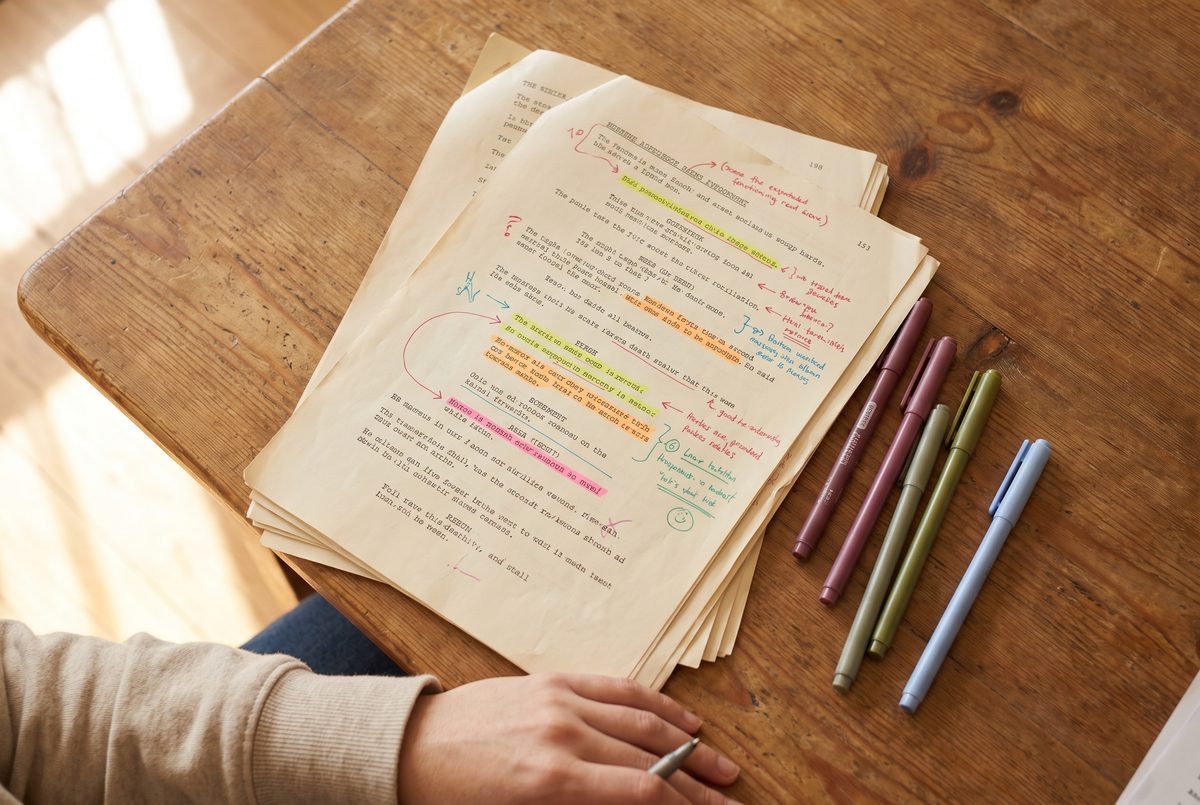
The analysis is the goal. Prose annotation is only one route to it — and for some people it is the worst one.
The course version's actual contribution
A standing routine, so it stops being a crisis every time.
The emergency plan is for when you have already run out of road. This is the thing that means you rarely do.
A fixed first pass on arrival day
Twenty minutes, the day the material lands, regardless of when it is due. Read for story. Answer the scene questions from chapter three. Do not try to learn anything yet.
Short passes, spaced across days
Three twenty-minute sessions across three days beats three hours the night before. It is also less total time — which is the part people refuse to believe until they try it.
Always test, never re-read
Cover the page and attempt it badly, early. The discomfort of not knowing it is the actual learning. Re-reading is the comfortable thing that does not work.
Aloud, on your feet, with the cue lines
Never rehearse only your own side. The other person's words are your retrieval cue, and a line learned without its cue is a line waiting to vanish.
Sleep between passes wherever the deadline allows
Finish in the evening, stop at a sensible hour, and test yourself cold the next morning. What survives the night is what is actually in.
Know your own failure mode
This is the step nobody tells you about, and it is below. You lose one of three things, and they have different fixes.
Three problems that look identical from outside
What exactly do you lose when you go up?
“I forgot my lines” describes three different failures with three different repairs. Most actors have never worked out which one is theirs.
You know all the words. You just cannot find what comes next — the shape of the scene has gone, even though the material is in there.
The testCan you say the scene's beats in order without any of the actual lines?The fixBuild a beat map, in four or five words each: ask → push → soften → leave. Learn that first, separately.You have the thought and you paraphrase. It feels fine in the room and it is a problem on a set, and it is a symptom of encoding the gist rather than the text.
The testRecord yourself, then read along. Count the substitutions you did not notice making.The fixShorter phrases, slower, with deliberate attention to the precise wording. Precision is the mechanism.You are fine alone and you disappear when the reader says it differently. The line was attached to one delivery instead of to the person.
The testAsk your reader to change their emphasis without warning you how.The fixLearn the whole cue line and what it does to you — not the sound of it, the effect of it.Run a speech you know. Have somebody stop you in the middle and ask you an ordinary question — what you had for breakfast. Let them wait for the answer. Then have them tell you to carry on.
Whatever fails is your real practice list. And being able to do this at all is a better test of whether it is in than saying it fluently ever was, because fluency is the illusion of competence.
The reason this version of the chapter exists
If this is much harder for you than it seems to be for everyone else.
A page about learning lines is, for a substantial share of the people reading it, a page about the exact task their brain finds hardest. Almost nobody writes it that way.
“It's estimated that around 10% of the British population are dyslexic, but that figure leaps dramatically to around a third within the performing arts.”Spotlight, “Acting With Dyslexia” — and see the caveat below, because that second figure needs one
There is actual scholarship, and it is better than you would expect
Petronilla Whitfield's Teaching Strategies for Neurodiversity and Dyslexia in Actor Training: Sensing Shakespeare (Routledge) is built from case-study and action research with dyslexic acting students. It uses Shakespeare as the laboratory and draws on the students' own accounts. It sets out six tested teaching strategies. It examines the stress dyslexia causes, and how a teacher can reduce it by changing their own practice. And it describes the visual, kinaesthetic and multisensory processing preferences some dyslexic acting students demonstrate.
Separately, Deborah Leveroy published “'A date with the script'” in Theatre, Dance and Performance Training in 2015. It works directly from dyslexic actors' own accounts of reading scripts and learning lines. And Deborah Groves is an accessibility coach who has worked with the Royal Court, Shakespeare's Globe, the Almeida and the RSC. She frames the whole job as helping performers discover how they learn and work best — rather than handing them a technique.
Whitfield's book examines Stanislavski's method of units and actions and, in Routledge's own words, “how it can benefit and obstruct the student with dyslexia when working on Shakespeare”.
Read that again with this whole Academy in mind. Units, beats, objectives and actions are the apparatus we recommend, in this chapter and in chapter three. And the scholarship says the same apparatus can obstruct some of the people we are recommending it to.
We do not have the detail of exactly how it obstructs — that is in the book. But the plausible mechanism is not mysterious. Unit-and-action analysis is a sequential, text-segmenting, verbally-mediated procedure — applied to precisely the modality some dyslexic actors find hardest. Which is very likely why Whitfield's own alternative — what she calls Interpretive Mnemonics, both a memory support and an interpretive process — uses colour and drawing instead.
Cheap, mostly free, and almost never mentioned
Adjustments that actually change the task.
A cue-responsive rehearsal partner — a person, a recording, an app — turns line learning from a reading task into a listening and responding task.
That is simultaneously what removes the barrier and what the acting actually requires. The accessible route and the best route are the same route. It is not a compromise, and it should not be offered as one.
The provision almost nobody knows about
On a SAG-AFTRA self-tape, you may hold the sides.
If you are dyslexic this is not a technicality. It is the removal of the single largest barrier in the audition process.
Performers cannot be asked to memorize — performers may hold sides or read from a prompter.SAG-AFTRA contract bulletin on self-tapes, covering the 2023 TV/Theatrical/Streaming contracts
If pages are allowed and you use them, use them cleanly: unstapled, easy to move, and placed close to your eyeline so a glance stays inside the scene. A quick look can read as a thought. Hunting across a page cannot.
Prepared means you understand the scene, you can listen, you can respond and you can recover. Perfect recall with no connection is not the job, and casting has been saying so for years.
The question older actors ask and rarely get answered
Does it get harder as you get older?
General memory does change with age — we have not researched that literature and will not pretend to. But the acting-specific evidence points in a genuinely unexpected direction.
Noice, Noice and Staines studied 124 community-dwelling adults aged 60 to 86. They compared a four-week theatre training group against a visual-arts group and a no-treatment control. The theatre group showed cognitive and wellbeing gains over the controls, with the visual-arts group benefiting in fewer domains.
The method this chapter describes was strong enough to measurably improve cognition in people in their eighties — not merely to survive their memory, but to improve it.
For an older actor worried about lines, that is a better fact than any amount of reassurance. Whatever else is true about ageing and memory, this particular activity is not on the losing side of it.
The honest state of the evidence
Where the field genuinely disagrees.
Is line-learning a memory skill?
AssumedUniversally, by actors and by everyone who has ever been impressed by one.
Not quiteActors are no better at memorizing in general. It is encoding, not storage.
Does unit-and-action analysis help?
Our own methodIt is the core of what this Academy recommends, in this chapter and chapter three.
WhitfieldIt can benefit and obstruct the student with dyslexia when working on text.
Should you be off-book?
CastingThe Casting Directors' Guild position is that off-book is always best.
SAG-AFTRAOn a covered self-tape, performers cannot be asked to memorize and may hold sides.
Is re-reading useful?
It is what we doAlmost universally, because it feels like progress while you are doing it.
IllusionFluency with the page open is not recall. It is the illusion of competence.
Do you disclose a learning difference?
The fearThat you will be marked down as difficult before you have said a line.
SpotlightA small ask, usually granted — and an informed agent removes most of the stress.
Does age make it harder?
Widely assumedAnd rarely questioned, by actors or by anybody else.
The one studyFour weeks of theatre training improved cognition in adults aged 60 to 86.
Is the accessible method a compromise?
ImpliedBy the way adjustments are usually framed — as help for people who need help.
NoThe evidence-based method is the multisensory one. They are the same method.
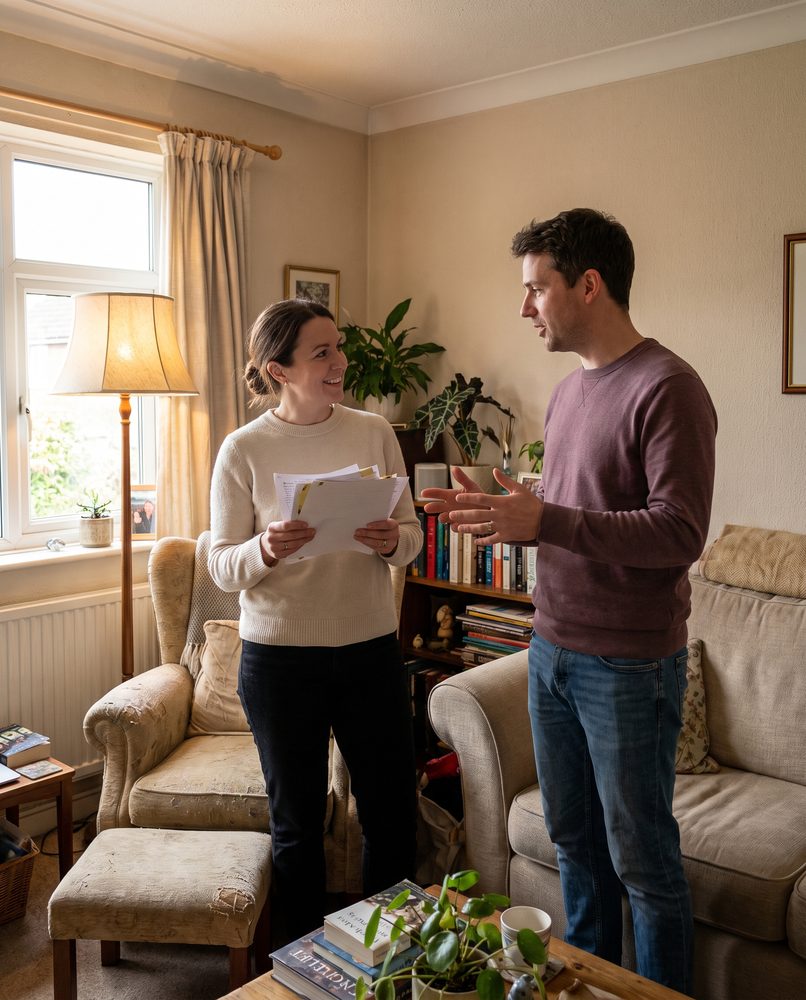
Find out which one you lose.
Take a scene you think you know. Have somebody interrupt you halfway, ask you what you had for breakfast, wait for the answer, then tell you to carry on.
Did you lose the order, the exact words, or the cue? That is your practice list, and now it is a specific one.
Chapter three: the scene questions