
What it is, and whose it is
Kristin Linklater was born in Edinburgh in 1936 and died in Orkney in 2020, aged eighty-four. She trained at LAMDA in London, where the voice teacher was Iris Warren. Warren then invited her back to teach. She spent six years there before moving to the United States in the mid-sixties.
What is unusual, and worth admiring, is how she talked about where the work came from.
The rest of her life is quickly told and mostly omitted from the guides. She co-founded Shakespeare & Company in Massachusetts with Tina Packer. She taught at Columbia as Professor of Theatre Arts from 1997 until her retirement. Then, in her seventies, she went home to Orkney and opened a voice centre there, which is still running.
The claim at the centre
“Freeing the natural voice” is the title of the book and the premise of everything in it. It contains two separate claims, and they are not equally well supported.
The practical instruction that falls out of this is small and worth carrying into any voice class. Notice which claims are physiological and which are aesthetic. A released jaw is physiology. A free, connected sound that happens to resemble one region and one social class is partly taste.
What you actually do
Nearly every summary of this method describes a vague sequence of floor work and humming. The book is far more specific than that, and its own structure is the best guide to the training.
Freeing the Natural Voice came out in 1976 and was revised and expanded in 2006. It runs in three parts, and the parts have names.
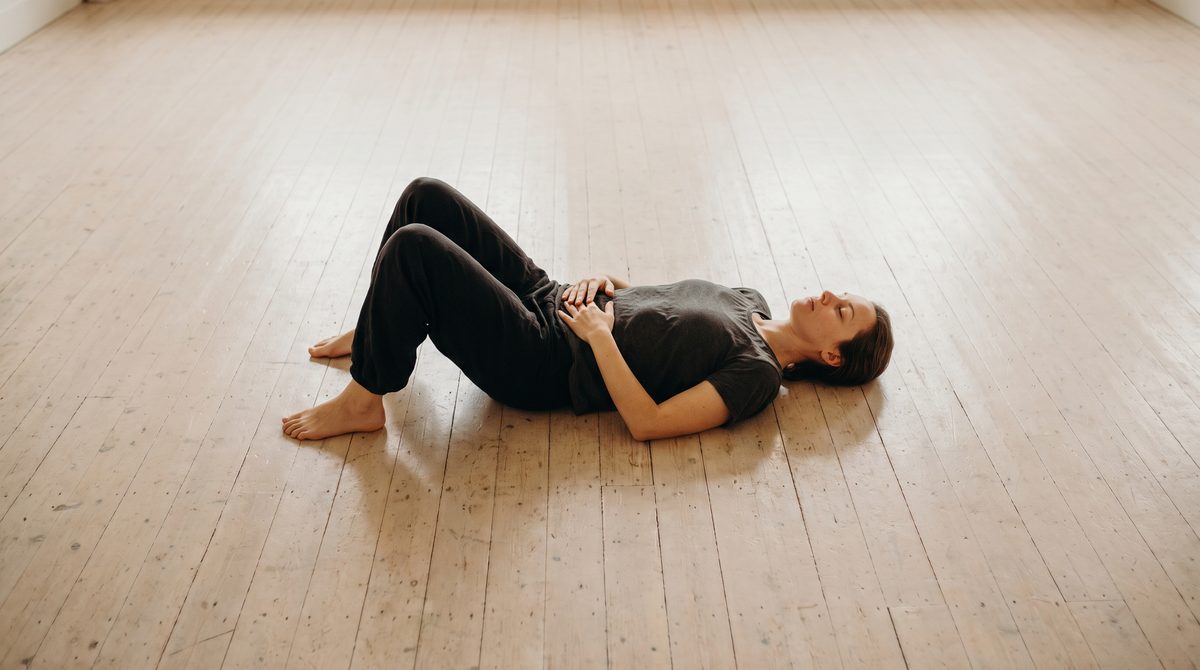
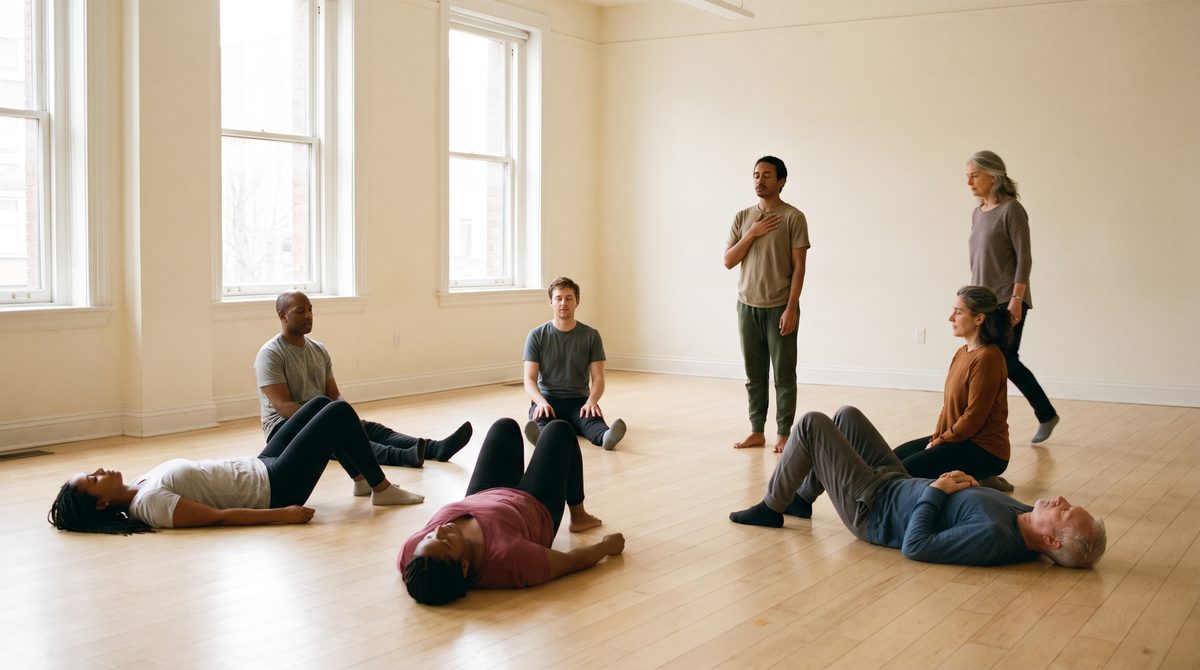
Where the work starts, and where the floor comes in. Lying down is not relaxation for its own sake — it removes the job of holding yourself up so you can notice what you normally do to your own breathing.
Not a minor step. It is the title of the whole first part of the book, and a chapter of its own. The smallest possible vibration, arriving on the breath rather than being pushed out of you.
Jaw, tongue, soft palate, throat. The passage the sound has to travel through, worked on one part at a time.
The name of the second part. You climb it: chest, then the middle of the voice, then nasal, then the skull. Each resonator is a rung, and the sequence is deliberate.
One thing every summary gets wrong. Range is not a stage after the resonators — it sits inside them, between the nasal work and the skull work. The two develop together.
Only now does anything resembling conventional voice technique appear. Consonants and vowels come near the end, not the beginning.
The third part is called the link to text and acting, and it is the last thing you reach. The whole architecture is designed so that language arrives on a voice that is already free, rather than a voice being trained on lines.
Can you learn it from the book? Partly. The floor and breath work are described well enough to follow. The risk with any release method is that you cannot tell from the inside whether you are doing it right. An exercise done slightly wrong for six months builds the habit it was meant to remove. Read it, and get someone to look at you occasionally.
Does it work?
Almost uniquely in this section, somebody measured. A 2020 paper in the Journal of Voice followed eleven student actors — eight women and three men — through sixteen months of Linklater training, with recordings before and after.
They measured sound pressure level, fundamental frequency, spectral balance, formants and the voice range profile. Listeners judged the recordings too. Pitch range in performance text increased significantly, and the authors concluded that the training has a positive impact on the voice. They call it the first systematic multi-parameter investigation of the method, and that is fair.
The caveats are the obvious ones and they matter. Eleven people is a small study and there was no control group. Sixteen months of drama school contains a great deal besides voice class, and the design cannot separate them. We also could not get past the paywall to the full results, so we are not going to describe findings we have not read.
One more correction to the standard line. It is often said that only three techniques anywhere have peer-reviewed evidence. That is not right — there is published acoustic work on Estill training, and a separate study of drama-school voice training generally. And the Alexander Technique is often cited as having official backing. The actual guidance is narrower than usually reported — a recommendation to consider it for people with Parkinson's who have balance or movement problems.
The actor's formant, and who it was found in
This is the closest thing voice science has to an objective marker of a trained acting voice, and it is the best bridge between this subject and actual measurement. It also comes with a finding that ought to be much better known.
The actor's formant is a concentration of acoustic energy around three to four thousand hertz. It appears when several of the higher resonances cluster together. It is what lets a voice cut through a room without being pushed. In a study of Brazilian male actors and non-actors, the actors had a stronger one and were heard as projecting more — while their measured loudness was no different.
A later study compared thirty actresses with thirty non-actresses. The actor's formant did not appear in the actresses' voices at all. The trained women were projecting perfectly well. They were simply doing it a different way, through adjustments at the vocal folds rather than by clustering resonances in the vocal tract.
Given that most people reading this page are women, that is not a footnote. The measurable marker of a trained acting voice was established on men and did not replicate in women. There is also a serious argument in the literature that the actor's formant, the singer's formant and several other named formants are all one phenomenon collecting different labels. Nobody has connected any of it to Linklater training specifically.
Whose voice counts as natural?
This is the objection to the method, and it deserves publishing properly rather than being either buried or turned into an attack.
A comparative-literature scholar at an American university published a study of voice pedagogy in 2017 that names the Linklater Center directly. Her argument is that a training which promises to liberate an authentic voice is also producing a particular kind of person. The language of freeing and releasing carries an idea of the self, and students absorb it along with the exercises.
The practical version for you is short. What a teacher hears as held is sometimes tension and sometimes just how you and everyone you grew up with speaks. Linklater's own work does not set out to change anybody's accent. The framing makes it easy for a careless teacher to drift there, and you are allowed to ask which one is happening.
Certification, cost, and who is in charge now
Grading the sources
Thirty-three briefs in. This one was among the better ones — it found the study, flagged its own gaps honestly, and told us to get the full paper. Two of its sources still needed demoting, taking our running count to twenty-six.
What to take from it
Lie down, knees bent, and watch your breath without helping it. This is the half of the method that transfers most directly to a tape, and it costs nothing.
The one thing the study actually measured going up. A close microphone does not need loudness, and pitch that moves with the thought is what reads.
The touch of sound, not the biggest noise you can make. If your warm-up is loud, you are training the wrong thing for camera.
Play a take back and listen to the ends of sentences. Thoughts that fade out are a breath problem, and this is the method built to fix it.
This was built for theatres. Everything about letting go of held effort transfers. Filling a room does not.
The measured result took sixteen months. Voice change is habit change, and any course promising it in a weekend is selling something else.
Where we differ from the standard account
Is there a natural voice underneath?
Commonly saidThe premise of the method, stated as fact.
What we foundA metaphor. Tension restricting the voice is well supported; a natural voice waiting to be released is not a measurable claim.
Whose idea was the method?
Commonly saidKristin Linklater's.
What we foundShe credited Iris Warren for the founding principle, named later collaborators, and wrote that she could not trace the lineage further back.
Did she study neuroscience?
Commonly saidRepeated as biography.
What we foundOne clause in a 2010 magazine profile. She read popular neuroscience and used it as imagery, and said herself it had not answered the question.
How strong is the evidence?
Commonly saidA peer-reviewed study proves it works.
What we foundEleven students, no control group, sixteen months of drama school confounding everything, and a lead author who is a certified teacher of the method.
Do only three techniques have research?
Commonly saidAlexander, Fitzmaurice and Linklater.
What we foundNot quite. There is published work on Estill and on drama-school voice training generally, and the Alexander guidance is narrower than usually reported.
Is the actor's formant established?
Commonly saidThe objective marker of a trained voice.
What we foundIn men. A study of sixty women did not find it in actresses at all, and the naming of these formants is itself disputed.
Who runs the certification now?
Commonly saidOne organisation, continuing her work.
What we foundTwo, with the same name, in two countries, neither mentioning the other. Ask which one before you pay.
Lie on the floor for five minutes tonight with your knees bent and a hand on your lower ribs, and do nothing except notice the breath arriving without your help. That is the first chapter of the book, it is free, and it is the part of this method that survives contact with a phone on a tripod.