The experiment we had been quoting without reading
Two researchers spent years studying how professional actors get lines in. Our page has been built on their conclusion for a long time. The middle of their work is more interesting than the conclusion.
Here is what they found when they taught the method to ordinary students rather than actors.
The researchers gave the working half a name. Their own words: using all physical, mental and emotional channels to communicate the meaning of the material to another person, either actually present or imagined. Note what is in that sentence. Another person. And note what the instruction to the winning group was — they were told not to try to remember any of it.
And one thing worth correcting in the other direction. People say actors learn the meaning rather than the exact words. That is not what the research shows. Deep work on why produces high word-for-word accuracy as a by-product, without anybody drilling. Meaning is not the alternative to getting it right. It is the route to it.

Why it goes at the worst moment
We have been saying this kind of memory survives nerves, and crediting it to the same researchers. They never tested nerves. The claim is still true. It belongs to somebody else.
There is no stress condition anywhere in that work. No pressure, no anxiety, no threat. Every experiment measures how much people remember after learning it one way or another way, in ordinary conditions. We attached “and it survives the audition room” to a finding about how deeply you learned it. That was our sentence, not theirs.
But there is a real literature on going blank, and it is better than the one we were leaning on.
If it goes anyway: stop, breathe out once, look at one real thing, and pick up. Do not apologise mid-speech. Almost everybody in the room has dried and the recovery is what they are watching.
Say it out loud — and the reason has a proper name
We were about to explain this using a term we have since discovered does not exist outside one marketing blog.
The claim was that speaking a line aloud gives you three kinds of memory instead of one — sight, sound, and muscle memory in the mouth and throat — and that this “triple encoding” makes it stick. There is no such term in memory research. The blog made it up.
Words you say aloud are remembered better than words you read silently. It has been tested repeatedly and it has a name and a literature.
It also works when you only mouth the words, which matters if you are learning on a train or in a shared flat at midnight. You do not need volume. You need production.
What the real research does not say is that your throat holds a separate third channel of memory. That part was the blog’s decoration. The effect is real. The explanation attached to it was not.
Cover the line. Do not read it again.
This is the one piece of advice on this page with genuinely heavy evidence behind it, and most actors do the opposite.
Reading a speech through again feels like learning. It is the single most convincing false signal in the whole business. Students who reread scored lower on later tests than students who tested themselves — and reported feeling more confident while doing it. That gap between how well you think it is going and how well it is going has its own name in the literature. The illusion of competence.
One honest footnote. Testing beats rereading, but the size of the gap is not fixed — a night of sleep narrows it, because sleep helps the reread material more than it helps the tested material. The direction holds. The margin moves.

The bedtime instruction, withdrawn
This page has told you to do a final pass right before sleep because it measurably aids recall. That is the one instruction here the evidence does not support.
Sleep consolidating memory is not in doubt. The specific instruction to review immediately before bed is a different claim and it does not hold up.
The morning test, and the problem with it
We were going to replace the bedtime advice with a free diagnostic: test yourself the second you wake, before you look at the script. It is a good idea with a specific flaw.
The logic is right. Whatever survives a night with no rehearsal is what is actually in. Whatever has gone is where tomorrow’s work goes. That answers the question this page has always left to instinct, which is how you know it is really in.
There is a well-documented state called sleep inertia — a stretch of roughly fifteen to thirty minutes after waking in which alertness, attention and memory are measurably impaired. You are testing the speech at the worst cognitive moment of your day.
How confident are we? The researchers who studied sleep and prose memory deliberately waited thirty minutes after waking before testing their participants, specifically so that sleep inertia had passed. The people whose job is measuring this build the delay in.
So: make a cup of tea first. Then test yourself, before you look at the script. Half an hour after waking, not thirty seconds. Same diagnostic, minus the confound.
And be clear what it does and does not tell you. It is not evidence that sleep improved anything. It only tells you what was solid enough to survive a night untouched. That is still the most useful free thing in this chapter.
If reading the page is the hard part
We were going to open this section with a striking statistic. We chased it to the end and there is nothing at the end.
The claim is that around a third of people working in the performing arts are dyslexic. It is quoted widely and it is attributed to a well-known industry body. Here is the actual chain. That body links to a mental-health resource site. That site says some drama schools report that up to thirty per cent of their students are dyslexic. No school is named. No survey, no method, no date. “Some drama schools say” is the entire evidence base, and along the way it turned from students at unnamed schools into practitioners generally, and from up to thirty per cent into around a third.
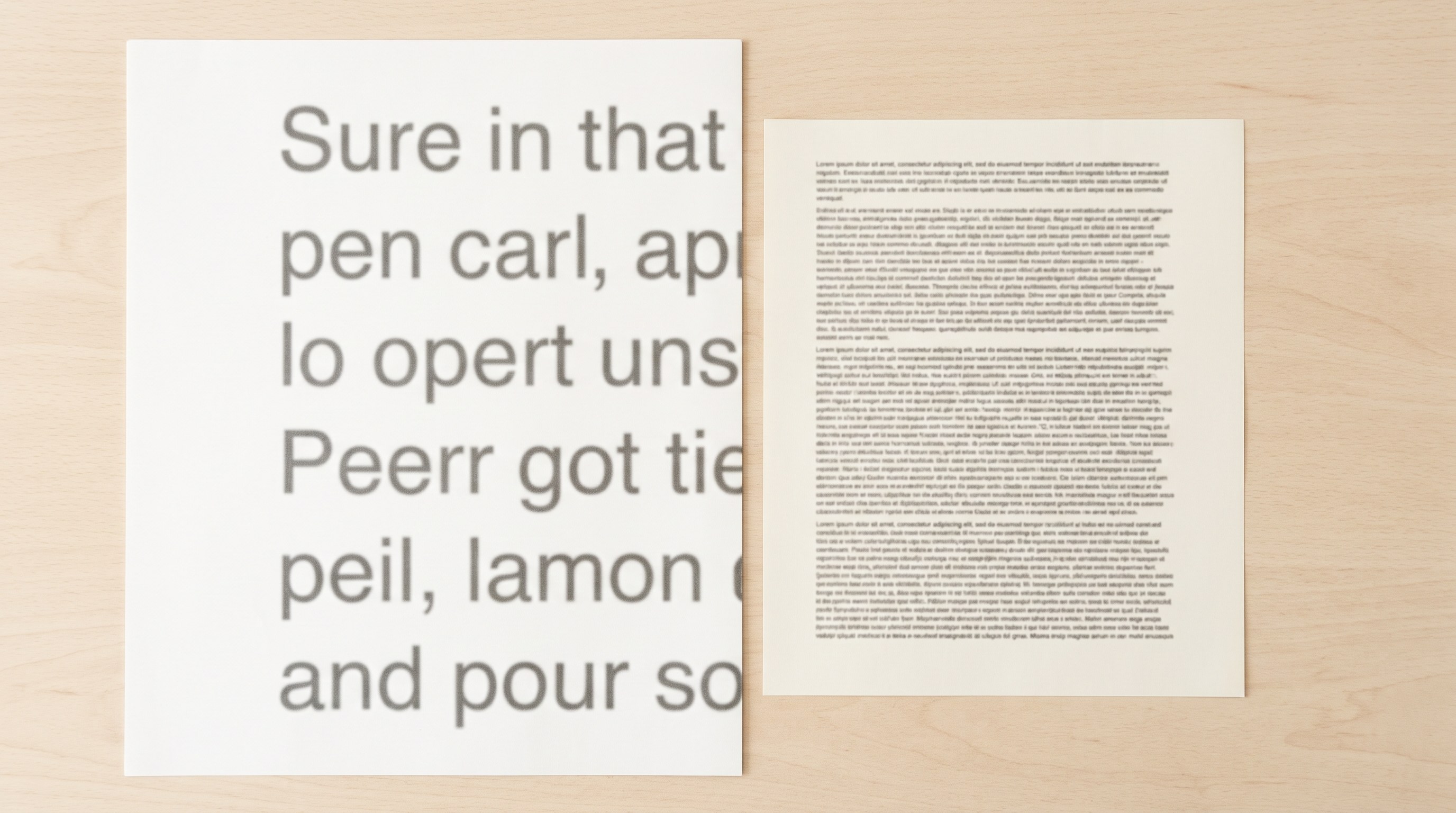
What is not in doubt is the guidance, and it is free. The British Dyslexia Association publishes an evidence-based style guide, current edition 2023, and every technique on this page runs through a printed page. So reformat the script before you learn it.
And lean on the routes that do not go through the page at all. Speaking it aloud, moving while you learn it, and a live person to say it to are all encoding routes that bypass reading entirely — and per the study at the top of this page, the person is the one that does the heavy lifting anyway. A slower route through text is not a weaker actor.
Three readers nobody writes for
Our research admitted it had looked at none of these. One of them turned out to carry the best news on the page.
If you have ADHD
The differenceDyslexia guidance is about decoding the page. ADHD guidance is about holding attention and getting things out of working memory.
What actors reportLearning while doing something physical rather than sitting with the script, attaching lines to blocking early, and writing everything down immediately because an idea not captured is gone.
Honest noteThere is no research on ADHD and line learning that we could find. This is working actors in the trade press, which is worth having and is not the same thing.
If you are working in a second language
The trapSaying a line aloud in a language you do not speak does not encode meaning. It builds the string of sounds, faster than usual.
What helpsSecure the meaning first, usually with a recording from a native speaker, before any repetition at all. Some actors learn their own lines first and the other part afterwards.
If you are older, and worried about it
The findingThe same researchers behind the study at the top of this page took acting training to older adults in retirement housing. Four weeks, twice a week.
The resultAgainst a singing group and a no-treatment group, the acting group improved more on nearly every measure — word recall, prose recall, problem solving. A later study with a hundred and seventy-nine people aged sixty to eighty-nine looked at self-control of attention.
Which inverts the questionThe techniques on this page are not something you do despite your memory. They were tested as a way of improving it.
How fast, honestly
The number everyone repeats for this is two pages in one to two hours. We looked at where it comes from and stopped repeating it.
It traces to one article on the website of a children’s acting school, written by a search-engine copywriter with no background in memory, psychology or acting. The piece carries a list of impressive-looking references at the bottom and none of the four claims we were taking from it is actually linked to any of them. The article itself carries a disclaimer saying results vary.
Grading the sources
One source with no relevant credentials was carrying four of this page’s claims. The paper our whole thesis rests on turned out to say something more interesting than the thesis.
One limit on all of it. Most of the sleep research here used word lists and invented words, not plays. There is now a small amount of work on connected prose and one on an actual monologue, pointing the same way. The direction is supported. The certainty is not, and we would rather say so than borrow authority the studies have not earned.
Where we differ from the standard account
Is understanding the speech the method?
Commonly saidWork out the beats and the lines follow.
What we foundOn its own it scored below rote. Saying it to a person, meaning it, is what turns it around.
Should you review right before bed?
Commonly saidA final pass before sleep locks it in.
What we foundNo evidence of an advantage, and a hint that a longer gap may be better a week later.
When should you test yourself?
Commonly saidThe moment you wake, before you look.
What we foundWait half an hour. Memory is measurably impaired for the first fifteen to thirty minutes after waking.
Does reading it through again help?
Commonly saidIt is how nearly everybody does it.
What we foundIt builds confidence faster than it builds memory. Cover the line and retrieve it instead.
Is going blank a memory problem?
Commonly saidIt feels like one, and like a personal failing.
What we foundRetrieval is impaired by social stress in healthy people who knew the material. It is physiological.
Do actors learn the sense rather than the words?
Commonly saidThey get the gist and improvise the rest.
What we foundThe opposite. Deep work on why produces high word-for-word accuracy without drilling.
Is listening to a recording of yourself efficient?
Commonly saidIt uses dead time.
What we foundIt is the fastest way to learn the tune rather than the speech.
Does memory get worse as an actor ages?
Commonly saidIt is the thing older actors dread.
What we foundActing training was used as the intervention in a study of older adults, and it beat the comparison group on nearly everything.
Do one thing tonight. Stand up, find somebody or imagine one specifically, and say the speech to them because you want something from them. Do not try to remember it. That instruction is not a trick — it is what the winning group in the study was actually told. Then cover the first line in the morning, half an hour after you get up, and find out what stuck.