
The origin, and it explains the whole misunderstanding
Stanislavski changed one word of Pushkin's, and we have been arguing about it ever since.
The phrase is not Stanislavski's invention. He took it from a Pushkin essay — and altered it by a single prefix, which is exactly where the trouble comes from.
In 1830 Alexander Pushkin wrote a draft article on folk drama, unpublished in his lifetime, containing the sentence that became Stanislavski's personal maxim:
The truth concerning the passions, verisimilitude in the feelings experienced in the given circumstances, that is what our intelligence demands of a dramatist.Pushkin, 1830 — in Jean Benedetti's rendering, Stanislavski: His Life and Art
What the primary text actually says
Suppositions. Products of the imagination.
Here is the definition, and then the sentence that dissolves the anxiety most beginners bring to this.
In Jean Benedetti's 2008 translation of An Actor's Work, Stanislavski lists the given circumstances as “the plot, the facts, the incidents, the period, the time and place of the action, the way of life”. Then comes the part nobody quotes:
The Given Circumstances, just like “if”, are suppositions, “products of the imagination.”Stanislavski, An Actor's Work, Benedetti translation (2008), around pp. 52–53
He is putting the circumstances in the same category as the magic if — and nobody has ever thought the magic if was something you find in the text. It is something you propose.
So the anxious question every beginner asks — what if the script doesn't say? — simply dissolves. The script never says most of it. You supply it. The standard is not accuracy, because there is nothing to be accurate to. The standard is whether your supposition is specific, consistent with the text, and useful.
The working discipline
Three layers: stated, implied, supplied.
This is our framework rather than anyone's quotation, but it follows directly from the primary material, and it is the thing that keeps invention honest.
Stanislavski has a word for that last move, and it is more useful than “given circumstances” ever was. He calls it justification: “Always try and justify what you do onstage with your own 'if' and Given Circumstances.” In plain English — make what you are doing make sense to you. Every stage direction you find odd, every line you would never say, every thing the writer has you do that you would not: supply the condition under which you would.
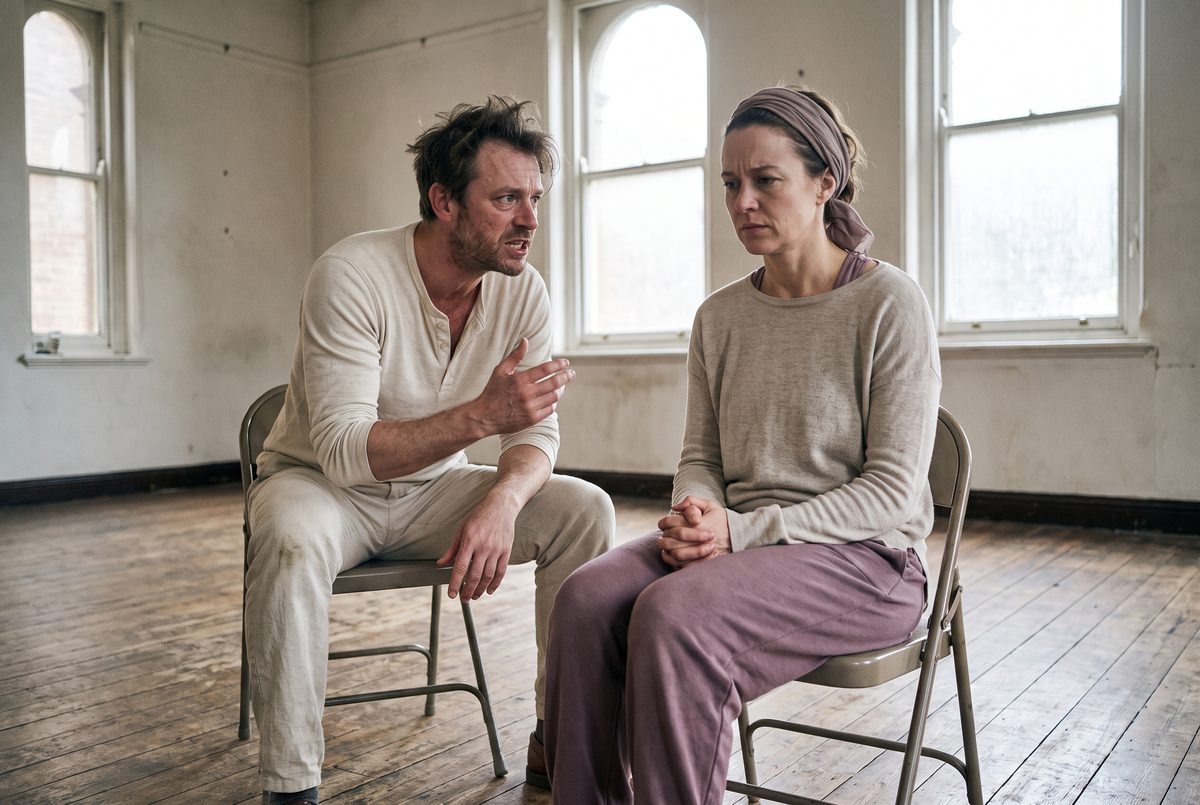
Circumstances are not information about a character. They are pressure in a room.
Why these two are always taught together
The circumstances are the conditions. The “if” is what you do with them.
Circumstances without the “if” is homework. You know a great deal and nothing has happened.
The “if” without circumstances is daydreaming. You are imagining freely with nothing to push against.
The most usable version anyone has written
Uta Hagen's nine questions — and the six she replaced them with.
Hagen arrived at these from an exercise recreating two minutes of her own daily routine, after noticing that no two days were the same and that her behaviour shifted with the particulars of each one.
Who am I?
Age, physical traits, education, beliefs, background — and name, opinions, likes, dislikes, fears, ethics.
What time is it?
The year, the season, the day, the minute. And why that particular timing matters.
Where am I?
Country, city, neighbourhood, building, room — and where in the room.
What surrounds me?
The immediate landscape, the weather, the condition of the place, the nature of the objects in it.
What are the given circumstances?
What has just happened, what is happening, and what I expect or plan to happen next.
What are my relationships?
How I stand in relation to the circumstances, the place, the objects, and the other people.
What do I want?
The concrete thing you are trying to get from the other person in this scene.
What is in my way?
No obstacle, no scene. This is the question people skip and then wonder why nothing is happening.
What do I do to get what I want?
And in Hagen's teaching this is a physical action question — not a state of mind.
Those nine come from Respect for Acting (1973) — and Hagen later disassociated herself from that book. In A Challenge for the Actor (1991) she works instead through six steps, and she encouraged students to rely on the later book, which she thought was clearer. That same book is where she renamed substitution as transference.
Which is the third time this course has run into the same pattern. Stanislavski moved away from emotion memory. Adler and Meisner moved further. Hagen revised her own most famous work. Even the people who wrote the exercises kept changing them, and a beginner should find that reassuring rather than destabilising.
The strongest line in this entire course, from the least expected source
“Don't drag feelings out of yourself.”
Everything this Academy has argued — that you cannot play an emotion, that attention goes outward, that pushing is the universal error — turns out to be in Stanislavski's own book. Which is not where anybody expects to find it.
Don't drag feelings out of yourself but think how to perform all the physical actions within the Given Circumstances throughout the play.Stanislavski, An Actor's Work, Benedetti translation — chapter eight, “Belief and the Sense of Truth”, around p. 166
The same book undercuts the other half of the popular reading. Glossing Pushkin's two terms, Stanislavski writes that “the truth of the passions” — genuine, living, human passions and the actor's own experiences — or “feelings that seem true” will arise of their own accord. And he defines that second option in brackets: not genuine passions, feelings or experiences, but a hint of them, a mood closely related to them, seeming like truth.
The founder of the tradition, in the book the whole tradition rests on, offering “a mood closely related” as a legitimate alternative to genuine felt emotion.
That corroborates Diderot from chapter one, Adler and the century-long drift from chapter two, and the first principle of chapter three — all from the source those arguments are usually made against. It is worth saying that he is glossing Pushkin's terms here rather than issuing a free-standing licence. It is still a long way from what “Stanislavskian” came to mean.
The spine of the chapter, and our own framework
A circumstance is only real if it changes what you do.
Here is the near-universal failure: an actor answers all nine questions, produces two pages of biography, feels thoroughly prepared, and performs the scene exactly as they would have anyway.
That is not laziness. It is a category error. They gathered information about a character instead of accepting conditions that constrain behaviour. So here is the test, and it is the whole chapter in one sentence.
Interesting. Possibly true. Almost certainly trivia as stated.
Apply the testDelete it. Does anything about the scene change? No.VerdictBiography. Keep it if you like it, but it is not doing any work.A real circumstance, and you can feel it working before you have finished reading it.
Apply the testDelete it and the pace changes, the patience changes, the volume changes.VerdictPlayable. This is what one looks like.Trivia as stated — but convertible, and conversion is the skill worth having.
Apply the testDelete it: nothing changes. So make it behavioural.VerdictHe checks the price of everything before he picks it up. Now it is a circumstance.And Hagen said the same thing about her own questions, decades before anyone turned them into a downloadable worksheet:
Thoughts and feelings are suspended in a vacuum unless they instigate and feed the selected actions, and it is the character's actions which reveal the character in the play.Uta Hagen, A Challenge for the Actor (1991)
The distinction that rescues wasted preparation
Backstory happened then. A circumstance is pressing on you now.
This is the single most useful sentence this chapter contains, and it explains why so much diligent character homework changes nothing at all.
Which also answers the question about how much to write down. Write it, because writing forces specificity — but keep it short and behavioural. A page of biography is a symptom. Five circumstances that each change something is the work. And as chapter five established, prose is not the only route to an analysis: draw it, colour it, walk it, or talk it into your phone. The analysis is the goal. The document is not.
Circumstances that were never in the script
The set, the costume and your reader are circumstances too.
The given circumstances are not only the writer's. They include the choices made by the director, the designer and everyone else — and Hapgood's translation said so explicitly a century ago.
Good preparation gives you something specific to adjust. Bad preparation gives you something precious to protect.
If a note from the director destroys your work, the work was too rigid. If it changes one circumstance and you can immediately feel what that does to everything else, you prepared correctly.
Three pages, no script, forty-eight hours
How to do this when you have almost no givens.
Everything above assumes a play, a full text and a rehearsal period. You usually have sides, a one-line character description in a breakdown, and two days.
Read the page for what it actually tells you
More than people notice. The page number locates the scene in the arc. A character name in ALL CAPS usually signals a first appearance. The scene heading gives you place and time of day. And what other characters say about you is evidence.
Mark what is implied
What must have happened for these people to be speaking to each other like this? That question does most of the work in about ninety seconds.
Answer only four of the nine
With two days you cannot do nine questions properly, and you do not need to. Who is this person to me? What do I want from them? What is in the way? What just happened? Those four change behaviour most. The rest is refinement.
Supply one bold, defensible circumstance
The thin stated layer is licence, not handicap. Casting says repeatedly that a specific point of view is what distinguishes the tapes they remember. Choose something that fits the text and changes what you do — not something chosen to look unusual.
Put the pages down and test it
Run it. If your choice is invisible in your behaviour, it failed the test. Make it more behavioural, or pick a different one.
“The nurse is tired” is not a circumstance. “This nurse is eleven hours into a shift and will not let one more person waste her time” is a human being with a point of view.
At that scale the circumstance to invent is simply who this person is when nobody is watching them — the nurse at the end of the shift, the officer who has been on that door since six. That is the entire job on a four-line part, and it is the whole difference between a person and a plot function.
On time: for any scene, twenty minutes of circumstances beats two hours of line-drilling — because as chapter five showed, meaning-based encoding is what makes lines stick in the first place. The analysis and the memorization are the same piece of work, done once.
The honest state of the evidence
Where the field genuinely disagrees.
Are the circumstances actually “given”?
The nameSays so, and they are almost universally taught as facts to be found in the text.
StanislavskiThey are suppositions, products of the imagination — the same category as the magic if.
Do you need genuine feeling?
The popular readingOf Stanislavski, and of everything that came after him.
His own textPermits “feelings that seem true” — a hint of them, a mood closely related.
Should you generate emotion?
What the Method meantBy the time it reached America and then the press.
StanislavskiDo not drag feelings out of yourself. Perform the physical actions within the circumstances.
Is more detail better?
The worksheetTradition, which rewards completeness and produces unchanged performances.
HagenThoughts and feelings are suspended in a vacuum unless they feed the selected actions.
Whose circumstances are they?
The writer'sThe text is the source, and the text is the authority.
Everyone'sThe director's and designer's choices are circumstances too — and they arrive late.
Nine questions or six steps?
NineIs what every class teaches, from a book published in 1973.
SixIs what Hagen moved to in 1991, having disassociated herself from the first book.
Can you do this on sides?
Not reallyThe whole method assumes a full text and a rehearsal period.
Better than thatThe stated layer is thin, so the supplied layer is large. That is more freedom, not less.
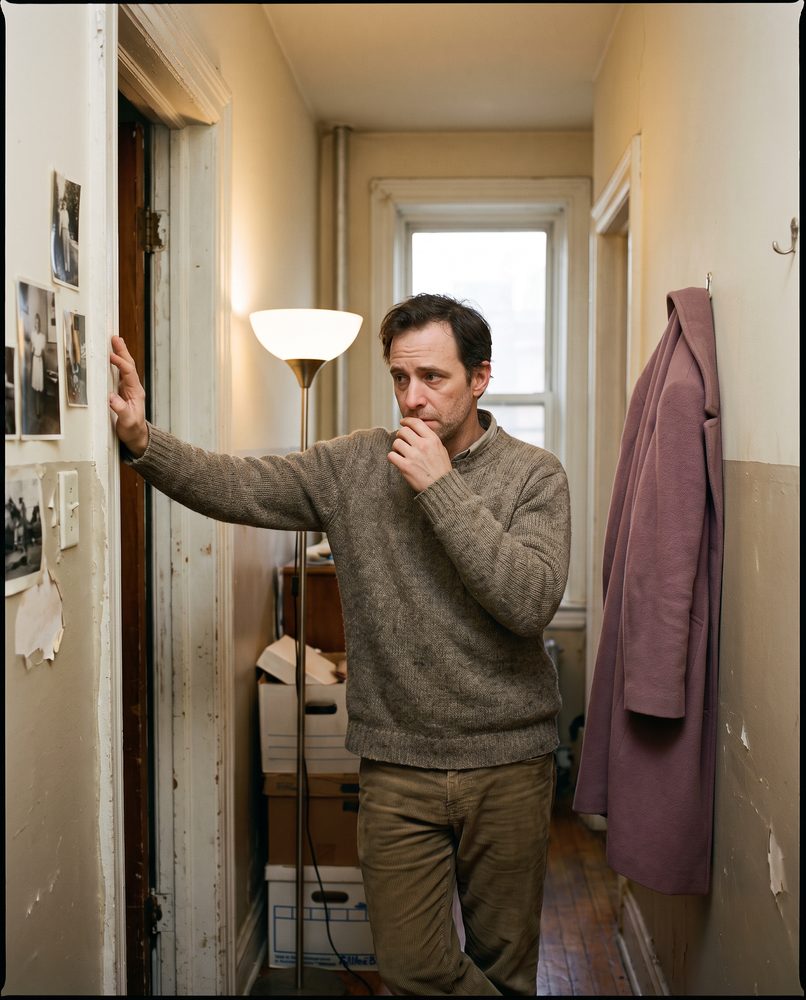
Same line. Three different lives.
Film one short line three times and change nothing except the circumstance. You have been awake for thirty hours. You have just been given wonderful news you cannot share. You are frightened of this room and cannot leave it.
Same words, same framing, same intention. Watch what happens to your eyes, your breath and your pace — without anyone asking you to feel anything.
Chapter three: the scene questions