
The reassurance we are not going to give you
Our research suggested one line for the reader who is thirty-five and thinks they have left it too late. It is the kindest idea in the whole dossier and we cannot print it.
The claim is that the average film actor’s first credit arrives at thirty and a half. The number is real, the research is good, and it is being asked to answer a question it was never about.
What was proposedWhat the study actually contains
The average first credit is at 30.5So a late start is normal
No
Everyone counted already had at least fifteen film credits. It is the average starting age of people who went on to have substantial careers, which is a different population from you.
The average actorPresented as everybody
No
That is the figure for men. For women it is 25.9, and the gap is one of the study’s own findings. Quoting only the male number on a page addressed to everyone is not defensible.
Careers run about thirty yearsRounded
Close
The figure is 28.4 years, and it describes careers that had already ended. Near enough to round, so we are giving you the real one instead.
The number underneathFrom the same research
True
Seven in ten people who get one film credit never get a second. Fewer than one in ten get more than five. That is the statistic sitting next to the comforting one.
We want to be exact about why this matters, because it is not pedantry. If a dataset only contains people who eventually succeeded, then the average age they started tells you nothing whatsoever about your chances of starting. It is a survey of survivors. Using it to comfort somebody would have been smuggling in an assumption we have no basis for — that the reader will turn out like the top sliver of the profession. And it would have been discoverable. The dropout figure sits in the same article, a few paragraphs away. A reassurance that falls apart when the reader checks it is worse than no reassurance.
Here is what the number can honestly do. Even among actors who became prolific, starting in your twenties was not the norm for men. So a late start plainly does not prevent a long career. It cannot tell you your odds, and we are not going to pretend it can. The genuinely encouraging thing on this page is in the next section, and it does not require a statistic at all.
You have not written a résumé with the important part missing
The instinct is that a page without credits is a page with a hole in it. That is backwards, and the reason is mechanical rather than motivational.
Think about what somebody casting a student film actually does. They open a casting platform and filter a database. They do not sit and read documents in order.
What the filters are.
Playing age. Location. Height, colouring, appearance. Accents, with proper logic so they can ask for one and not another. Physical and special skills. Gender.
Every single one of those is on the document you just made. None of them is a credit.
And credits are not among the standard filter fields on any of the major platforms. They sit in free text attached to a person, which is a thing you read after you have already found them.
So the reframe is this, and we think it is the most useful sentence on the page. The credit-free résumé is not a placeholder for a real one. It is the search index — and the section you correctly delete is the one nobody is searching on. One honest limit on how hard we push that. We established the filter fields from the platforms’ own help documentation, not from an engineer confirming what is and is not indexed. So the safe wording is that credits are not among the standard structured filters, rather than that no search could ever surface one. The point stands either way. You are findable on everything you have got.
Which changes what you should spend your time on. Filling in every attribute field properly is worth more than anything you could write in prose, because the fields are what the search runs against. An accent you did not list is an accent you cannot be found for.
What actually goes on it
Four things, and one instruction about the heading you are tempted to leave in.
Training, at the topName the teacher, not just the school. Two of the sources who recommend this sell training, which we should say out loud — but the structural argument survives it, because training is a real filter field and a credit is not.
First
Special skills, specificallyNamed accents, named instruments, named sports, driving licences, languages at an honest level. This is the densest concentration of searchable facts you own.
Second
Physical details and playing ageThe first filters anybody applies. A playing age is a range you can occupy, not a birthday, and leaving it blank removes you from most searches entirely.
Third
Related experienceFront of house, crew, stage management, anything adjacent. It says you have been in buildings where the work happens — and per the filmmakers below, proximity is genuinely how casting works at this level.
Fourth
The credits heading itselfDelete it. Absent, not empty. A heading with nothing under it draws the eye to the absence and makes the page about what you lack.
Remove
School and college productions do go on, and a respected source goes further down than most beginners expect. Bonnie Gillespie, writing in 2005, counts the freshman orientation video — her words are that the video they shot on campus in which you played a student, “well, that counts! So does the school play.”
The workshop you are about to pay for
Somebody will offer you access to a casting director for a fee. Here is the accurate version of the warning, which is narrower than the one we were going to give.
We were going to tell you that paying for a casting director workshop means paying into something the law treats as a scam. That is an overreach and we are correcting it.
What the California law actually does
Commonly saidIt bans casting director workshops.
What it saysIt does not. Training services are explicitly permitted, subject to rules on disclosure, bonding and conduct.
What it prohibitsCharging an advance fee for representation or employment, and selling an audition disguised as instruction.
Has it been used?
The recordYes. Nineteen workshop operators were convicted under it in 2018, for running what were functionally paid auditions.
What that tells youThe line is real and enforceable, and it falls between a class and a purchased audition.
So is a legal workshop worth it?
The honest answerIt is a paid class. It may be a good one.
What it is notA credential. It does not go in your training section as though it were conservatoire work, and casting people have said as much.
One source note, because we would rather show it than bury it. We could not pin down a firm dated quote from a named casting director on workshops not counting as training. The view is widely attributed and we found it paraphrased in several places. We are stating it as a general position rather than putting words in one person’s mouth.
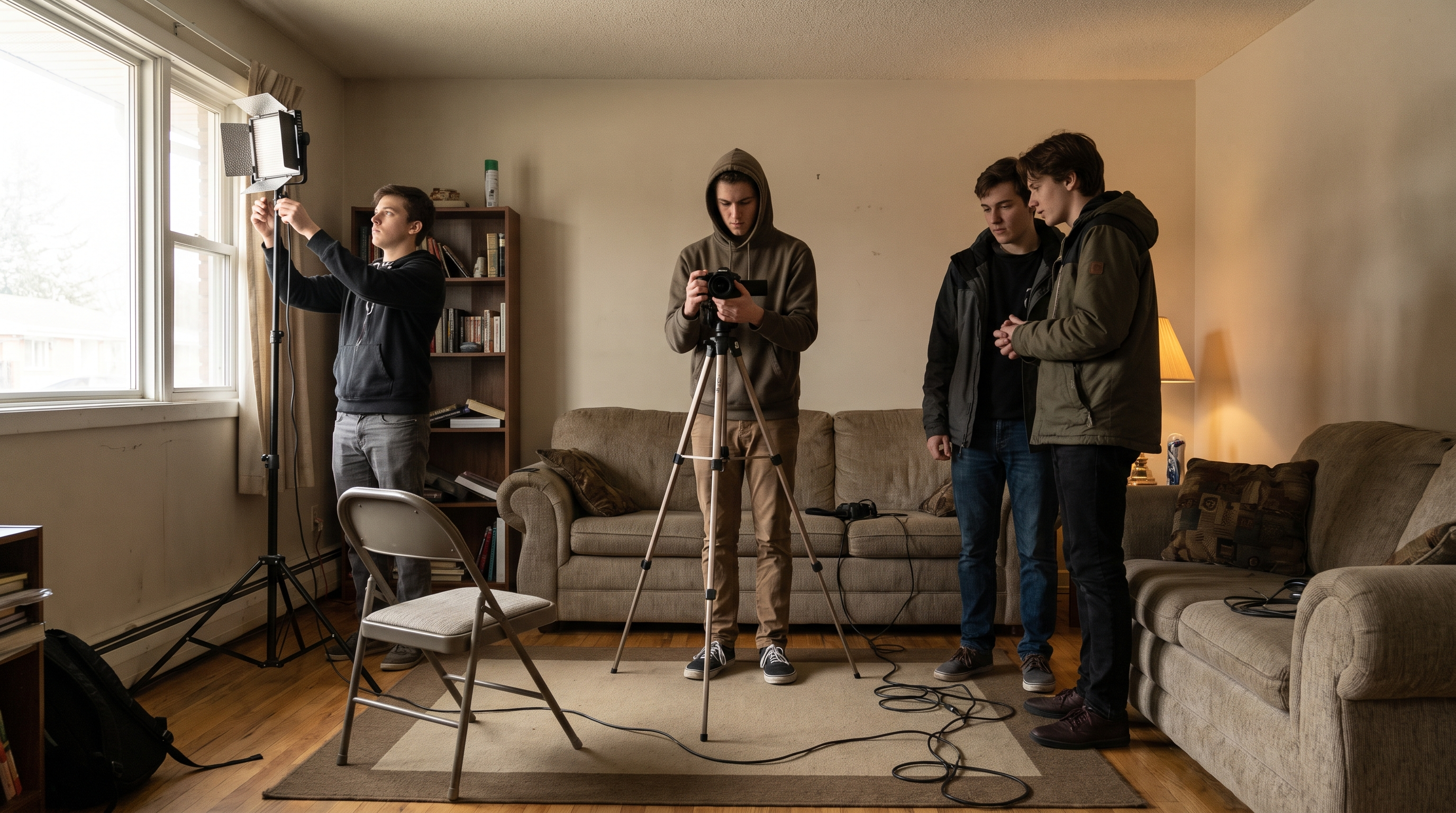
Where a first credit actually comes from
This page used to end by promising you would have credits in four months without saying where from. Here is the route, including the part where the tidy institutional answer turns out not to exist.
Student and short films are the entry point, and the reason is structural. The tier of work that is closed to actors without an agent is not this one. Student castings sit on open platforms, which is precisely the tier that is open to you.
The routeWhat it actually is
The general platformsMandy, StarNow, Backstage UK
Real
Where the work is posted. The London Film School directs its own students to Mandy and Spotlight to find actors, which makes Mandy the practical way into that school’s pipeline.
Actors’ collectives with school tiesFor one school, checkably
Real
An independent collective has run a formal partnership with the London Film School since 2019, supplying actors for directing practice, table reads and the graduation showcase, with a list actors can join.
Smaller dedicated listingsStudent and short film sections
Real
At least one is a genuine registered company with current, dated, paid listings rather than a content farm. Small, but real, and free to apply.
Facebook groups and school noticeboardsYour town plus “auditions”
Real
Unglamorous and it works. The physical noticeboard at a local film school still carries castings that never reach a platform.
British film schools’ own casting systemsWhat we expected to find
Not there
They mostly do not exist. The national school’s casting page is a paid course training casting assistants. Another’s is a workshop for directors. Neither is a way in for an actor, and we would rather say so than imply a tidy route.
Free posting for schoolsA promotional arrangement
American
Real, and the page describing it is written for American schools. We could not confirm it applies in Britain, so we are not sending you looking for it.
And here is the mechanism that makes the first one worth the disproportionate effort. Hero Mackenzie, who graduated from the London Film School in 2017, cast her graduation film with an actor she had watched in somebody else’s student short. Her words: “I watch a lot of short films made by students.” He had a minor role in it and, she says, stole the scene from the lead. Student filmmakers are each other’s audience. So the first credit does not just fill a line. It puts you inside the pool the next cohort casts from, which is why the second one is easier than the first. Nobody gives a number for how long that takes and we are not inventing one.
You will prepare a performance and arrive at a conversation
Nobody tells beginners this and it is the single most useful piece of preparation on the page.
The student film audition is frequently not an audition in the sense you are imagining. Ben Aston, London Film School 2014, started by having actors run a scene and stopped — his words are that “it was actually quite unhelpful. It was more helpful to have a conversation about the character.”
The two-stage version
Hero Mackenzie runs a chat first, “to see if they are someone I can collaborate with”, and only then a read. Stage one is not a warm-up. It is the assessment.
Why they work this way
Aston is candid that early on he was “very scared of actors”, which led to a lack of talking. The person casting you may have less experience in the room than you do, and a conversation is how they find their footing.
What they are looking for
A third filmmaker in the same piece wants somebody who can shift on the spot rather than lock into one fixed idea, and notes that “sometimes what you feel is good on the spot is not necessarily good on camera.”
What to do with thatPrepare the work and then be prepared not to do it. Have something to say about who the person is. The thing being assessed is whether you are someone to work with, which is the same finding as every casting chapter on this site.

The free document nobody mentions
Our research called this the practical gap under the practical gap: nothing anywhere on what a student film agreement should contain. It turns out the union publishes one.
Equity has a guide to working on student films with a standard form of engagement attached. It is free, it is British, and it is written for exactly this situation.
1
Minimum wage still appliesThere is no exemption because a film school is a charity. That single fact is worth knowing before you agree to anything.
2
Usage is limited, and that protects youStudent, educational and festival screening is covered by the day fee. Any commercial use requires re-engaging you under a full agreement, so your student film cannot quietly become an advert.
3
There is a footage clauseA guaranteed copy of the finished film, in an agreed format. Agree this before you shoot, in writing, and then chase it — it is the half of the payment most actors never collect.
4
And a credit clause, expenses, hours and insuranceHow you will be credited, travel and meals, rest breaks under working time rules, cancellation. All the things a first-timer does not know to ask.
Two honest warnings to go with it, because this is that kind of site. Student sets can be disorganised, information can arrive late or wrong, and the recurring complaint from actors is specific: producers who think they are directors and come and give you notes on your performance. One published account calls that the hands-down worst of it. Take notes from the director, which is also the rule on professional sets, and ask at the start who that is. None of this is a reason not to go. Expenses, food and a copy of the footage are a normal offer, the applications are free, and the day is how the whole thing starts.
Grading the sources
The research behind this page was warm, useful and wrong in three places, one of which was its kindest idea.
The claim, and where it came fromWhat we found
The average first credit is at 30.5, so 35 is not lateProposed as the closing kindness
No
The dataset only contains actors with fifteen or more film credits. It is a survey of survivors and cannot speak to a beginner’s odds. It is also the male figure only.
A student film won the Palme d’OrVia a trade article
No
It won the Short Film Palme d’Or, which is a different award. The trade article dropped the qualifier, and repeating that to beginners would badly misdescribe what happened.
De Niro, Keitel, De Palma and Scorsese all met through student filmsA platform’s promotional page
No
Only one pairing is true. De Niro was cast in a college student film De Palma co-directed. De Palma later introduced him to Scorsese at a party. The four-way version is marketing.
A named school casting networkGiven as a route
No
It does not check out for a British reader. The nearest real thing is a Canadian film-school programme with a different name. Dropped.
Equity publishes a student film agreementThe gap our research could not fill
Primary
It exists, it is free and it is detailed — wages, usage, footage, credit, expenses, hours, insurance. The most practically valuable find on the page.
Credits are not a filter fieldPlatform documentation
Good
Playing age, location, appearance, accents and skills all are. Credits sit in free text. Established from help pages rather than from inside the systems, and we have said so.
Hero Mackenzie cast from another student’s shortBackstage UK, 2017
Good
Verified verbatim, including the two-stage audition. The mechanism this page needed and the reason the first credit compounds.
The audition is often a conversationBen Aston, same article
Good
Verified verbatim, with a third filmmaker in the same piece saying much the same thing. Dated 2017.
The freshman orientation video countsBonnie Gillespie
Good
Verified verbatim. From 2005, not recently, and her position on extra work is stricter than usually quoted: remove all of it once you have a real credit.
Paying for a workshop means paying into a scamOur own framing
Narrowed
Overreach. The law permits training services and prohibits disguised paid auditions, which is a real and enforced line. We have published the narrower version.
A casting director says workshops are not trainingAttributed to one name
Unpinned
Widely paraphrased, no firm dated quote found. Stated as a general position rather than as her words.
British film schools run their own casting routesImplied
Mostly not
We checked each one. Their casting pages train casting assistants or run director workshops. The honest answer is the open platforms, and one collective tied to one school.
One thing worth flagging that is not an error. Two of our sources say almost the same reassuring sentence eighteen years apart — one in 2005, one in 2023 — and it would be easy to present that as a single quote from whoever sounds best. They are two people who arrived at it separately, which is more interesting than either alone.
Where we differ from the standard account
Is thirty-five too late to start?
Commonly saidNo, and here is a statistic about average first credits.
What we foundThat statistic only counts people who already succeeded. The honest answer is kinder without it.
Is a résumé with no credits a weak document?
Commonly saidYes, a placeholder until you have something.
What we foundIt contains every field a casting search filters on. Credits are not one of them.
What do you do with the empty credits heading?
Commonly saidLeave it, so the structure looks right.
What we foundDelete it. A heading with nothing under it makes the page about the absence.
Can you list extra work?
Commonly saidPick a side, depending which article you read.
What we foundTwo respected people genuinely disagree. Neither permits upgrading it, which is what people actually do.
What is a student film audition like?
Commonly saidPrepare the scene and perform it.
What we foundOften a conversation first, and that conversation is the assessment.
Do film schools have a way in for actors?
Commonly saidImplied, vaguely, by everyone.
What we foundIn Britain, mostly not. Their casting pages are for training casting staff.
What does a student film pay?
Commonly saidNothing, it is for exposure.
What we foundExpenses, food and footage are a normal offer, and Equity publishes an agreement covering all three.
Do one thing tonight. Go through every attribute field on your casting profile and fill in the empty ones — accents, skills, playing age range, location. That is the part somebody is about to search, it takes twenty minutes, and it is the only work on this page you can do before you have a single credit.