What to Wear for a Self-Tape in 2026
A camera-ready wardrobe guide for actors: what reads well on screen, what disappears into the background, and what to leave in the closet.
By Sal Framondi
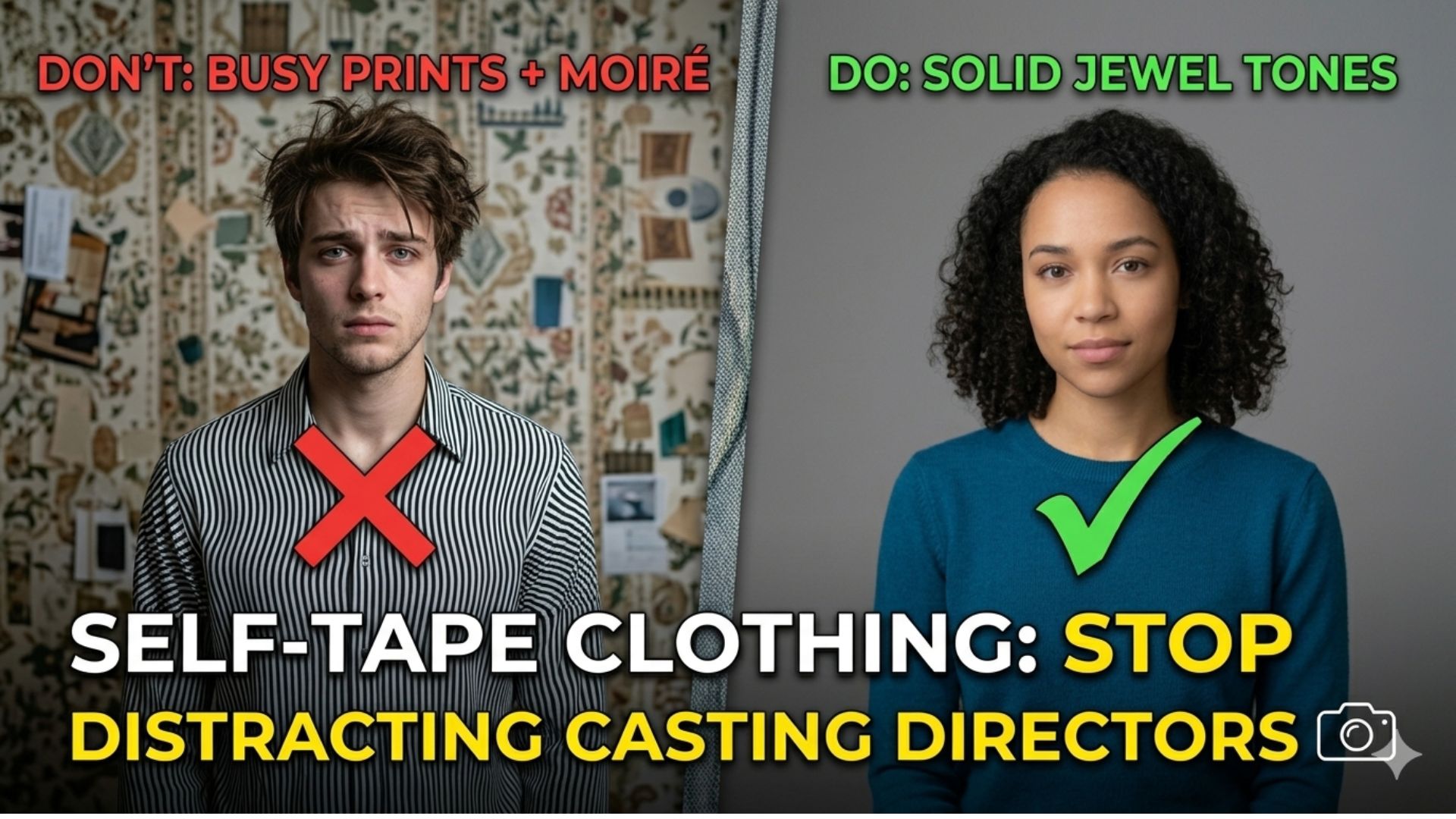
The singular goal of a professional self-tape is to showcase your performance, your eyes, and your specific connection to the material. If a Casting Director is busy analyzing the loud floral pattern on your shirt or trying to ignore the vibrating lines on your sweater, they are fundamentally not looking at your acting. Choosing the right wardrobe for an audition is as much a technical decision as it is an aesthetic one, and in the high-definition casting landscape of 2026, ignoring these specs can result in your file being instantly overlooked. Your clothing must support your character choice, not become the primary focal point.
The Catastrophic Technical Failure of the "Moiré Effect"
The absolute most critical technical rule for on-camera wardrobe is to avoid thin, busy stripes and intricate patterns. When you wear tiny, dense stripes—such as those found on a standard pinstripe shirt, a corduroy jacket, or even some subtle plaids—the digital sensor inside your 4K camera simply cannot process the spatial details correctly. This technical "confusion" generates what is known in the industry as the Moiré Effect: a jarring, wavy, vibrating pattern that actively crawls across your chest on the screen. The effect is profoundly distracting to a viewer and immediately makes your audition footage look like a low-quality, amateur production, zapping the professional credibility of your performance.
The Power of Solid "Jewel Tones" on Digital Sensors
If you are ever uncertain about which clothing to select, you can never go wrong with a solid, professional Jewel Tone. Jewel tones are defined as rich, deeply saturated colors (like sapphire, emerald, ruby, or amethyst) that naturally flatter almost every skin complexion and "pop" beautifully against neutral, grey, or blue backdrops. ROYAL BLUE or NAVY are widely considered the safest, most professional choices for a self-tape. EMERALD GREEN or a deep TEAL are exceptional for making your eye color appear more pronounced, while DEEP PLUM or BURGUNDY can add a sophisticated touch of warmth and maturity to your presence. These colors integrate seamlessly with modern camera color-grading and avoid "washing out" the performer.
Wardrobe Colors You Must Avoid
While you might love these colors in real life, certain colors create technical friction on camera and should be strictly avoided for self-tapes. WHITE must be avoided as it reflects too much light, often "washing out" skin tones or causing the camera's internal auto-exposure to struggle. Bright, primary RED is also problematic; many digital sensors cannot interpret this specific saturation level, causing the color to "bleed" into a fuzzy, distracting halo around the actor's body. Furthermore, skin tones (such as beiges, tans, or peaches) must be avoided, as you will essentially blend into your own features, resulting in a flat, monotone appearance that lacks defining contrast.
Dressing "Character-Informed," Not "In Costume"
A crucial distinction in professional casting is the difference between dressing character-informed versus dressing in costume. You want to intelligently suggest the character’s professional or socio-economic reality without resorting to a full Halloween-style kit that looks desperate or "busy." For example, if you are auditioning for a Doctor, you do not require a stethoscope and a white lab coat; a clean, solid-colored professional button-down is more than sufficient. Similarly, a Lawyer can be suggested by a sharp blazer, and a Blue-Collar role by a clean, logo-free t-shirt or a high-quality denim shirt. Trust the script and your performance to tell the specific story; your clothes are just there to help frame that conviction.
Summary: Trust Flattering Simplicity
When in doubt, always default to a solid-colored, well-fitted top that makes you feel both confident and comfortable. It is essential to avoid logos, branding, or distracting jewelry, and, above all, to never wear the catastrophic "Moiré Effect" tiny stripes. If the Casting Director is able to forget what you were wearing but they can perfectly remember your eyes and your performance nuances, you have done your job perfectly.
STAY INFORMED ON CASTING TECH
LATEST INDUSTRY NEWS: Visit OnSetReport.com