Blog
4 months agoThe Ultimate Guide to Self-Tape Eyelines: Where to Look When You're Alone
Looking directly into the camera is the fastest way to ruin a professional audition. Master the "Just Off-Lens" technique to create a believable scene partner and keep casting directors focused on the emotional truth of your performance.
By Admin
The Biggest Self-Tape Mistake: Breaking the Fourth Wall
Unless a script explicitly instructs you to break the "fourth wall," you should never look directly into the camera lens during a self-tape. In the professional film and television industry, characters engage with one another, not the audience. When an actor stares into the lens, they are essentially talking to a piece of glass rather than a living character, which instantly shatters the illusion of the scene. To make your audition feel like a high-budget production, you must master the "Just Off-Lens" eyeline, which allows the camera to capture the nuances of your performance without making the viewer feel like they are being interrogated.
The Logic of the "Just Off-Lens" Technique
Your eyeline represents where your character’s focus is directed. In a professional self-tape environment, your reader should stand as close to the camera lens as possible without obstructing the frame. This proximity is vital because of the "Two-Eye Rule." If your eyeline is placed too far away from the lens, the camera only captures a profile of your face, obscuring one of your eyes and hiding half of your emotional expression. By keeping your partner close to the camera, you ensure that both eyes remain visible to the Casting Director, creating a sense of intimacy that makes the viewer feel like they are standing inside the scene with you.
The Vital Importance of Eyeline Height
Maintaining a level eyeline is a critical technical skill that many actors overlook. Your "mark" or scene partner should be at the same height as the camera lens. If your partner is significantly taller or shorter than you, they must adjust their position by sitting or standing on a box to match the lens level. Looking significantly up or down during a scene unintentionally changes the power dynamic of the performance; looking down can make a character appear submissive, while looking up can make them appear small or victimized. Keeping your eyes level with the lens ensures the focus remains on your internal choices rather than accidental physical cues.
Handling Multiple Characters in a Single Scene
Navigating a scene with multiple characters requires a specific spatial strategy to avoid the "Tennis Match" effect. If you are addressing two different people, you should place one eyeline slightly to the left of the lens and the second eyeline slightly to the right. This subtle shift allows the camera to see the change in your focus without requiring you to swing your head back and forth. You should never place two different characters on the same side of the camera, nor should you place an eyeline on both sides of the room. Consistency is key to keeping the audience grounded in the geography of the scene you have created.
Creating a Mark When Acting Alone
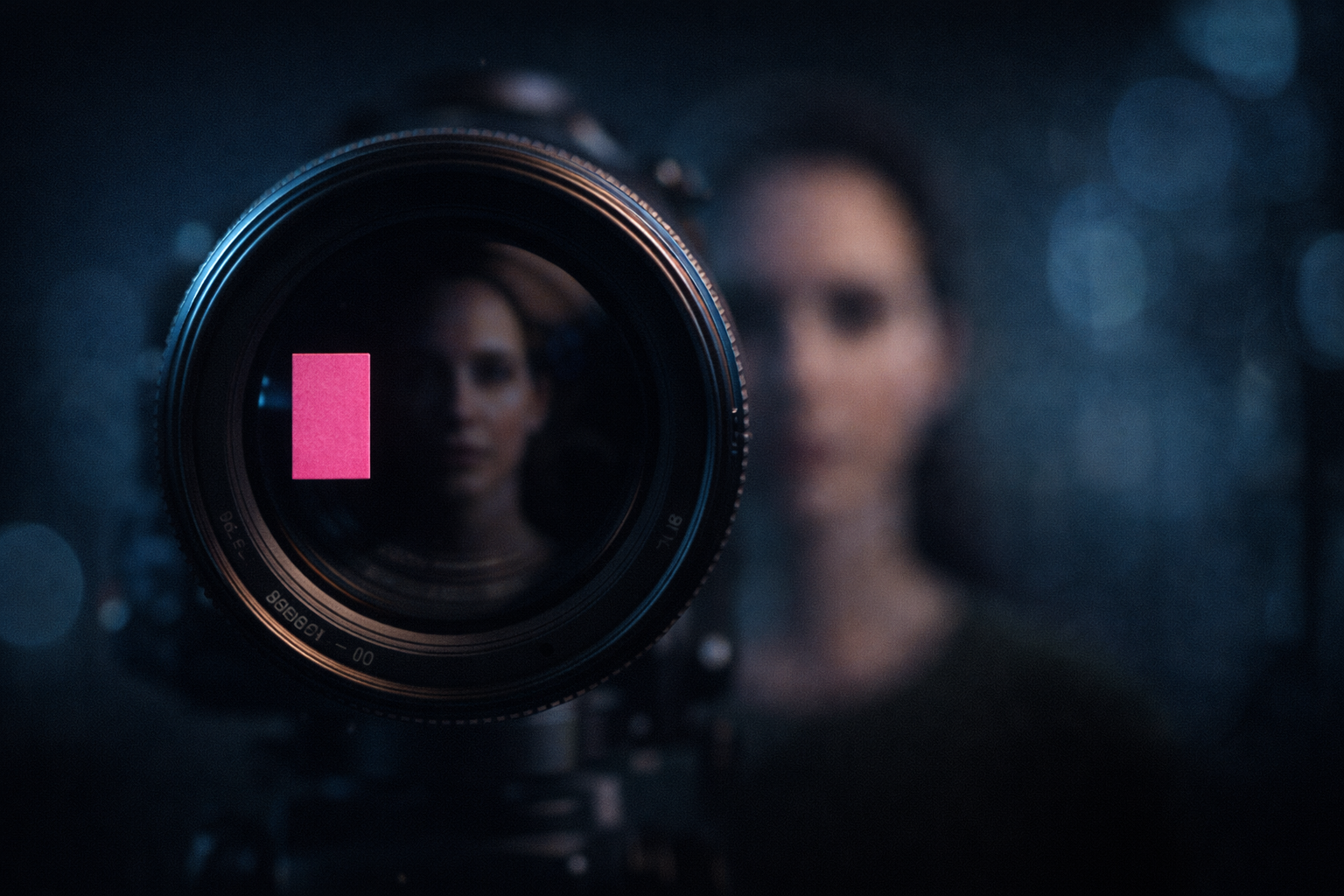
If you are using a digital reader or a pre-recorded track, having a physical "mark" to look at is even more essential. Without a human presence, your eyes have a natural tendency to wander, which Casting Directors can interpret as a lack of preparation or "searching" for lines. To fix this, place a small piece of bright tape or a Post-it note directly next to the camera lens. Focus your emotional energy on that specific point as if it were the most important person in the world. By anchoring your vision to a physical spot, you invite the camera to capture the "truth" in your eyes, ensuring that the illusion of the scene remains intact from the first frame to the last.
Unless a script explicitly instructs you to break the "fourth wall," you should never look directly into the camera lens during a self-tape. In the professional film and television industry, characters engage with one another, not the audience. When an actor stares into the lens, they are essentially talking to a piece of glass rather than a living character, which instantly shatters the illusion of the scene. To make your audition feel like a high-budget production, you must master the "Just Off-Lens" eyeline, which allows the camera to capture the nuances of your performance without making the viewer feel like they are being interrogated.
The Logic of the "Just Off-Lens" Technique
Your eyeline represents where your character’s focus is directed. In a professional self-tape environment, your reader should stand as close to the camera lens as possible without obstructing the frame. This proximity is vital because of the "Two-Eye Rule." If your eyeline is placed too far away from the lens, the camera only captures a profile of your face, obscuring one of your eyes and hiding half of your emotional expression. By keeping your partner close to the camera, you ensure that both eyes remain visible to the Casting Director, creating a sense of intimacy that makes the viewer feel like they are standing inside the scene with you.
The Vital Importance of Eyeline Height
Maintaining a level eyeline is a critical technical skill that many actors overlook. Your "mark" or scene partner should be at the same height as the camera lens. If your partner is significantly taller or shorter than you, they must adjust their position by sitting or standing on a box to match the lens level. Looking significantly up or down during a scene unintentionally changes the power dynamic of the performance; looking down can make a character appear submissive, while looking up can make them appear small or victimized. Keeping your eyes level with the lens ensures the focus remains on your internal choices rather than accidental physical cues.
Handling Multiple Characters in a Single Scene
Navigating a scene with multiple characters requires a specific spatial strategy to avoid the "Tennis Match" effect. If you are addressing two different people, you should place one eyeline slightly to the left of the lens and the second eyeline slightly to the right. This subtle shift allows the camera to see the change in your focus without requiring you to swing your head back and forth. You should never place two different characters on the same side of the camera, nor should you place an eyeline on both sides of the room. Consistency is key to keeping the audience grounded in the geography of the scene you have created.
Creating a Mark When Acting Alone
If you are using a digital reader or a pre-recorded track, having a physical "mark" to look at is even more essential. Without a human presence, your eyes have a natural tendency to wander, which Casting Directors can interpret as a lack of preparation or "searching" for lines. To fix this, place a small piece of bright tape or a Post-it note directly next to the camera lens. Focus your emotional energy on that specific point as if it were the most important person in the world. By anchoring your vision to a physical spot, you invite the camera to capture the "truth" in your eyes, ensuring that the illusion of the scene remains intact from the first frame to the last.