Should You Send Two Self-Tape Takes?
Follow the audition instructions first. When take count is not specified, decide whether one strong take or two distinct takes best serve the scene.
By Sal Framondi
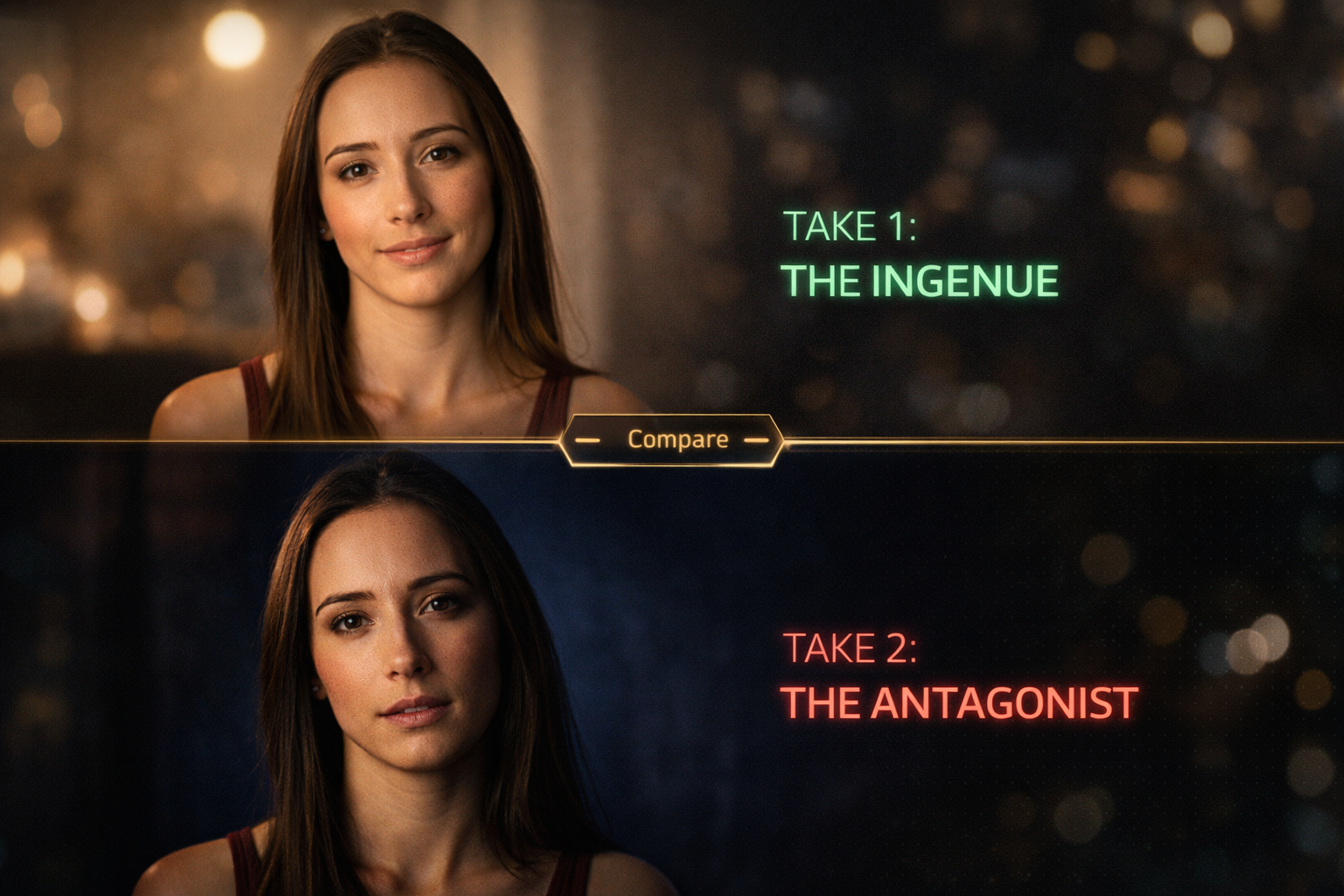
Send the number of takes requested in the audition instructions. If the instructions are silent, one strong take is usually the clearest choice; add a second only when it offers a distinct, defensible interpretation.
More files do not automatically show range. Your decision should make the submission easier to understand, not ask someone else to choose between unfinished ideas.
Follow the stated take count
Read the breakdown, message, scene labels and upload fields before recording. Instructions may set a total number of takes, request one take per scene or invite an alternate. Follow that structure even if your usual practice is different.
Do not treat extra upload slots as permission to fill them. A portal can support several files while the audition request asks for one. Likewise, do not combine files when separate uploads are requested.
The Academy guide to self-tape takes covers the basic decision. The practical question here is how to choose when no answer is supplied.
When instructions are silent, begin with one
Prepare the scene fully and record the interpretation that best fits the text, project tone and role description. If that take communicates a clear relationship, objective and change, it may be all you need.
One take makes a confident statement and reduces the risk of diluting your strongest work. It also keeps attention on the acting rather than on small differences between versions.
Do not submit a second take merely because it contains fewer mistakes. Select the strongest complete take first. Technical or line errors belong in outtakes, not in the final choice.
A second take needs a real reason
Consider a second take when the material genuinely supports two readings and the instructions do not prohibit it. The difference should affect the scene, not just the volume, speed or size of the performance.
You might change what you need from the other person, what has just happened or what you are protecting. A relationship shift can alter listening and behavior while keeping the same words truthful.
Both takes must still fit the role and project. A random opposite choice may show contrast but can also show that you have not made sense of the material.
Do not manufacture contrast
A common trap is making one take quiet and another loud. That changes presentation without necessarily changing the acting. Start with circumstances and intention, then allow pace and energy to follow.
A second take should stand on its own. Do not submit a restrained first take and an exaggerated second take simply to prove range. Ask whether you would be comfortable if either version were viewed by itself.
If Take 2 is merely a slightly better Take 1, choose the better one. Near-duplicates add viewing without adding useful information.
Use preparation to test options
Explore alternatives in rehearsal rather than deciding at the upload screen. Record short passes with different relationships or stakes, then review which interpretation makes the text clearest.
Once you choose a direction, record complete takes. Avoid assembling a performance from many tiny fragments unless the instructions require a particular edit. Continuity of thought matters.
Ask a trusted reader or coach a focused question: which version makes the relationship or turn clearer? Do not ask them to choose based only on which one seems more impressive.
Label and order two takes clearly
When sending two takes, use the requested naming format. If no format is given, identify the scene and take plainly. Keep the actor name and role consistent across both files.
Place your strongest, most text-supported interpretation first unless the instructions specify another order. The second should feel like a purposeful alternate, not a correction.
Open both files after naming them and confirm the labels match the performances. Check that no slate or scene has been duplicated accidentally.
Handle multiple scenes separately
Two scenes do not necessarily mean two takes of each scene. Treat each requested scene as its own decision. One may benefit from an alternate while another is already clear in one version.
Consider the total submission. Four or six files can become cumbersome even when each individual choice seems reasonable. Follow any overall limits shown in the current instructions and portal.
If the request is ambiguous and a contact method is supplied, ask a concise question before the deadline. Do not wait until the upload is due to resolve it.
Review the complete submission
Watch the chosen files in order. Confirm that the takes are meaningfully different, technically consistent and equally usable. A second take with weak sound or focus does not help demonstrate an acting choice.
Remove drafts from the delivery folder. Upload only what you have deliberately selected, then use any portal preview to verify the order.
Know when to stop recording
Set a point when you will review and choose rather than continuing to generate options. Too many similar takes can make a clear decision harder and consume the time needed for upload checks.
Return to the text, identify which version best communicates the scene and submit that work. If no alternate adds a genuinely different and truthful reading, one take is the complete answer.
Decision checklist
Ask: Did the instructions specify a count? Is Take 1 complete and clear? Does Take 2 offer a different relationship, circumstance or objective? Does it still fit the material? Is each version strong enough to stand alone? Are the files labeled and ordered correctly?
Instructions decide first. When they are silent, submit one clear take unless a genuinely distinct second interpretation adds useful information.