Blog
4 months agoNatural Light vs. Artificial Light: How to Use Window Light for Self-Tapes
You don't need a thousand-dollar lighting kit to look like a series regular. Learn the "North-Facing" secret and how to turn any standard window into a professional studio softbox for your next audition.
By Admin
The Best Lighting Source for Actors is Completely Free
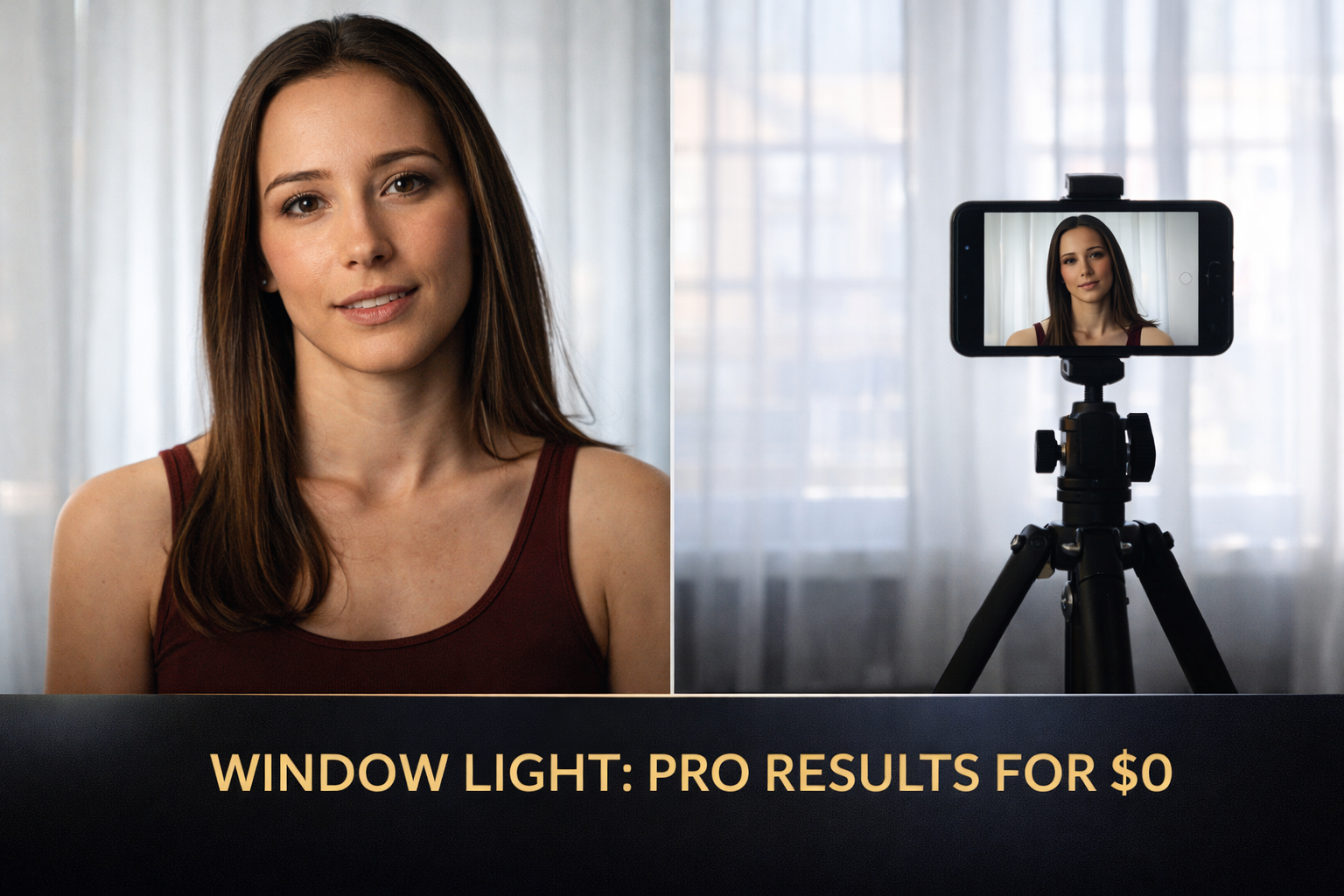
A common misconception in the 2026 acting industry is that professional-grade visuals require an expensive investment in LED panels or high-end ring lights. The reality is that some of the most successful, booking-winning self-tapes are shot using nothing but a standard window. Natural light is "full-spectrum," meaning it renders skin tones with a richness and eyes with a "sparkle" that affordable artificial lights simply cannot replicate. However, while the light is free, its application is a science. If you position yourself incorrectly, natural light can move from your greatest asset to your biggest technical liability.
The Golden Rule of Window Positioning
The most frequent mistake actors make when utilizing natural light is improper orientation relative to the window. If the light source is behind you, you will appear as a dark silhouette, rendered invisible to the Casting Director. If the light is positioned strictly to your side, you create "Rembrandt lighting"—a dramatic, high-contrast look that, while artistic, is often too moody and distracting for a standard film or TV audition. To achieve the professional "flat-light" look that casting offices prefer, you must set your camera up directly in front of the window so that you are looking out toward the glass. This ensures the light hits your features evenly, filling in shadows and making your expressions unmistakable.
Timing and the "North-Facing" Secret
Natural light is a living element that shifts throughout the day, and timing your shoot is critical for consistency. You should always avoid direct, "hard" sunlight hitting your face, as it will cause you to squint and create harsh, "crunchy" shadows under your nose and chin. Many professional cinematographers actually prefer overcast days because clouds act as a massive, natural softbox, scattering the light for a flawless skin finish. If you have the luxury of choice, utilize a north-facing window. North-facing glass provides the most consistent, indirect "cool" light throughout the entire day, preventing the sudden exposure shifts that can ruin a long scene.
How to Diffuse and Soften Your Light Source
If the light entering your space is too intense or creates "hot spots" on your forehead and cheeks, you can easily diffuse it using common household items. Professional diffusion doesn't have to be expensive; taping a thin, white bedsheet or hanging sheer white curtains over the window will create a beautiful, high-end studio glow. These materials act as a "scrim," letting the luminosity through while spreading it out so it "wraps" around your face naturally. This simple hack removes the digital "edge" from your video and gives your self-tape a soft, expensive cinematic quality.
The Hybrid Approach: When Artificial Light is Mandatory
While natural light is superior for beauty and color accuracy, it has one fatal flaw: it is unreliable. If you receive a high-priority "emergency" audition at 8:00 PM during the winter, the sun is no longer your ally. This is why seasoned professionals eventually transition to a hybrid setup. Use natural light whenever possible to capture that organic "film look," but always keep a simple, color-corrected LED kit ready as a backup. Great lighting isn't ultimately about the equipment you own; it's about your understanding of how light interacts with the human face. By mastering window positioning, you can ensure your performance is always the brightest thing in the room.
STAY INFORMED ON CASTING TECH
LATEST INDUSTRY NEWS: Visit OnSetReport.com
A common misconception in the 2026 acting industry is that professional-grade visuals require an expensive investment in LED panels or high-end ring lights. The reality is that some of the most successful, booking-winning self-tapes are shot using nothing but a standard window. Natural light is "full-spectrum," meaning it renders skin tones with a richness and eyes with a "sparkle" that affordable artificial lights simply cannot replicate. However, while the light is free, its application is a science. If you position yourself incorrectly, natural light can move from your greatest asset to your biggest technical liability.
The Golden Rule of Window Positioning
The most frequent mistake actors make when utilizing natural light is improper orientation relative to the window. If the light source is behind you, you will appear as a dark silhouette, rendered invisible to the Casting Director. If the light is positioned strictly to your side, you create "Rembrandt lighting"—a dramatic, high-contrast look that, while artistic, is often too moody and distracting for a standard film or TV audition. To achieve the professional "flat-light" look that casting offices prefer, you must set your camera up directly in front of the window so that you are looking out toward the glass. This ensures the light hits your features evenly, filling in shadows and making your expressions unmistakable.
Timing and the "North-Facing" Secret
Natural light is a living element that shifts throughout the day, and timing your shoot is critical for consistency. You should always avoid direct, "hard" sunlight hitting your face, as it will cause you to squint and create harsh, "crunchy" shadows under your nose and chin. Many professional cinematographers actually prefer overcast days because clouds act as a massive, natural softbox, scattering the light for a flawless skin finish. If you have the luxury of choice, utilize a north-facing window. North-facing glass provides the most consistent, indirect "cool" light throughout the entire day, preventing the sudden exposure shifts that can ruin a long scene.
How to Diffuse and Soften Your Light Source
If the light entering your space is too intense or creates "hot spots" on your forehead and cheeks, you can easily diffuse it using common household items. Professional diffusion doesn't have to be expensive; taping a thin, white bedsheet or hanging sheer white curtains over the window will create a beautiful, high-end studio glow. These materials act as a "scrim," letting the luminosity through while spreading it out so it "wraps" around your face naturally. This simple hack removes the digital "edge" from your video and gives your self-tape a soft, expensive cinematic quality.
The Hybrid Approach: When Artificial Light is Mandatory
While natural light is superior for beauty and color accuracy, it has one fatal flaw: it is unreliable. If you receive a high-priority "emergency" audition at 8:00 PM during the winter, the sun is no longer your ally. This is why seasoned professionals eventually transition to a hybrid setup. Use natural light whenever possible to capture that organic "film look," but always keep a simple, color-corrected LED kit ready as a backup. Great lighting isn't ultimately about the equipment you own; it's about your understanding of how light interacts with the human face. By mastering window positioning, you can ensure your performance is always the brightest thing in the room.
STAY INFORMED ON CASTING TECH
LATEST INDUSTRY NEWS: Visit OnSetReport.com