How Will Roberts Booked a Role in Oppenheimer — And the Self-Tape System He Built From It
Will Roberts didn't just book a role in Christopher Nolan's Oppenheimer — he did it using a specific, repeatable self-tape system that he has now turned into a complete guide for actors. Inside the system that stood out to one of the greatest directors in Hollywood history.
By Sal Framondi
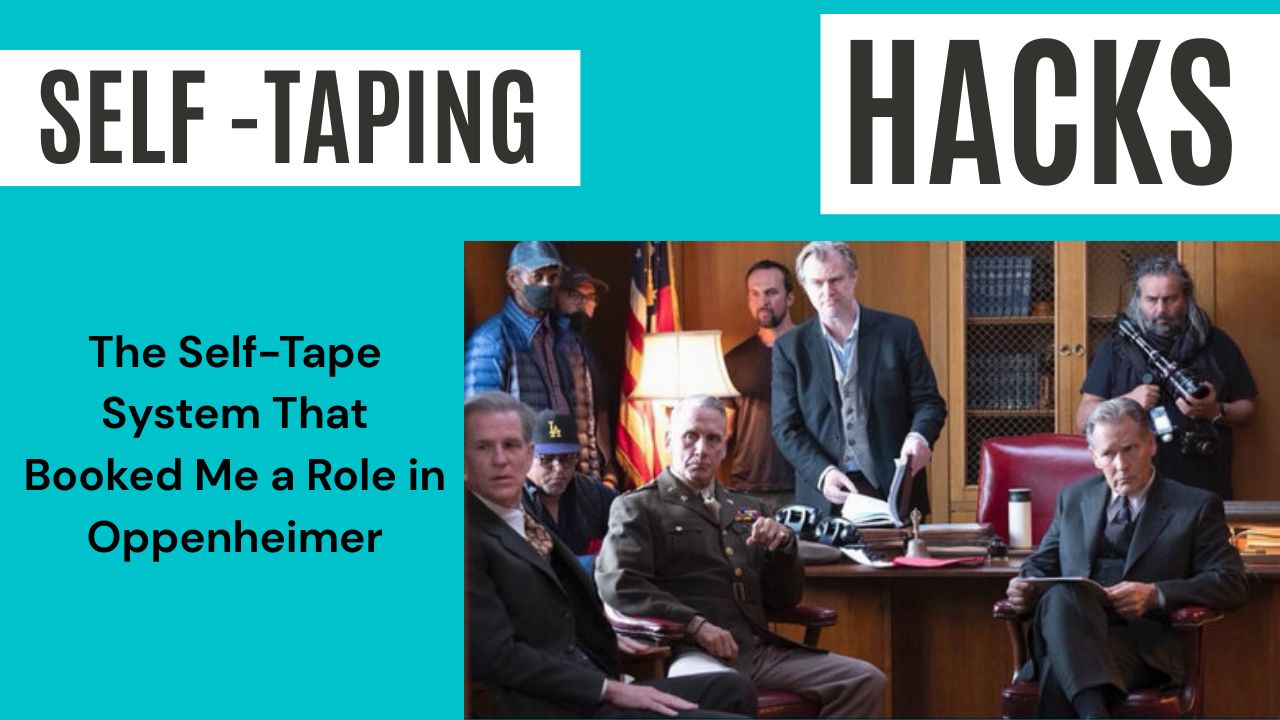
His films — The Dark Knight, Inception, Dunkirk, Tenet, Oppenheimer — are built on precision, specificity, and a relentless pursuit of authenticity. Every frame. Every performance. Every choice.
So when actor and producer Will Roberts submitted a self-tape for Oppenheimer and it landed him the role of General George C. Marshall — one of the most important military figures in American history — it wasn't luck.
It was a system.
And Will has spent the time since building that system into a complete guide for actors: Self-Tape Hacks: The System That Booked Me a Role in Oppenheimer.
Why This Matters for Every Actor in 2026
Here is the thing about self-taping that most actors miss.
The self-tape is not a substitute for a real audition. It is not a workaround. It is not a lesser version of being in the room.
The self-tape IS the audition.
As casting director Anne Chapman, CSA puts it directly in Will's guide: "If I'm hiring directly from the tape, I need to see strong, committed choices. A wrong but bold choice from a strong actor is more valuable than a lukewarm 'right' choice."
That is what casting directors are looking for. Not technical perfection. Not expensive equipment. Not a Hollywood studio setup.
Commitment. Specificity. A performance that lands.
But here's the problem no one talks about: you can have all the talent in the world and still submit a tape that never gets seen — because the lighting is wrong, the framing is off, the reader drowns you out, the file is too big, or the eyeline doesn't connect.
The tape is a professional document. And if the document fails, the performance inside it fails with it.
Will Roberts figured this out. And Oppenheimer proved it.
What the System Actually Covers
Will's guide is built around every element that affects whether a self-tape succeeds or fails — from the first decision you make to the moment you hit submit.
Preparation. The audition comes first. Everything else waits. Will teaches actors to research the tone of the project before recording a single frame — because an indie drama demands different energy than a thriller, and casting directors can tell immediately if you've done your homework. As casting director Heidi Miami Marshall says in the guide: "Approach it with the passion and enthusiasm of actually being on set and creating the work."
The Reader. Casting directors can tell instantly if you're playing against silence. A real reader — or a professional AI reader — changes everything about your performance. Will's system addresses how to get the most out of your reader, when a live reader is essential, and how HowToSelfTape.com's built-in AI scene partners solve this problem for every audition — not just the ones you can afford to coach for.
The Camera. You don't need a $3,000 DSLR. You need the right setup. Casting director Daryl Eisenberg puts it plainly in the guide: "An iPhone is fine, as the quality is high enough to give us the footage we need." Will's system covers exactly how to use what you have to produce professional-grade submissions.
The Tripod. The single most important piece of equipment for your self-tape is not a camera. It is a tripod. Shaky footage signals amateur before you've said a word. Will covers what to look for, what to spend, and why this matters more than anything else in your gear setup.
Framing. Two inches of headroom. Medium close-up. Horizontal always. These are not suggestions — they are industry standards that casting directors notice immediately when they are violated. The guide walks through every framing rule that separates professional submissions from the ones that get passed over in the first three seconds.
Lighting. As casting director Mel Mack puts it in the guide: "If your lighting is off… you're making it real easy for us to move on… you've got 3–7 seconds to make an impression." Will's system covers the 3-point lighting setup that works — key light, fill light, optional back light — and how to achieve professional results with an affordable setup.
Audio. If they can't hear you, they can't hire you. Will's guide breaks down microphone choices, room tone, audio levels, and the one rule that most actors get wrong — your voice must always be louder and clearer than your reader's.
Choices. This is the heart of the system. Casting directors are not looking for the "correct" read. They are looking for commitment. Casting director Kim Williams says it clearly in the guide: "Make strong, confident choices. If you go a little bit bigger than necessary, it's okay. We can pull you back from that, but at least we know there's something there that can be worked with."
Takes. Two takes. Distinctly different. Not two versions of the same read — two genuinely different interpretations that show range. Will's system covers exactly how to approach this and why it consistently gives actors a competitive edge.
The Slate. Your slate is the only moment you get to be yourself — not the character. Will covers how to deliver it with confidence, what information to include, and how to use it to make a first impression before the scene even starts.
Editing and Labeling. The tape is your professional document. Name it correctly. Trim the start and end. Export at the right resolution. These details signal to casting directors whether you understand the business — and whether you are going to be easy to work with.
The Casting Directors Who Contributed
What makes this guide different from most self-tape advice is where it comes from.
Will didn't write this from theory. He wrote it from a working career — and he gathered voices from the industry professionals who are on the other side of the submission portal every single day.
The guide includes insights from casting directors and coaches including Anne Chapman, CSA — Heidi Miami Marshall — Richard Evans — Kim Williams — Stephanie Holbrook — Daryl Eisenberg — Erica S. Bream, CSA — Mel Mack — Mel Mackie — Robert B. Martin — Sharon Bialy — and Marci Liroff.
These are not general impressions. These are specific, practical instructions from the people who decide which tapes get a callback and which ones get skipped.
The Platform Behind the System
The guide is the foundation. HowToSelfTape.com is where you put it into practice.
Every principle Will covers in the book is built into the platform. The AI Script Analyzer breaks down your scene beat by beat — objectives, emotional shifts, character intentions — before you ever hit record. The built-in Teleprompter with a live voice reader keeps your eyes near the lens and your energy in the performance. The Audition Tracker keeps every submission organized. The Self-Tape Guide walks you through the technical setup every time. And the Headshot Evaluator gives you instant professional feedback on your submission materials.
The guide teaches you the system. The platform helps you execute it — every single audition, every single time.
Get Your Free Copy
Will Roberts built this system inside a working career and used it to book a role in one of the most celebrated films of the decade.
Now it is yours.
To receive a free copy of Self-Tape Hacks: The System That Booked Me a Role in Oppenheimer, email:
📧 sal@howtoselftape.com
Put "Free eBook" in the subject line and we will send it directly to your inbox.
And when you are ready to put the system to work — start your free 7-day trial at HowToSelfTape.com. Full access. No credit card. No excuses.
👉 Start Your Free Trial at HowToSelfTape.com