Blog
4 months agoHow to Slate Like a Pro: The 10-Second Digital Handshake for Actors
Your slate is the only time a Casting Director sees you—not the character. Master the "Digital Handshake" with these 2026 industry standards for framing, energy, and professional profiles that win over casting before the scene even starts.
By Admin
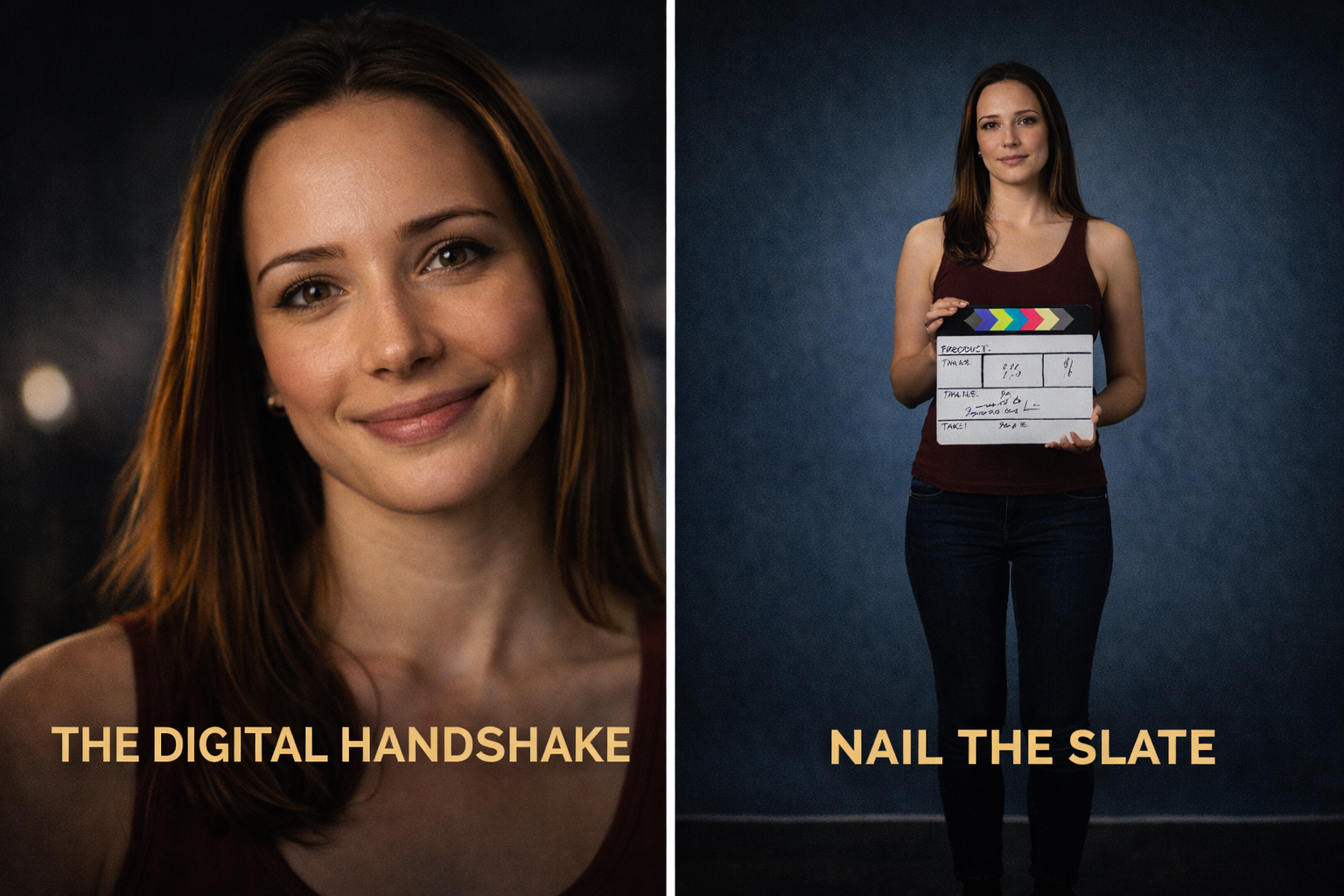
The Power of the Slate: Your Audition's Critical First Impression
In the high-stakes digital casting landscape of 2026, most actors mistakenly view the slate as a tedious formality, focusing 99% of their creative energy on the scene itself. However, industry insiders know that the slate is often the very first thing a Casting Director (CD) sees, and it serves as the only moment they get to experience your authentic personality rather than a character choice. In ten seconds or less, a professional slate communicates your physical stature, your natural "vibe," and your overall level of industry literacy. It is your primary opportunity to prove that you are a charismatic, reliable professional whom a production would want to spend twelve hours a day with on a high-pressure set.
The Energy Shift: Navigating the "Human to Actor" Transition
The most frequent mistake performers make during a slate is adopting a "robotic" persona, reciting their name, height, and location with a flat, glazed-over expression. To stand out, you must treat the slate as a warm greeting to a professional peer. Imagine you are walking into a room of collaborators you already know and trust; your energy should be grounded, friendly, and entirely natural. While you should never "act" during your slate, you must showcase your real-life charisma and presence. This "digital handshake" is a demonstration of your baseline personality, which is often just as important to producers as your dramatic range.
Technical Precision: Following Instructions to the Letter
Professionalism in 2026 is measured by an actor's absolute ability to follow technical directions. Every casting office utilizes a different slate preference; some may require a full-body "long shot," while others demand specific profile turns or a display of the hands for commercial scaling. If a breakdown provides specific information requirements, you must deliver them in the exact order requested. If no instructions are provided, maintain a concise "Industry Standard" format including your Name, Height, Agency, and current Geographic Location. Failing to follow these minor details can signal to a CD that you might be difficult to direct or prone to missing critical marks on a busy set.
Mastering Slate Framing and Seamless Transitions
Achieving a professional look requires a seamless transition between your slate and your scene. If your audition requires a full-body slate followed by a close-up scene, you must handle the frame change without jarring "star wipes" or amateur transitions. The "Zoom Method" involves slating in a medium-wide shot (chest up) to display body language, followed by a clean jump-cut to the Medium Close-Up required for the scene. This technical fluency demonstrates that you have a command over your home studio environment and understand the visual language of modern cinematography, making your submission far more appealing to high-end production teams.
Eye Contact and the "Commercial" Technicals
During your scene, your eyeline should remain anchored just off-camera to maintain the fourth wall. However, during the slate, you must look directly into the camera lens. This direct eye contact creates a subconscious connection with the Casting Director, making the interaction feel personal and present. For commercial auditions, you will frequently be asked to provide "Profiles and Hands." To nail this, turn your head precisely 90 degrees to each side, holding for a half-second to display your bone structure. When showing hands, bring them to chest level, display the palms, and flip to show the backs with a natural, relaxed finger position rather than stiff "jazz hands."
Ending Strong with the Tail Slate and Final Checklist
Occasionally, a breakdown will request a "tail slate," which occurs at the end of your video file. In these instances, it is vital to stay in character for a few beats after your final line before taking a breath and transitioning clearly into your natural self. This demonstrates incredible emotional control and professional range. Before finalizing your upload, always run through a practical checklist: ensure your face is clearly lit without shadows under the eyes, verify that your audio is crisp and intelligible, and keep the entire slate under fifteen seconds. A snappy, professional slate tells the industry you are ready to hit the mark and easy to work with.
In the high-stakes digital casting landscape of 2026, most actors mistakenly view the slate as a tedious formality, focusing 99% of their creative energy on the scene itself. However, industry insiders know that the slate is often the very first thing a Casting Director (CD) sees, and it serves as the only moment they get to experience your authentic personality rather than a character choice. In ten seconds or less, a professional slate communicates your physical stature, your natural "vibe," and your overall level of industry literacy. It is your primary opportunity to prove that you are a charismatic, reliable professional whom a production would want to spend twelve hours a day with on a high-pressure set.
The Energy Shift: Navigating the "Human to Actor" Transition
The most frequent mistake performers make during a slate is adopting a "robotic" persona, reciting their name, height, and location with a flat, glazed-over expression. To stand out, you must treat the slate as a warm greeting to a professional peer. Imagine you are walking into a room of collaborators you already know and trust; your energy should be grounded, friendly, and entirely natural. While you should never "act" during your slate, you must showcase your real-life charisma and presence. This "digital handshake" is a demonstration of your baseline personality, which is often just as important to producers as your dramatic range.
Technical Precision: Following Instructions to the Letter
Professionalism in 2026 is measured by an actor's absolute ability to follow technical directions. Every casting office utilizes a different slate preference; some may require a full-body "long shot," while others demand specific profile turns or a display of the hands for commercial scaling. If a breakdown provides specific information requirements, you must deliver them in the exact order requested. If no instructions are provided, maintain a concise "Industry Standard" format including your Name, Height, Agency, and current Geographic Location. Failing to follow these minor details can signal to a CD that you might be difficult to direct or prone to missing critical marks on a busy set.
Mastering Slate Framing and Seamless Transitions
Achieving a professional look requires a seamless transition between your slate and your scene. If your audition requires a full-body slate followed by a close-up scene, you must handle the frame change without jarring "star wipes" or amateur transitions. The "Zoom Method" involves slating in a medium-wide shot (chest up) to display body language, followed by a clean jump-cut to the Medium Close-Up required for the scene. This technical fluency demonstrates that you have a command over your home studio environment and understand the visual language of modern cinematography, making your submission far more appealing to high-end production teams.
Eye Contact and the "Commercial" Technicals
During your scene, your eyeline should remain anchored just off-camera to maintain the fourth wall. However, during the slate, you must look directly into the camera lens. This direct eye contact creates a subconscious connection with the Casting Director, making the interaction feel personal and present. For commercial auditions, you will frequently be asked to provide "Profiles and Hands." To nail this, turn your head precisely 90 degrees to each side, holding for a half-second to display your bone structure. When showing hands, bring them to chest level, display the palms, and flip to show the backs with a natural, relaxed finger position rather than stiff "jazz hands."
Ending Strong with the Tail Slate and Final Checklist
Occasionally, a breakdown will request a "tail slate," which occurs at the end of your video file. In these instances, it is vital to stay in character for a few beats after your final line before taking a breath and transitioning clearly into your natural self. This demonstrates incredible emotional control and professional range. Before finalizing your upload, always run through a practical checklist: ensure your face is clearly lit without shadows under the eyes, verify that your audio is crisp and intelligible, and keep the entire slate under fifteen seconds. A snappy, professional slate tells the industry you are ready to hit the mark and easy to work with.