How to Self-Tape Without a Reader
Stuck without a scene partner? Three technical solo-tape methods that keep your timing sharp and your tape looking professional.
By Sal Framondi
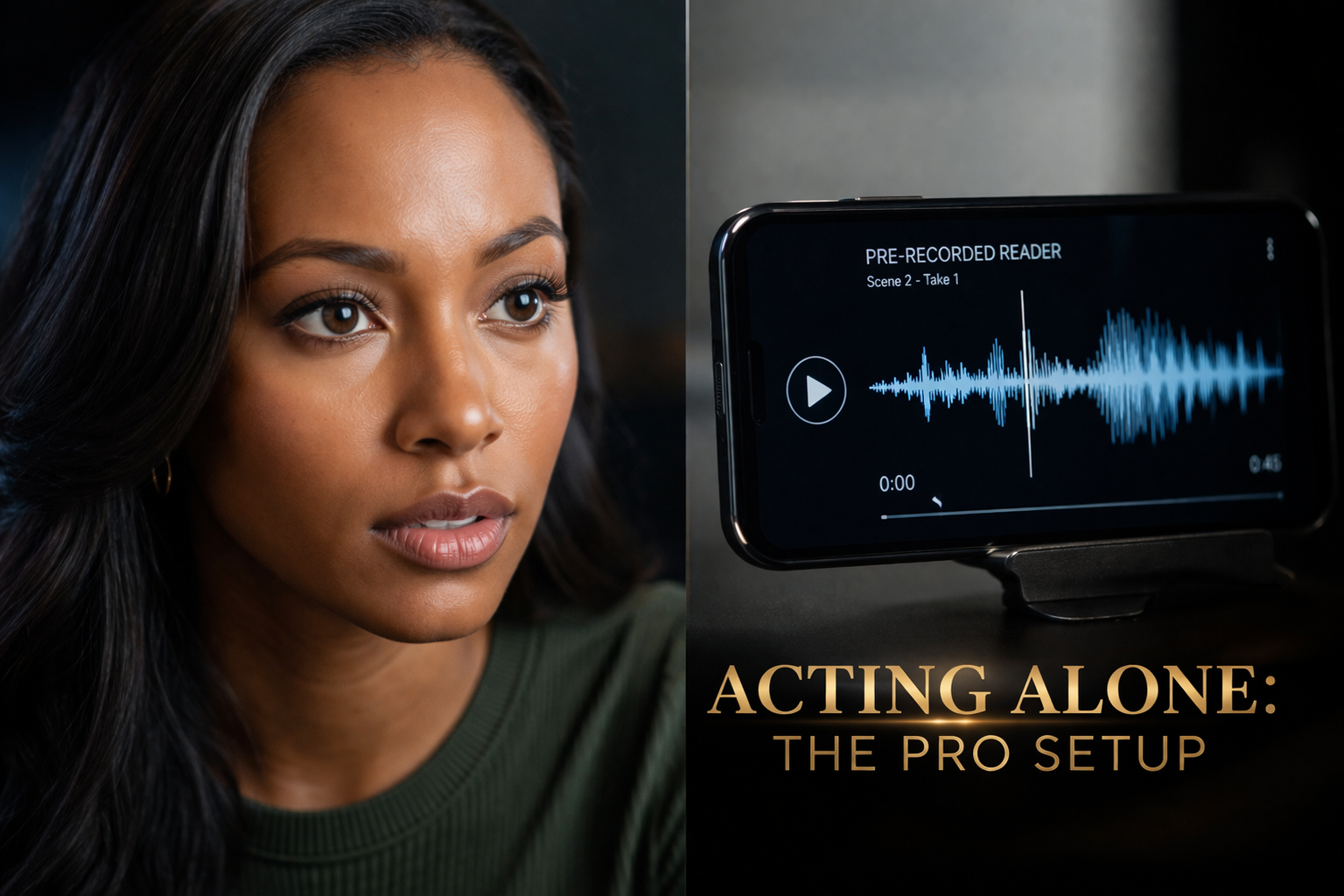
It is a situation every working actor eventually faces: a high-priority audition arrives with a twelve-hour turnaround, and every potential reader you know is busy, asleep, or on set. While having a live human scene partner remains the gold standard for chemistry and spontaneity, the digital landscape of 2026 has provided sophisticated technical workarounds. If you find yourself alone, the key is not to panic, but to utilize a systematic approach that maintains the "ping-pong" rhythm of a real conversation. Acting to silence requires a higher level of focus, but with the right tech, you can turn in a submission that is indistinguishable from one recorded with a live partner.
The Rise of Dedicated Self-Tape and AI Reading Apps
The most efficient way to navigate a solo session is to utilize applications specifically engineered for this challenge. Modern tools like WeAudition, ColdRead, or LineLearner allow you to pre-record the "Reader" lines and trigger them during your performance. These apps often feature "Smart Gaps" that detect the length of your lines or allow you to trigger the next cue with a subtle Bluetooth remote. When using these tools, the most important technical tip is to keep your playback volume moderate. If the reader's voice is too loud, your microphone will pick up a "tinny" echo from the speakers, which immediately signals to a Casting Director that you are acting to a recording rather than a person.
The Pre-Recorded Audio Track and the Physical Gap Method
If you prefer to work without a specialized app, you can achieve professional results using a standard voice memo application. The secret to success with this method is the "Physical Gap." When recording the reader's lines, you must actually "act out" your own lines in your head in real-time. This ensures that the silences you leave between the reader's dialogue are the correct organic length for your reactions. To make the scene feel three-dimensional, play the recording back through an external Bluetooth speaker placed near your camera's lens. This mimics the directional source of a real person's voice, keeping your eyeline grounded and your ears tuned to the "world" of the scene.
The Advanced Technique of Silent Beats and Ghost Cues
For the actor with an elite level of concentration, the "Silent Beats" method involves memorizing the entire scene—including the reader's lines—and acting to invisible cues. This is a high-risk, high-reward strategy because without an audible sound cue, your timing can easily become "rushed," causing you to step on the imaginary character's dialogue. To master this, many pros use the "Last Word Trigger," where they subtly mouth the reader's final word to themselves as a physical cue to begin their own line. This ensures that your "listening" remains active and your internal monologue continues to react to the imaginary stimulus, preventing the performance from becoming a static monologue.
Avoiding the Trap of the Robotic Pause
The single biggest failure of the solo self-tape is the "Robotic Pause," where an actor visibly waits for a recording to finish before "re-starting" their acting. To maintain professional credibility in 2026, you must ensure you are breathing, shifting, and reacting during the reader's lines just as you would if they were physically present. Your primary job is to create an illusion so seamless that the Casting Director forgets you are in a room by yourself. By treating your technical setup as your scene partner, you can provide a grounded, responsive performance that proves you are a "solution" for the production, regardless of your circumstances.
STAY INFORMED ON CASTING TECH
LATEST INDUSTRY NEWS: Visit OnSetReport.com