Blog
2 months agoHow to Self-Tape for Commercials vs. TV vs. Film: The Complete 2026 Guide
Commercial, TV, and film casting directors are looking for completely different things when they open your self-tape — and submitting the same setup and energy across all three formats is one of the most common reasons talented actors do not get callbacks. This is the complete guide to reading the room before you even hit record.
By Admin

Most actors treat every self-tape the same way. Same setup. Same energy. Same framing. Same lighting. Same slate. Send it in and wait.
The actors who book across multiple formats do the opposite. They read the room before they build the room. They know that the casting director watching a commercial self-tape and the casting director watching a dramatic film self-tape are not looking for the same thing — and that submitting a theatrical performance to a commercial audition, or commercial energy to a prestige drama, is the fastest way to signal that you do not understand the industry you are trying to work in.
This guide breaks down every format difference that matters: performance, setup, lighting, slate, pacing, and the specific technical adjustments that make a self-tape feel native to the format it is being submitted for.
The Foundational Difference: What Each Format Is Actually Casting For
Before the technical breakdown, the strategic one.
Commercial auditions are based on efficient planning — they last just a few minutes per candidate, and the final decision involves not only casting staff but also the input of media agencies and clients themselves. You are not just auditioning for a casting director. You are auditioning for a brand. The central question is whether you make an audience trust and like the product. That is a completely different mandate than demonstrating emotional range or narrative believability.
Commercial casting directors say it plainly — commercials versus theatrical jobs are apples and oranges. Actors who get their start in student films default to treating all auditions like film auditions. They do not work that way. The energy, the pacing, the setup, the performance register — all of it shifts when the format shifts.
Film auditions search for a fitting piece of the overall storytelling board of a movie project. Casting directors are looking for a performer who can capture an audience for an extended period while fulfilling the artistic vision of the project's creators rather than promoting a product. The camera in a film submission is not a witness to your performance. It is a collaborator in it. Micro-expressions, breath, stillness, and the thought behind the line are all visible in a way they simply are not in commercial work.
Television sits between the two — and then splits again depending on whether you are taping for a network procedural, a premium cable drama, a streaming comedy, or a multi-camera sitcom. Each has its own visual and performance language. The mistake most actors make is treating TV as a single format when it is actually a spectrum that touches both commercial energy on one end and cinematic intimacy on the other. Knowing where on that spectrum your specific submission falls is the work that separates actors who book TV consistently from those who get occasional callbacks and cannot figure out why the results are uneven.
Commercial Self-Tapes: Bright, Fast, and Likable
A commercial audition is a chance to connect truthfully on camera. You are not selling a product — you are revealing something real in a moment that happens to involve one. Bring authentic energy, stay present, and let your personality light up the frame. Commercials are short, often lasting 15 to 60 seconds, so you must make a strong first impression quickly. Casting directors want to see how fast you can bring energy and likability to the screen.
The word that defines commercial performance is accessibility. Casting directors and their clients need to look at you and immediately feel warmth, trust, and relatability within the first two seconds. This is not about being fake or performed — it is about being the most open, magnetic version of yourself from the first frame. The instinct to internalize, to sit in complexity, to let the emotion live beneath the surface — all of that serves film beautifully and kills commercial submissions. What serves commercial is presence, specificity, and the ability to make a stranger like you before you have said a single word.
On the slate, when asked and given no further direction, say your first and last name only. Nothing else. Do not add your agent, your location, your height, or a profile shot unless specifically requested. Commercial slates are usually shot very close up and come at the beginning of the audition. A cluttered slate signals that you do not know the commercial world's conventions, which is exactly the wrong first impression in a format where first impressions are everything.
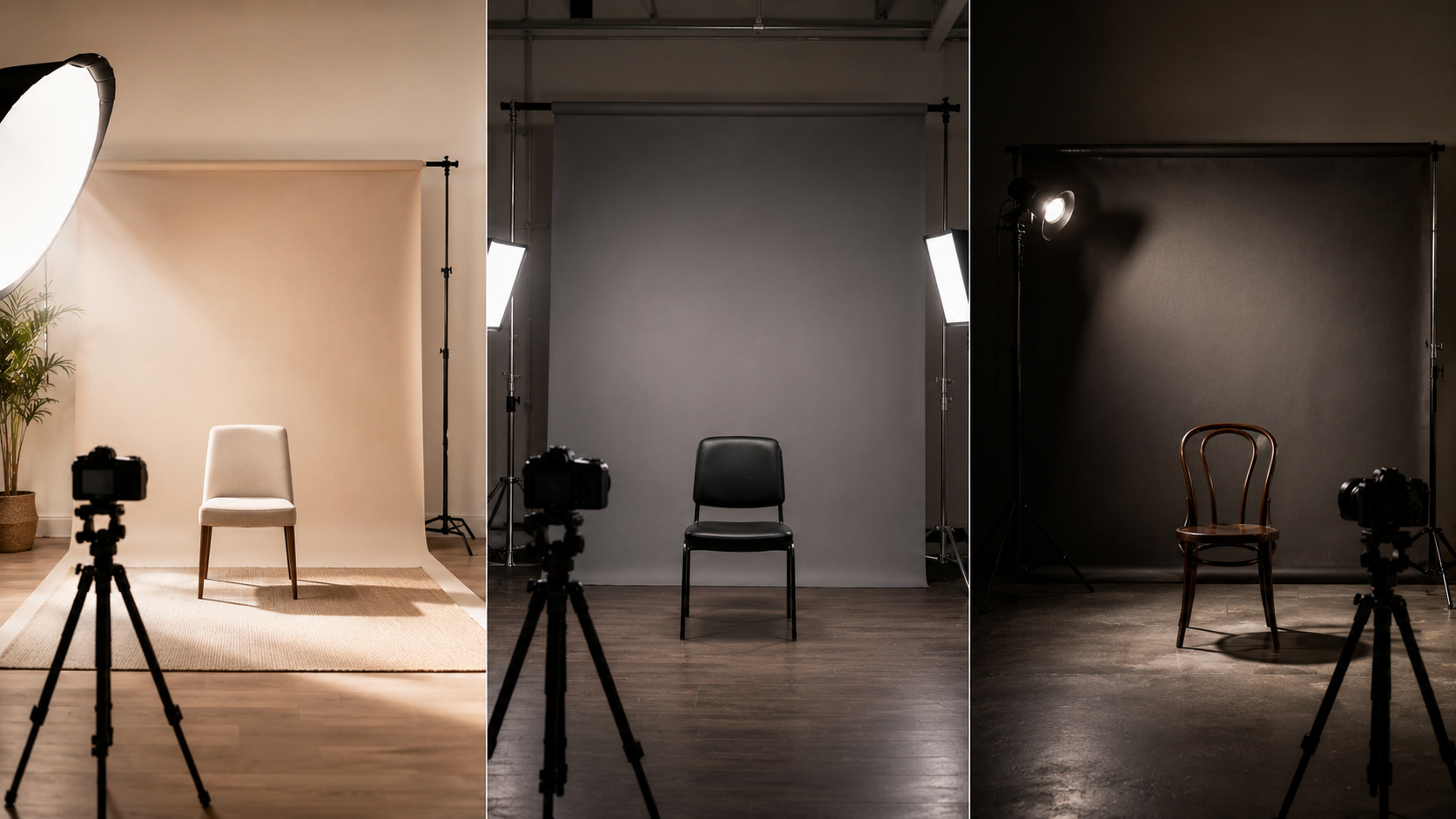
For the technical setup, high-key lighting — a lighting aesthetic with no shadows and intense brightness — is the visual register commercial casting directors are wired to respond to. Your face should be evenly and brightly lit. A ring light centered in front of you, or two softboxes at equal 45-degree angles with matched intensity, produces this look cleanly. Commercial lighting style is typically softer and brighter, designed to highlight warmth and approachability — to show casting directors that you can connect with everyday audiences and represent a brand with authenticity. Anything that reads dark, dimensional, or moody fights the energy the format requires and creates a visual mismatch that registers subconsciously before the performance even begins.
A commercial casting director wants to focus on you and your performance, not on what is on the bookshelf behind you. They want to see your face clearly. Natural light is fantastic. The mic on your phone will work. Your performance is the most important element — do not let gear anxiety delay your submission. And submit early. One of the worst scenarios for a casting director is not having enough actors to present to their client. When you submit early, you provide reassurance to the casting office that all is on track. Casting directors notice — and an early, strong submission can put you on casting's radar before most tapes have even come in.
TV Self-Tapes: Energy Calibrated to the Show's World
Television is the format with the widest internal range, which makes it the most important one to read carefully before you touch the camera. The single most important step you can take before taping for any TV role is to watch at least two episodes of the series if it exists, or to study the tone of the breakdown carefully if it is a pilot. The show itself tells you everything about the register you need to hit — faster or slower, broader or tighter, elevated or naturalistic.
For TV, especially shows with more energy or faster pacing, casting directors might prefer to see a little more movement. They still want a clear view of your face, but they may want to see how you move or react. Keep your frame wide enough to show your shoulders and hands when needed, but not so wide that your face feels far away. The standard medium close-up — chest to just above the head, camera at eye level, straight angle — is your baseline for any TV submission. From there, you adjust based on the show's tone rather than making a blanket decision.
The lighting for TV submissions should be clean and professional without pushing into the high-brightness commercial register or the dramatic contrast of a cinematic film setup. Think of it as the professional midpoint — bright enough to read as polished, dimensional enough to convey character and emotional depth. Two softboxes at 45-degree angles with a slight imbalance between key and fill give you this effect without requiring complex equipment. The side that is slightly less lit creates just enough dimension to suggest a real person rather than a commercial spokesperson, while remaining warm and accessible enough to serve the intimacy of the television medium.
No matter the style, follow any special directions from casting carefully. They may ask for a wide shot, a slate in a specific format, or a particular eyeline. In TV, more than any other format, the breakdown instructions are a test of professionalism as much as the performance itself. Actors who follow them precisely demonstrate that they can take direction, which is one of the core things a TV casting director is evaluating.
Film Self-Tapes: Intimate, Dimensional, and Emotionally True
Film is where the technical register shifts most dramatically — and where actors trained in commercial or stage work most commonly get it wrong. The instinct to project, to fill the space, to announce the emotion — these instincts are correct for the stage and counterproductive for the camera.
In acting audition videos for film, casting directors usually want close, natural shots that feel real and emotional. Film scenes often focus on smaller, quieter moments where your eyes and small expressions matter most. Restraint reads. Authenticity reads. Size does not. The medium close-up in a film submission is not a frame that captures your performance — it is a frame that reveals it. Every thought behind the line, every fraction of a breath before the reaction, every micro-expression that you might never consciously intend is visible in this frame and legible to a casting director watching on a laptop screen at close range.
Casting directors for film have high expectations even on self-tapes. Even though you may have just received the copy, they assume you have had time to work on the material and can bring your best performance. Make strong choices for your character and ensure the take you submit is your absolute best one. This is not a format that rewards adequate preparation. Film casting directors are making decisions about whether your performance has the depth to sustain a feature film or a ten-episode prestige series. The bar is correspondingly higher.
For the technical setup, the lighting for film should be dimensional rather than flat. Theatrical lighting style is often moodier, with more contrast and shadow to create intensity — designed to demonstrate range and believability for complex roles. This does not mean your film self-tape should be dark or underexposed. It means the lighting should have shape — a clear key light with visible shadow on the opposite side of the face rather than the flat, even brightness of a commercial setup. Move your softbox or ring light to a 45-degree angle and reduce or eliminate the fill light on the opposite side. The result is a face with depth, contour, and presence — a face that looks like it belongs in a frame rather than in an advertisement.
Low-key lighting — a filmic style that uses more directional light to create depth and dimension — conveys the sense of character complexity that dramatic material requires. The backdrop for film should recede entirely. A neutral gray or dark neutral surface that creates no visual competition is the standard. Nothing warm, nothing bright, nothing that pulls the eye away from the performance happening in the foreground.
The Mistake That Costs Actors the Most
The most common cross-format mistake is not the performance — it is the mismatch between the setup and the material. An actor who shoots a dramatic film self-tape with a ring light centered dead-on, bright and even, is sending a visual signal that fights the scene before a single word is spoken. The lighting says commercial. The material says drama. The casting director's brain registers the conflict, and the tape loses credibility before the performance gets its chance.
The reverse is equally damaging. An actor who brings restrained, internally focused film naturalism to a commercial self-tape reads as flat, disengaged, and uncastable in the format — even if the technical craft is objectively strong. Both commercial and narrative styles need clean video and sound — but when you self-tape for a commercial, keep your energy high and show quick connection. For a narrative role, it may take more time to ascertain what the action is in the scene and let the emotional truth build more slowly.
Read the format first. Build the room second. Then perform. In 2026, the actors booking across multiple categories are not necessarily more talented than the actors who only book in one. They are more technically fluent. They understand that the camera, the lighting, and the backdrop are not neutral — they are the first layer of the performance. And they set that layer intentionally, specifically, and correctly for the format in front of them every single time they sit down to tape.
The actors who book across multiple formats do the opposite. They read the room before they build the room. They know that the casting director watching a commercial self-tape and the casting director watching a dramatic film self-tape are not looking for the same thing — and that submitting a theatrical performance to a commercial audition, or commercial energy to a prestige drama, is the fastest way to signal that you do not understand the industry you are trying to work in.
This guide breaks down every format difference that matters: performance, setup, lighting, slate, pacing, and the specific technical adjustments that make a self-tape feel native to the format it is being submitted for.
The Foundational Difference: What Each Format Is Actually Casting For
Before the technical breakdown, the strategic one.
Commercial auditions are based on efficient planning — they last just a few minutes per candidate, and the final decision involves not only casting staff but also the input of media agencies and clients themselves. You are not just auditioning for a casting director. You are auditioning for a brand. The central question is whether you make an audience trust and like the product. That is a completely different mandate than demonstrating emotional range or narrative believability.
Commercial casting directors say it plainly — commercials versus theatrical jobs are apples and oranges. Actors who get their start in student films default to treating all auditions like film auditions. They do not work that way. The energy, the pacing, the setup, the performance register — all of it shifts when the format shifts.
Film auditions search for a fitting piece of the overall storytelling board of a movie project. Casting directors are looking for a performer who can capture an audience for an extended period while fulfilling the artistic vision of the project's creators rather than promoting a product. The camera in a film submission is not a witness to your performance. It is a collaborator in it. Micro-expressions, breath, stillness, and the thought behind the line are all visible in a way they simply are not in commercial work.
Television sits between the two — and then splits again depending on whether you are taping for a network procedural, a premium cable drama, a streaming comedy, or a multi-camera sitcom. Each has its own visual and performance language. The mistake most actors make is treating TV as a single format when it is actually a spectrum that touches both commercial energy on one end and cinematic intimacy on the other. Knowing where on that spectrum your specific submission falls is the work that separates actors who book TV consistently from those who get occasional callbacks and cannot figure out why the results are uneven.
Commercial Self-Tapes: Bright, Fast, and Likable
A commercial audition is a chance to connect truthfully on camera. You are not selling a product — you are revealing something real in a moment that happens to involve one. Bring authentic energy, stay present, and let your personality light up the frame. Commercials are short, often lasting 15 to 60 seconds, so you must make a strong first impression quickly. Casting directors want to see how fast you can bring energy and likability to the screen.
The word that defines commercial performance is accessibility. Casting directors and their clients need to look at you and immediately feel warmth, trust, and relatability within the first two seconds. This is not about being fake or performed — it is about being the most open, magnetic version of yourself from the first frame. The instinct to internalize, to sit in complexity, to let the emotion live beneath the surface — all of that serves film beautifully and kills commercial submissions. What serves commercial is presence, specificity, and the ability to make a stranger like you before you have said a single word.
On the slate, when asked and given no further direction, say your first and last name only. Nothing else. Do not add your agent, your location, your height, or a profile shot unless specifically requested. Commercial slates are usually shot very close up and come at the beginning of the audition. A cluttered slate signals that you do not know the commercial world's conventions, which is exactly the wrong first impression in a format where first impressions are everything.
For the technical setup, high-key lighting — a lighting aesthetic with no shadows and intense brightness — is the visual register commercial casting directors are wired to respond to. Your face should be evenly and brightly lit. A ring light centered in front of you, or two softboxes at equal 45-degree angles with matched intensity, produces this look cleanly. Commercial lighting style is typically softer and brighter, designed to highlight warmth and approachability — to show casting directors that you can connect with everyday audiences and represent a brand with authenticity. Anything that reads dark, dimensional, or moody fights the energy the format requires and creates a visual mismatch that registers subconsciously before the performance even begins.
A commercial casting director wants to focus on you and your performance, not on what is on the bookshelf behind you. They want to see your face clearly. Natural light is fantastic. The mic on your phone will work. Your performance is the most important element — do not let gear anxiety delay your submission. And submit early. One of the worst scenarios for a casting director is not having enough actors to present to their client. When you submit early, you provide reassurance to the casting office that all is on track. Casting directors notice — and an early, strong submission can put you on casting's radar before most tapes have even come in.
TV Self-Tapes: Energy Calibrated to the Show's World
Television is the format with the widest internal range, which makes it the most important one to read carefully before you touch the camera. The single most important step you can take before taping for any TV role is to watch at least two episodes of the series if it exists, or to study the tone of the breakdown carefully if it is a pilot. The show itself tells you everything about the register you need to hit — faster or slower, broader or tighter, elevated or naturalistic.
For TV, especially shows with more energy or faster pacing, casting directors might prefer to see a little more movement. They still want a clear view of your face, but they may want to see how you move or react. Keep your frame wide enough to show your shoulders and hands when needed, but not so wide that your face feels far away. The standard medium close-up — chest to just above the head, camera at eye level, straight angle — is your baseline for any TV submission. From there, you adjust based on the show's tone rather than making a blanket decision.
The lighting for TV submissions should be clean and professional without pushing into the high-brightness commercial register or the dramatic contrast of a cinematic film setup. Think of it as the professional midpoint — bright enough to read as polished, dimensional enough to convey character and emotional depth. Two softboxes at 45-degree angles with a slight imbalance between key and fill give you this effect without requiring complex equipment. The side that is slightly less lit creates just enough dimension to suggest a real person rather than a commercial spokesperson, while remaining warm and accessible enough to serve the intimacy of the television medium.
No matter the style, follow any special directions from casting carefully. They may ask for a wide shot, a slate in a specific format, or a particular eyeline. In TV, more than any other format, the breakdown instructions are a test of professionalism as much as the performance itself. Actors who follow them precisely demonstrate that they can take direction, which is one of the core things a TV casting director is evaluating.
Film Self-Tapes: Intimate, Dimensional, and Emotionally True
Film is where the technical register shifts most dramatically — and where actors trained in commercial or stage work most commonly get it wrong. The instinct to project, to fill the space, to announce the emotion — these instincts are correct for the stage and counterproductive for the camera.
In acting audition videos for film, casting directors usually want close, natural shots that feel real and emotional. Film scenes often focus on smaller, quieter moments where your eyes and small expressions matter most. Restraint reads. Authenticity reads. Size does not. The medium close-up in a film submission is not a frame that captures your performance — it is a frame that reveals it. Every thought behind the line, every fraction of a breath before the reaction, every micro-expression that you might never consciously intend is visible in this frame and legible to a casting director watching on a laptop screen at close range.
Casting directors for film have high expectations even on self-tapes. Even though you may have just received the copy, they assume you have had time to work on the material and can bring your best performance. Make strong choices for your character and ensure the take you submit is your absolute best one. This is not a format that rewards adequate preparation. Film casting directors are making decisions about whether your performance has the depth to sustain a feature film or a ten-episode prestige series. The bar is correspondingly higher.
For the technical setup, the lighting for film should be dimensional rather than flat. Theatrical lighting style is often moodier, with more contrast and shadow to create intensity — designed to demonstrate range and believability for complex roles. This does not mean your film self-tape should be dark or underexposed. It means the lighting should have shape — a clear key light with visible shadow on the opposite side of the face rather than the flat, even brightness of a commercial setup. Move your softbox or ring light to a 45-degree angle and reduce or eliminate the fill light on the opposite side. The result is a face with depth, contour, and presence — a face that looks like it belongs in a frame rather than in an advertisement.
Low-key lighting — a filmic style that uses more directional light to create depth and dimension — conveys the sense of character complexity that dramatic material requires. The backdrop for film should recede entirely. A neutral gray or dark neutral surface that creates no visual competition is the standard. Nothing warm, nothing bright, nothing that pulls the eye away from the performance happening in the foreground.
The Mistake That Costs Actors the Most
The most common cross-format mistake is not the performance — it is the mismatch between the setup and the material. An actor who shoots a dramatic film self-tape with a ring light centered dead-on, bright and even, is sending a visual signal that fights the scene before a single word is spoken. The lighting says commercial. The material says drama. The casting director's brain registers the conflict, and the tape loses credibility before the performance gets its chance.
The reverse is equally damaging. An actor who brings restrained, internally focused film naturalism to a commercial self-tape reads as flat, disengaged, and uncastable in the format — even if the technical craft is objectively strong. Both commercial and narrative styles need clean video and sound — but when you self-tape for a commercial, keep your energy high and show quick connection. For a narrative role, it may take more time to ascertain what the action is in the scene and let the emotional truth build more slowly.
Read the format first. Build the room second. Then perform. In 2026, the actors booking across multiple categories are not necessarily more talented than the actors who only book in one. They are more technically fluent. They understand that the camera, the lighting, and the backdrop are not neutral — they are the first layer of the performance. And they set that layer intentionally, specifically, and correctly for the format in front of them every single time they sit down to tape.