How to Self-Tape a Monologue in 2026
Self-taping a monologue is not the same as self-taping a scene. Here is the complete technical and performance system for getting it right.
By Sal Framondi
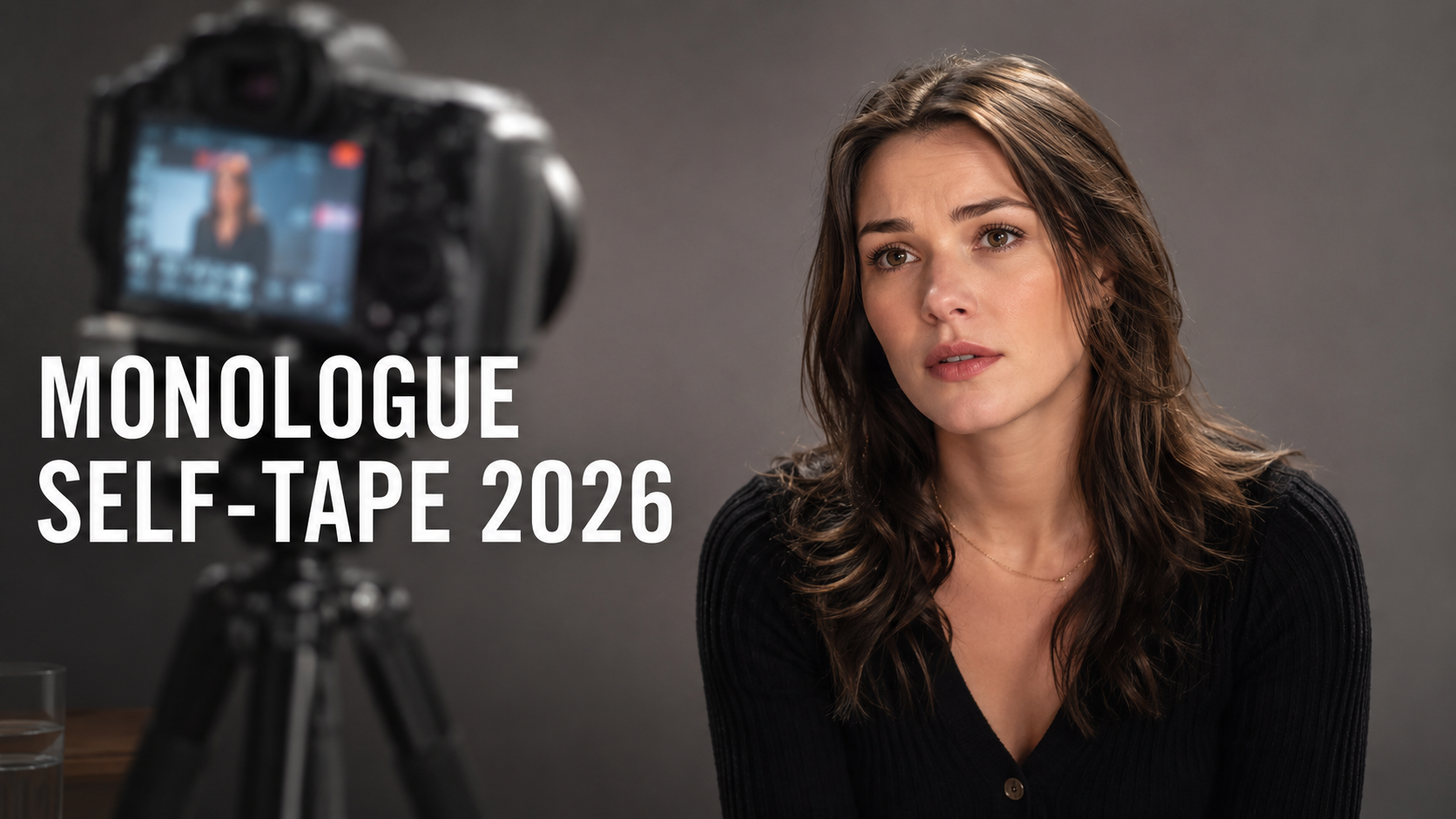
Most actors who are comfortable self-taping dialogue scenes hit a wall the moment they are asked to submit a monologue. The rules feel different because they are different. In a dialogue scene, the back-and-forth creates natural rhythm, gives you something to react to, and keeps the energy moving. A monologue is just you, the camera, and two minutes of unbroken performance with nowhere to hide. Understanding why the format demands a different approach is the first step to getting it right.
In 2026, monologue self-tapes are being requested more frequently than at any previous point in the industry. MFA programs at top conservatories, undergraduate theatre programs, certain film and television roles, and an increasing number of indie casting directors are asking for monologue submissions as a first-round filter. The reason is simple — a monologue reveals things about an actor that a dialogue scene cannot. It shows sustained emotional commitment, the ability to hold a throughline, and whether the actor is genuinely present or simply reacting to a scene partner. Casting directors and admissions panels use the monologue self-tape to answer one specific question: can this actor carry a moment alone?
Choosing the Right Monologue for Camera
The single most common mistake actors make when self-taping a monologue is choosing material written for the stage. Stage monologues are designed to fill a theatre — they are built with large emotional arcs, physical movement, and projection in mind. The camera does not reward any of those things. What reads as powerful from the fifteenth row of a theatre reads as overacting from two feet away on a laptop screen.
For a self-tape submission, choose material that was written for the screen or that translates naturally to intimate performance. The language should feel conversational even when the emotion is heightened. The physical world of the piece should be containable within a medium close-up frame. If you find yourself wanting to move around the room, stand up, or use large gestures to tell the story, the material is probably working against the format. The best monologue self-tape material feels like the actor is talking directly to one specific person in a real situation — not performing for an audience.
Framing and Camera Setup for a Monologue
The standard medium close-up that serves dialogue self-tapes well is also the correct starting frame for a monologue. Your eyes should sit in the upper third of the frame, your shoulders should be visible, and there should be a small amount of headroom above you. Do not widen the shot to show more of your body. The casting director or admissions panel wants your face — specifically your eyes — and everything else in the frame is a distraction from that.
One of the most important technical decisions in a monologue self-tape is eyeline. Unlike a dialogue scene where your eyeline is placed just off the lens toward an imaginary scene partner, a monologue gives you more flexibility. If your character is speaking to a specific person in a specific location, place that person in your mind just off camera at lens height and hold your eyeline there consistently throughout. If your monologue is more internal — a character working something out, speaking to themselves, or addressing the audience — a slightly more direct relationship with the lens can work. The key word is consistency.
Drifting eyeline in a monologue reads as unfocused and unprepared.
The Technical Setup — Light, Audio, and Background
Everything you know about technical self-tape setup applies to the monologue, but the stakes are higher because there is no scene partner to draw attention away from technical flaws. Your key light should be positioned at roughly forty-five degrees to your face, slightly above eye level, producing a clean catch light in your eyes. Your background should be neutral — a plain wall, a simple backdrop, or a clean environmental background that does not compete with your performance. Avoid backgrounds with movement, busy patterns, or anything that pulls the eye away from your face.
Audio is non-negotiable for a monologue submission. In a dialogue scene, the scene reader can sometimes carry a moment if the actor's audio dips. In a monologue, every word is yours and every drop in audio quality is noticed immediately. Use an external microphone if you have one. If you are recording on an iPhone, position it no more than three to four feet from your face and record in a room with soft furnishings to reduce echo. Run a ten-second audio test before your full take and listen back on headphones. You are listening for room tone, echo, and any background hum from appliances or HVAC systems. Fix all of it before you record your performance.
Performance Considerations Specific to the Camera
The camera rewards internal life over external expression. This is the fundamental performance truth that separates actors who book from monologue self-tape submissions and actors who do not. Casting directors watching a monologue self-tape are looking for what is happening behind your eyes — the thinking, the wanting, the adjusting — not the demonstration of emotion on your face. The impulse to show the panel that you are feeling something is the enemy of actually feeling it.
Before you record, know specifically who you are talking to. Give that person a name, a face, a history with your character, and a reason why this conversation is happening right now. The more specific your imaginary circumstances, the more real your behavior on camera will be. Generalized emotion — playing sad, playing angry, playing desperate — reads as performance. Specific behavior in response to a specific imaginary person reads as truth. The camera will tell the difference every time.
How Long Should Your Monologue Self-Tape Be
Unless the submission guidelines specify a length, aim for material that runs between ninety seconds and two minutes on camera. Shorter than ninety seconds and there is not enough time to establish a world, develop a relationship, and arrive somewhere emotionally. Longer than two and a half minutes and you are testing the patience of whoever is watching, particularly in high-volume submission situations where panels are reviewing hundreds of tapes. If your chosen material runs longer than two minutes, look for a natural edit point where you can trim without losing the arc of the piece.
Always read the submission guidelines carefully before you record. Some MFA programs specify classical versus contemporary material, comedic versus dramatic tone, or strict time limits. Some casting directors ask for two contrasting monologues in a single submission. Ignoring these specifications — regardless of how strong your performance is — will get your tape removed from consideration before anyone presses play.
The Slate for a Monologue Submission
Most monologue self-tape submissions require a slate before the performance begins. Keep it clean, professional, and brief. State your name, the title of the piece, the playwright or source material, and the character you are playing. Do not editorialize — do not explain why you chose the piece, apologize for your setup, or add anything that was not asked for. Step back slightly for your slate so the panel can see you from the chest up, then move back into your performance frame before you begin. Give yourself a three to five second breath between the end of your slate and the first word of your monologue. That breath is not dead air — it is you entering the world of the piece, and the panel will feel the difference between an actor who takes it and one who does not.
Submitting and Labeling Your File
When your take is complete, export your file in 1080p at a minimum. Name your file using your last name, first name, the title of the monologue, and the year — for example: Smith-Jane-Monologue-Title-2026.mp4. This naming convention ensures your file is identifiable in a folder containing hundreds of submissions and signals to the recipient that you understand professional submission standards. Upload to the platform specified in the submission guidelines. If no platform is specified, Vimeo with a private link is the cleanest and most universally accessible option for monologue submissions.