How to Get Into Acting: A Beginner's First-Move Guide
No agent, no film school, no connections? Here's exactly what to do this week to get into acting — the practical starter checklist that gets you auditioning instead of waiting.
By Admin
You don't get into acting by waiting to be allowed in. You get in by doing the small, unglamorous things this week that turn "someday" into a real audition on your calendar. If you've been Googling how to get into acting and drowning in vague advice, here's the version nobody gives you: a checklist you can actually start today.
Forget the myth that you need to move to L.A., land an agent, and wait to be discovered. That road still exists, but it's not the only one anymore — and it's not the fastest. The fastest way in is to make yourself submittable and then start submitting.
Start here: To get into acting, do four things in your first month — set up a simple self-tape corner, get one monologue or scene performance-ready, get a clean headshot, and start submitting to real auditions. Training helps, an agent helps, but neither is the thing that gets you in the room first. Reps do.
Step 1: Build a self-tape corner (this week)
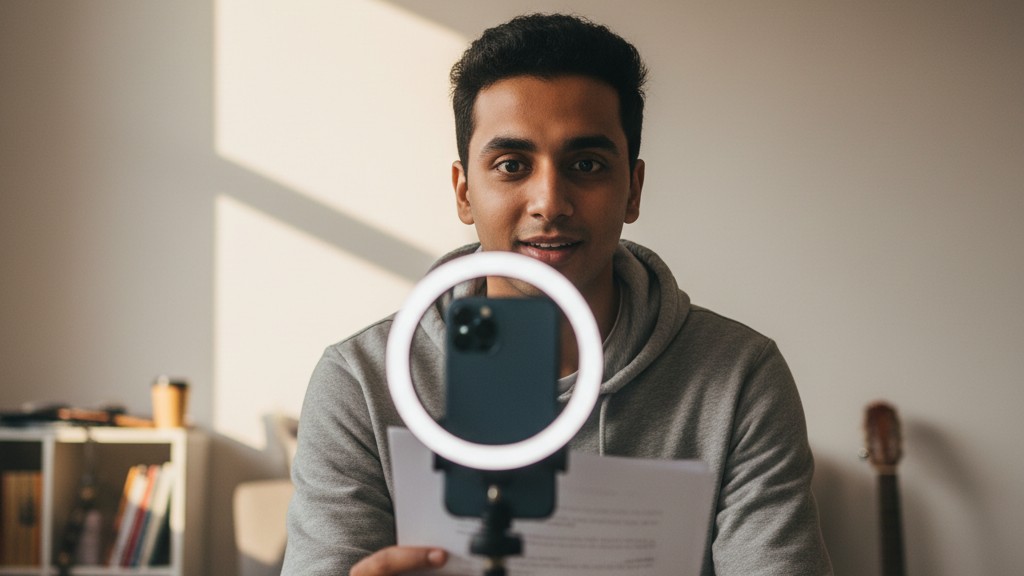
The audition room moved. Today, a huge share of auditions are self-tapes you record at home and submit. That means your first real move isn't finding an agent — it's building a corner of your room that can shoot a clean tape.
You need almost nothing: a phone, a quiet space, a plain wall, and soft, even light (a $19 ring light does the job). That's your way in, open 24 hours a day. If you want the full setup walked through, start with our self-tape guide — but don't let "perfecting the setup" become the thing that stops you from ever recording.
Step 2: Get one piece performance-ready
Pick one short monologue or scene that fits your age and type, and get it truly off-book and alive. One great two-minute piece beats a folder of half-learned ones. This is your calling card — the thing you can perform cold when an opportunity shows up.
Step 3: Get a usable headshot
Your headshot is often the first thing casting sees, and it decides whether they open your tape at all. It does not need to cost $500. A clean, well-lit photo that actually looks like you on a normal day — not glamour, not ten years ago — is the goal. You can even start with a strong photo shot at home and upgrade later.
Step 4: Start submitting — before you feel ready
This is the step beginners skip, and it's the only one that actually gets you into acting. Submit yourself to student films, background work, indie shorts, and local casting calls. You're not waiting to be chosen — you're generating your own at-bats.
You will never feel "ready" to submit. Submit anyway. Readiness is something acting gives you after you start — not before.
Do you need classes or an agent first?
No — not to start. Classes make you better and you should take them when you can, but they can also become a comfortable place to hide from auditioning. And an agent doesn't create momentum; they amplify it. Build a little proof first — a tape, a headshot, a couple of small credits — and you'll be a far more attractive prospect when you do approach reps.
Common mistakes that keep beginners stuck
- Waiting for permission. Nobody is coming to give it. Start.
- Spending money before spending reps. A pricey course can't book you; auditions can.
- Sending a bad tape. Dark, echoey, badly framed tapes get skipped no matter how good the acting is. Your setup is part of your craft now.
- Chasing an agent as step one. Bring them momentum, not just hope.
- Overthinking your "type." You'll learn it by auditioning, not by agonizing.
Frequently Asked Questions
How do I get into acting with no experience?
Build a self-tape setup, get one strong piece ready, get a clean headshot, and start submitting to entry-level roles — student films, background, indie