How to Frame a Self-Tape: The 2-Second Rule
Casting decides if you look professional in two seconds. Get the framing right: mid-chest up, eyes on the top third, camera at your eye level.
By Sal Framondi
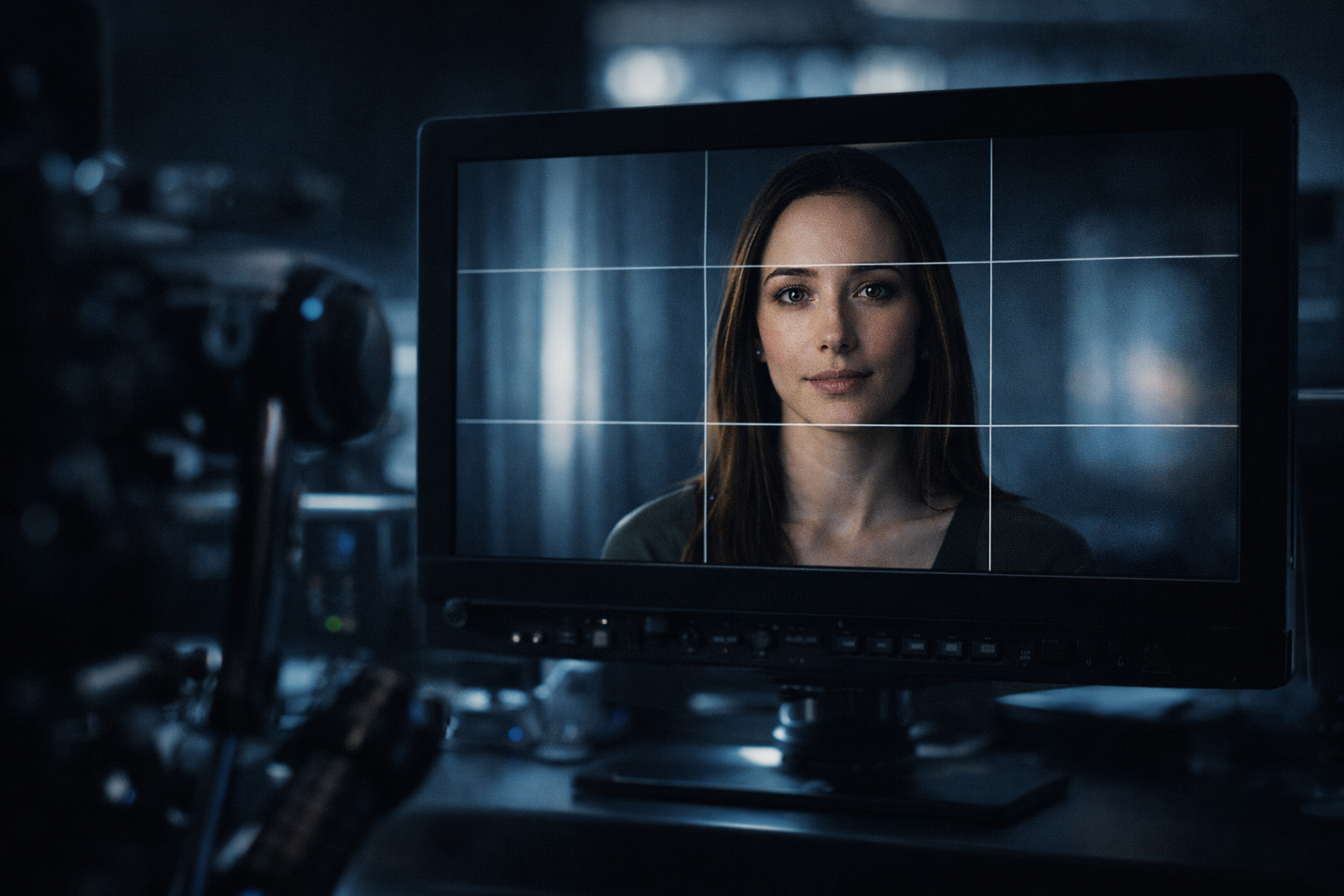
In the high-velocity world of 2026 casting, your thumbnail is your handshake. When a casting director opens your video file, they make a subconscious judgment about your professionalism within the first two seconds. If the camera is positioned too far away, the viewer cannot connect with your eyes; if it is positioned too close, your performance feels claustrophobic and technically unpolished. The Medium Close-Up (MCU) has become the universal standard for film and television auditions because it perfectly balances emotional intimacy with physical context. Mastering this specific frame is the most immediate way to signal that you understand the technical requirements of a professional set.
The Anatomy of a Perfect Medium Close-Up
In the specific context of self-taping, a Medium Close-Up dictates that the frame should begin at the middle of your chest and terminate approximately one to two inches above the top of your head. This framing is strategically designed to prioritize the eyes, placing them in the upper third of the frame—the "golden zone" where humans naturally look for emotional cues. By including the shoulders and chest, you allow for subtle physical character choices and hand movements to remain within the shot without "falling out" of the frame. This composition effectively fills the screen with your presence, minimizing background distractions and keeping the focus entirely on your internal life.
The "Chest-Up" Baseline and the Sternum Rule
To achieve consistent professional results, you should always align the bottom of your video frame with your sternum or the middle of your chest. This specific baseline ensures that your shoulders are fully visible, which is essential for conveying posture, tension, and physical character development. Avoid the common mistake of "neck-up" framing, which can make you look like a "floating head" and strips away the physical groundedness required for a cinematic performance. Ensuring the chest is included provides the necessary anchor for your head and neck movements, making the overall image feel stable and intentional.
Eliminating the Amateur "Headroom" Mistake
One of the most frequent indicators of an amateur self-tape is excessive "headroom"—the empty space between the top of an actor's head and the top of the video frame. Leaving too much space makes the actor appear shorter and diminishes their presence within the scene. Conversely, "cutting" the top of the head can make the viewer feel like the performer is being crushed by the frame. The professional standard is to leave a sliver of space—roughly one to two inches—above the hair. This creates a balanced, aesthetically pleasing composition that mirrors the high-end cinematography found in modern streaming series and feature films.
The Psychology of Eye-Level Camera Placement
The vertical height of your camera lens is a critical storytelling tool that must remain neutral for a standard audition. You should never film from a "low angle" looking up your nose, as this creates an unintended "power" dynamic that can make you appear looming or villainous. Similarly, filming from a "high angle" looking down at you can make a character appear small, weak, or victimized. To maintain a true "peer-to-peer" connection with the casting director, the camera lens must be exactly level with your eyes. This neutral perspective allows your acting choices to define the character's status, rather than the camera angle doing the work for you.
The Landscape Requirement in a Vertical World
Despite the prevalence of vertical video on social media platforms like TikTok and Instagram, professional casting software is built exclusively for a 16:9 widescreen (Landscape) orientation. Recording in "Portrait" mode is a significant error that forces the casting director to view your performance between two giant black bars, effectively wasting 60% of the available screen real estate. Always record horizontally to ensure your tape integrates seamlessly into the casting portals used by major studios. By mastering the Medium Close-Up and adhering to these technical standards, you ensure that the industry's first impression of you is one of absolute professional readiness.