Blog
6 months agoHeadshots That Book: 2026 Trends for Cinematic Actor Branding
In 2026, a "booking" headshot is no longer a glossy portrait—it’s a frame pulled from a movie. Learn why authenticity and "Theatrical Branding" have replaced studio perfection as the #1 requirement for getting in the room.
By Admin

The Shift from Perfection to Cinematic Truth
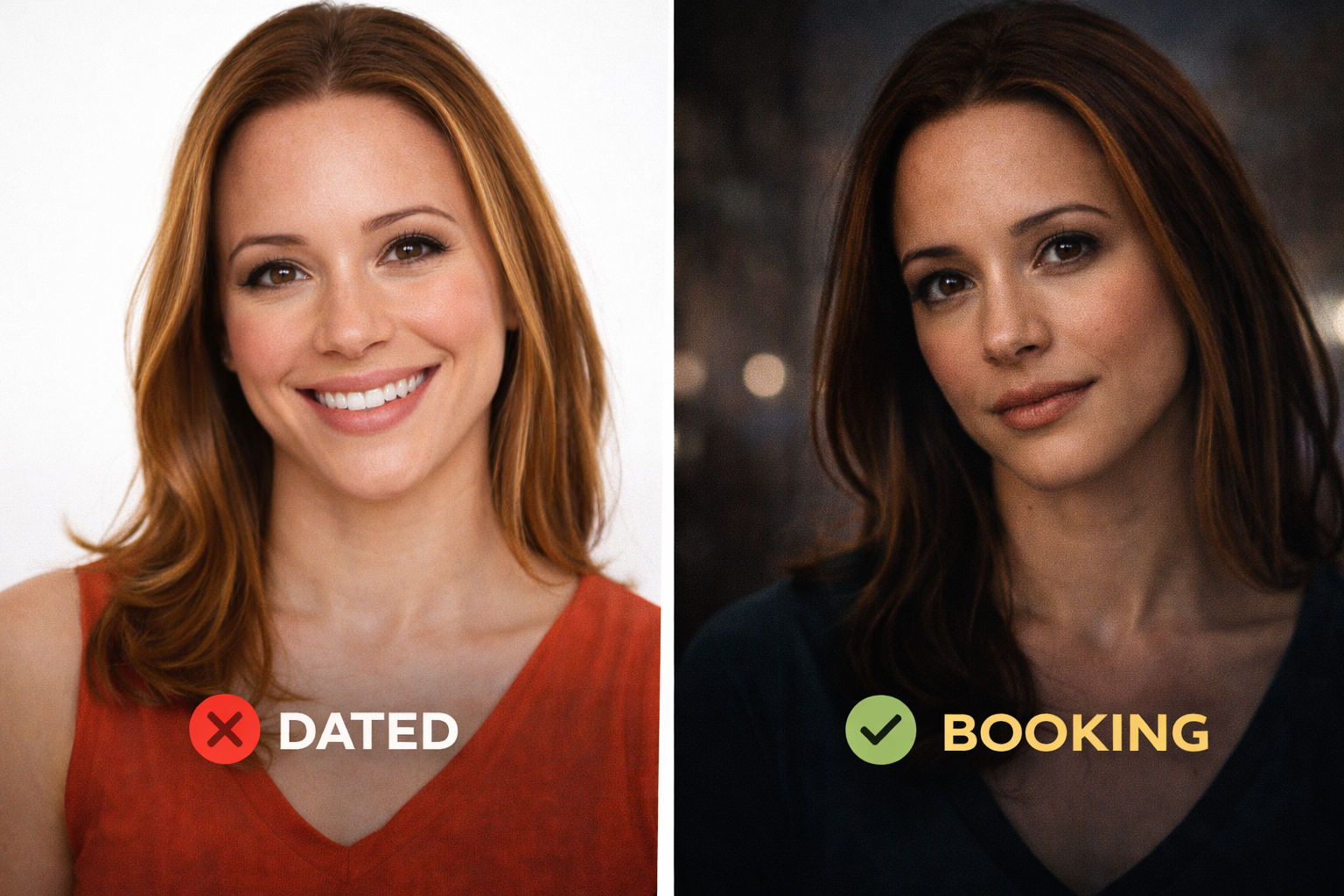
In the high-velocity casting environment of 2026, the definition of a "great" headshot has undergone a radical transformation. Casting Directors (CDs) are no longer moved by the glossy, hyper-perfected studio portraits that defined the last decade. Instead, the industry has pivoted toward "Cinematic Truth"—images that look less like a photoshoot and more like a high-definition still pulled directly from a streaming series. Today’s most effective headshots prioritize natural dimensionality and "honest" textures over artificial polish. As digital submission platforms move toward AI-assisted sorting, images that convey a grounded, human presence are the ones that successfully bypass the initial filters and land on a human decision-maker's screen.
Defining Your 2026 Casting "Lanes" and Archetypes
A successful headshot must act as a strategic marketing tool that communicates your specific casting "lane" within three seconds. Gone are the days of the "generic" headshot. In 2026, actors are finding success by leaning into specific character archetypes through their wardrobe, lighting, and environmental backgrounds. Whether you are the "Grounded Tech Genius," the "Blue-Collar Hero," or the "Corporate Antagonist," every element of your photo should reinforce that narrative. When your image aligns perfectly with your natural essence and physical type, casting professionals don't have to guess where you fit in their story; the image does the heavy lifting before they ever open your résumé.
The Power of Micro-Expressions and "Active" Eyes
One of the most critical shifts in 2026 headshot trends is the move away from static, "dead-eye" posing toward active, specific emotional moments. The most bookable headshots capture "Micro-Expressions"—subtle flickers of thought, reaction, or intention that suggest an internal life. When you are in front of the lens, treat it as a scene partner rather than a piece of glass. Imagine a specific person you are reacting to and an objective you are trying to achieve. This creates "Active Eyes" that draw the viewer in, making the Casting Director feel an immediate emotional connection to you as a performer rather than just observing a static marketing asset.
Environmental Backgrounds vs. Flat Studio Colors
Flat, solid-color studio backdrops have largely fallen out of favor for theatrical submissions. In 2026, textured or environmental settings—such as soft brick, neutral urban walls, or window-lit interiors—are being used to provide narrative context without creating a distraction. These "blurred" environments add a cinematic depth (bokeh) that suggests the world the character lives in. This atmospheric approach supports the storytelling by making the viewer subconsciously place you on a professional set. The goal is to create a believable, three-dimensional environment that keeps the ultimate focus on the actor’s face while suggesting a larger cinematic world.
What to Avoid: The "Red Flags" of 2026 Photography
The industry is currently rejecting heavily retouched images that erase natural character lines, scars, or skin textures. If you walk into a room and don't match your photo, you have immediately broken the trust of the casting office. Similarly, filters that "airbrush" the skin or hyper-commercial "teeth-heavy" smiles that lack emotional specificity are viewed as outdated. Black-and-white headshots and overly bright "high-key" studio lighting now feel like relics of a previous era. To remain castable in 2026, you must prioritize timeliness and believability over vanity. A "booking" headshot is an honest representation of who you are on your best day, ready to step onto a professional set.
In the high-velocity casting environment of 2026, the definition of a "great" headshot has undergone a radical transformation. Casting Directors (CDs) are no longer moved by the glossy, hyper-perfected studio portraits that defined the last decade. Instead, the industry has pivoted toward "Cinematic Truth"—images that look less like a photoshoot and more like a high-definition still pulled directly from a streaming series. Today’s most effective headshots prioritize natural dimensionality and "honest" textures over artificial polish. As digital submission platforms move toward AI-assisted sorting, images that convey a grounded, human presence are the ones that successfully bypass the initial filters and land on a human decision-maker's screen.
Defining Your 2026 Casting "Lanes" and Archetypes
A successful headshot must act as a strategic marketing tool that communicates your specific casting "lane" within three seconds. Gone are the days of the "generic" headshot. In 2026, actors are finding success by leaning into specific character archetypes through their wardrobe, lighting, and environmental backgrounds. Whether you are the "Grounded Tech Genius," the "Blue-Collar Hero," or the "Corporate Antagonist," every element of your photo should reinforce that narrative. When your image aligns perfectly with your natural essence and physical type, casting professionals don't have to guess where you fit in their story; the image does the heavy lifting before they ever open your résumé.
The Power of Micro-Expressions and "Active" Eyes
One of the most critical shifts in 2026 headshot trends is the move away from static, "dead-eye" posing toward active, specific emotional moments. The most bookable headshots capture "Micro-Expressions"—subtle flickers of thought, reaction, or intention that suggest an internal life. When you are in front of the lens, treat it as a scene partner rather than a piece of glass. Imagine a specific person you are reacting to and an objective you are trying to achieve. This creates "Active Eyes" that draw the viewer in, making the Casting Director feel an immediate emotional connection to you as a performer rather than just observing a static marketing asset.
Environmental Backgrounds vs. Flat Studio Colors
Flat, solid-color studio backdrops have largely fallen out of favor for theatrical submissions. In 2026, textured or environmental settings—such as soft brick, neutral urban walls, or window-lit interiors—are being used to provide narrative context without creating a distraction. These "blurred" environments add a cinematic depth (bokeh) that suggests the world the character lives in. This atmospheric approach supports the storytelling by making the viewer subconsciously place you on a professional set. The goal is to create a believable, three-dimensional environment that keeps the ultimate focus on the actor’s face while suggesting a larger cinematic world.
What to Avoid: The "Red Flags" of 2026 Photography
The industry is currently rejecting heavily retouched images that erase natural character lines, scars, or skin textures. If you walk into a room and don't match your photo, you have immediately broken the trust of the casting office. Similarly, filters that "airbrush" the skin or hyper-commercial "teeth-heavy" smiles that lack emotional specificity are viewed as outdated. Black-and-white headshots and overly bright "high-key" studio lighting now feel like relics of a previous era. To remain castable in 2026, you must prioritize timeliness and believability over vanity. A "booking" headshot is an honest representation of who you are on your best day, ready to step onto a professional set.