When a Strong Audition Doesn't Fit the Role
A strong audition can still miss the role. Learn how to read the brief, identify tone, make specific choices, and judge your work without guessing.
By Sal Framondi
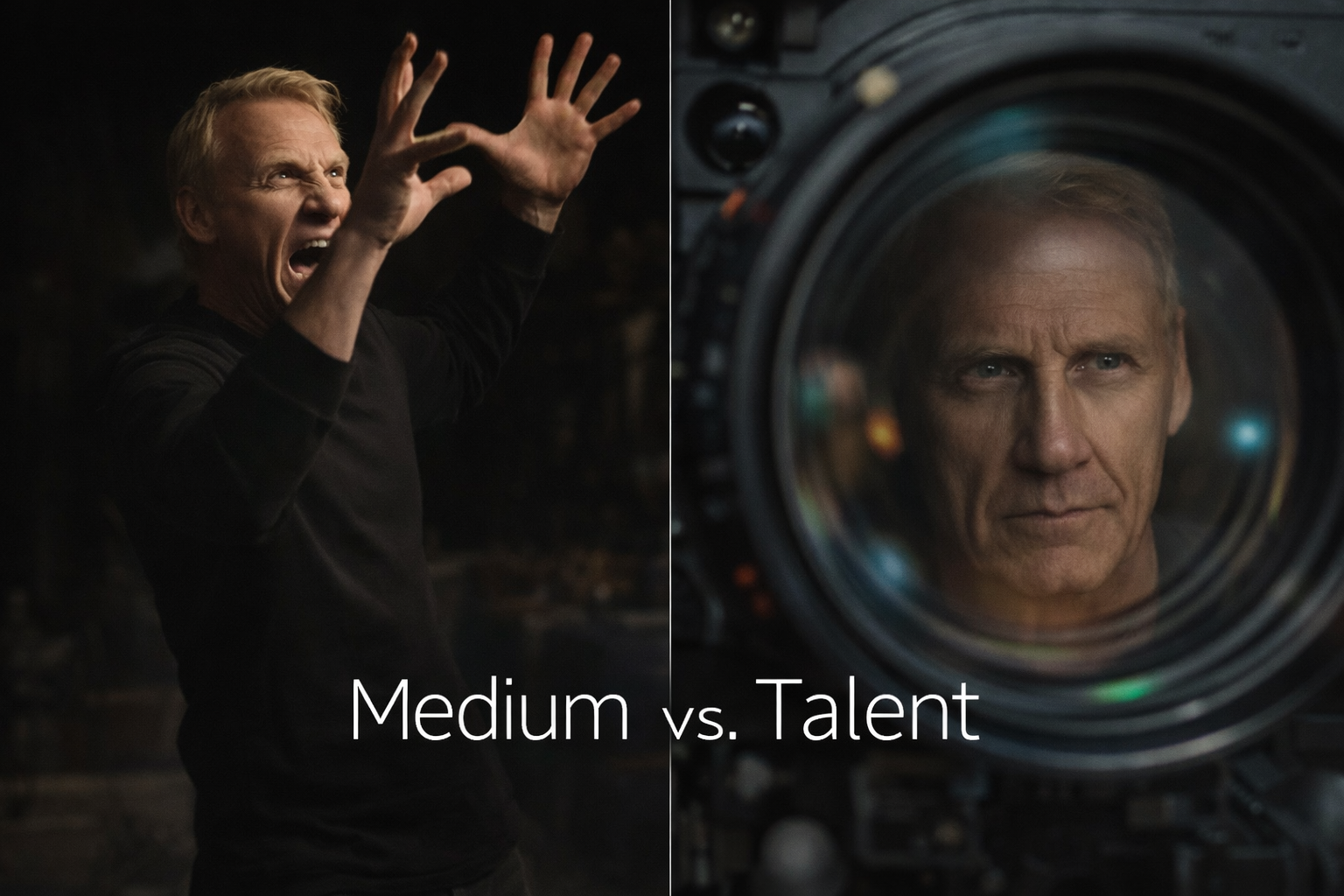
A strong audition can be well prepared, truthful, and technically clean without being the right fit for a particular role. The useful question is not, “Was I talented enough?” It is, “Did my choices serve this script, this format, and this character?”
You cannot know every reason a team does not call you back. You can, however, review whether your interpretation answered the information you were given. That keeps your preparation focused on choices you control instead of imagined decisions happening elsewhere.
Separate good acting from the right fit
Actors often judge an audition by intensity. A take may feel powerful because it required tears, anger, speed, or a major emotional turn. None of those qualities automatically make it right for the scene. A quiet exchange may need restraint. A comedy may depend on pace and listening rather than visible effort. A commercial may need simple connection with the product or situation.
Fit begins with the function of the role. Is the character driving the scene, receiving new information, hiding something, calming another person, or changing a decision? Your performance should make that function clear. If the scene is about listening and deciding, adding a large emotional display can pull attention away from the actual event.
This does not mean making every audition smaller. It means choosing the size, pace, and focus that the material supports. The strongest choice is not always the biggest choice. It is the clearest playable choice that belongs in the world of the script.
Read the instructions before interpreting the scene
Start with the casting notice, audition instructions, and any supplied reference material. Note the project format, requested framing, character description, relationship, tone, and submission requirements. Treat those details as boundaries, not optional suggestions.
Then read the scene once without performing it. Identify what changes between the first line and the last. Mark what your character wants from the other person, what stands in the way, and where a new piece of information changes the approach. If you begin with a fully formed performance before answering those questions, you may polish an idea that does not fit the scene.
When the material is limited, avoid filling every gap with an elaborate backstory. Make only the assumptions needed to play the scene. A simple, supported relationship and immediate objective usually give you more freedom than a detailed story the text never confirms.
Match the performance to the format
A scene written for a close camera can register small shifts in thought. A broad physical choice that works in another setting may distract in a tight frame. Fast comedy may require clean timing and a clear turn, while a grounded dramatic exchange may need more room around silence. These are not rigid formulas, but they are useful questions.
Ask what the viewer must understand without explanation. Can they see who matters to you? Can they follow the moment your tactic changes? Does the pace allow the language to land? If your internal work is rich but the story is hard to follow, adjust the outward behavior rather than adding more emotion.
For a practical foundation, review the Academy guide to breaking down a script. Use that process to find playable facts before deciding how the scene should feel.
Make one specific interpretation
Trying to show every possible version of the character can make a take feel vague. Choose a clear relationship, immediate need, and point of view. You are not claiming that your reading is the only valid one. You are giving the team a complete version they can evaluate.
Specificity can be simple. Instead of playing “nervous,” decide what you are trying to prevent the other person from noticing. Instead of playing “confident,” decide what you need them to agree to before the conversation ends. Actions give the scene direction. General moods often produce the same expression across every line.
If the instructions invite a second take, change the interpretation rather than merely changing volume. Shift the relationship, urgency, or tactic while keeping the script and requested tone intact. If only one take is requested, send the version that most clearly answers the brief.
Review the tape without chasing approval
Watch once for story and once for technical issues. On the story pass, ask whether the relationship is readable, the turns occur in the right places, and the ending lands. On the technical pass, check sound, focus, framing, eyeline, and whether anything pulls attention away from the work.
Do not keep recording only because you have not produced a take that feels exciting. Excitement is not the same as fit. After several repetitions, choices can become forced and listening can flatten. Set a reasonable take limit before you begin, then choose the clearest complete performance that follows the instructions.
Use a callback gap as useful evidence
A single result tells you very little. Casting decisions include factors you cannot see, including combinations among performers and production needs. Avoid rebuilding your approach after every silence.
Look for patterns across several auditions instead. Are you consistently misunderstanding comedy tone? Are your dramatic scenes pushed beyond what a close frame needs? Are you choosing material that does not represent the roles you submit for? Ask a trusted teacher or coach for feedback on the pattern, not a promise about why one job went elsewhere.
Keep notes after submitting: the format, your main choice, what you changed between takes, and one thing you would repeat. This creates a useful record without turning every outcome into a judgment of your ability.
A practical fit check
- Read every instruction before rehearsing.
- Name the character’s immediate objective in plain language.
- Identify the relationship and what changes in the scene.
- Choose a performance size that suits the frame and format.
- Make one specific interpretation instead of several vague ones.
- Check that the story is readable without extra explanation.
- Review sound, focus, framing, and eyeline separately.
- Submit the strongest complete take, not the most dramatic take.
- Judge patterns across multiple auditions, not one result.
Make the next audition more precise
A strong audition is not wasted because it does not lead to a callback. Your job is to prepare carefully, interpret the available evidence, and make a clear offer that fits the material. When you review the work through that lens, you can improve without pretending to know decisions you were never in the room to hear.