Blog
4 months agoCan I Use Props in a Self-Tape? The Honest Truth from Casting Directors
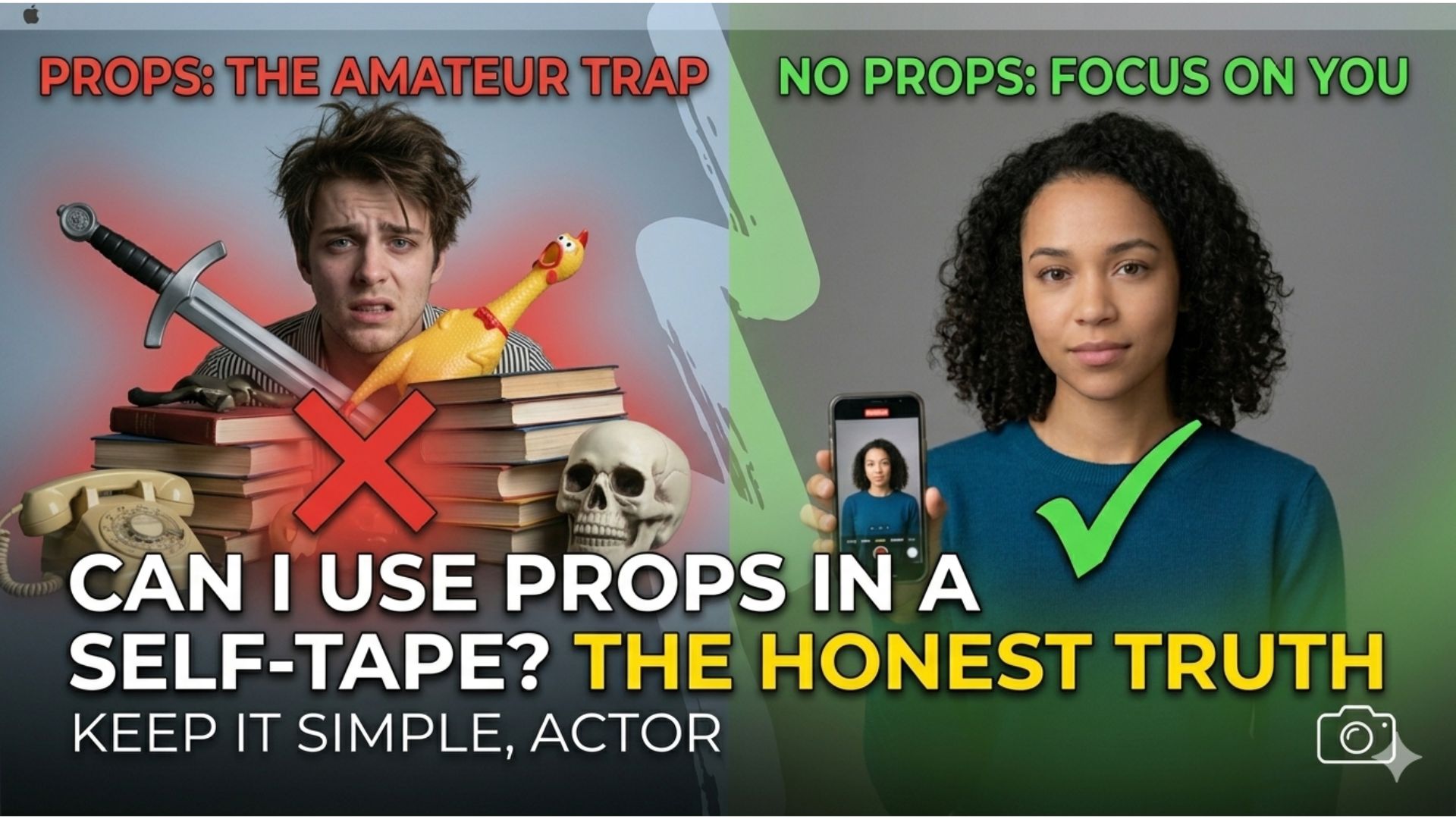
To prop or not to prop? It’s a question that plagues every actor. Learn why that rubber chicken or plastic sword might be doing more harm than good and how to use your imagination to keep the focus on your performance.
By Admin

To prop or not to prop? Learn why using physical objects in your audition can actually signal amateurism and how to keep the focus on your acting.
The Prop Trap: Why Less is More in Professional Casting
You just received a script where your character is a professional chef. Your first instinct is likely to grab a whisk and a mixing bowl to make the scene feel more grounded and "real." However, in the world of professional 2026 self-taping, props are almost always a significant distraction. While you may think you are being helpful by bringing the world of the play to life with physical objects, you are likely sabotaging your performance by drawing the viewer's eye away from the most important element in the frame: your internal life.
The Distraction Factor and the Amateur Signal
The most vital component of your self-tape is your eyes and the subtle emotional shifts occurring in your performance. When you introduce a physical prop, the Casting Director's eye naturally follows the movement of the object rather than the nuances of your face. If you are fumbling with a prop or worrying about how it looks on camera, you are no longer acting; you are merely "doing business." This often signals to a Casting Director that you do not trust your own ability to create an environment through your imagination. Experienced actors know that the magic of a scene happens when the audience "sees" the world through the actor's conviction, not through a collection of household items.
The Mime Exception and the Power of Suggestion
One of the most effective tools in an actor's arsenal is the power of suggestion. You do not need a real phone to have a convincing phone conversation, nor do you need a real cup to drink coffee on camera. Simply suggesting the action with a slight hand gesture is often far more powerful than using a physical object because it keeps the frame clean and the focus centered on your features. By using your imagination to fill in the physical details of the world, you invite the Casting Director to engage with your performance on a deeper, more creative level.
Navigating the Rare Exceptions for Prop Usage
There are very rare occasions where a prop is acceptable, but only if it is absolutely essential to the plot and meets specific technical criteria. If a scene is centered entirely on the discovery of a specific letter, a simple, silent piece of white paper is acceptable. However, you must avoid anything that makes noise, such as objects that clank, rattle, or bang, as your microphone will prioritize those sounds over your dialogue. Generally, low-profile items like a pen, a pair of glasses, or a book are safe, provided they do not obstruct your face or create technical hurdles for the production team.
The Smartphone Rule and Protecting Your Face
The most common prop used in modern auditions is the smartphone, yet we specifically recommend avoiding your actual device. When you hold a physical phone to your ear, you effectively block half of your face from the camera lens, cutting off the Casting Director's view of your expressions. A more professional approach is to place the "phone" on a table in front of you as if it were on speakerphone, or to hold your hand slightly away from your face to ensure your features remain fully visible. Ultimately, Casting Directors want to hire your talent, not your props. If your acting is grounded and the writing is strong, the audience will see everything they need to in their mind's eye.
STAY INFORMED ON CASTING TECH
LATEST INDUSTRY NEWS: Visit OnSetReport.com
The Prop Trap: Why Less is More in Professional Casting
You just received a script where your character is a professional chef. Your first instinct is likely to grab a whisk and a mixing bowl to make the scene feel more grounded and "real." However, in the world of professional 2026 self-taping, props are almost always a significant distraction. While you may think you are being helpful by bringing the world of the play to life with physical objects, you are likely sabotaging your performance by drawing the viewer's eye away from the most important element in the frame: your internal life.
The Distraction Factor and the Amateur Signal
The most vital component of your self-tape is your eyes and the subtle emotional shifts occurring in your performance. When you introduce a physical prop, the Casting Director's eye naturally follows the movement of the object rather than the nuances of your face. If you are fumbling with a prop or worrying about how it looks on camera, you are no longer acting; you are merely "doing business." This often signals to a Casting Director that you do not trust your own ability to create an environment through your imagination. Experienced actors know that the magic of a scene happens when the audience "sees" the world through the actor's conviction, not through a collection of household items.
The Mime Exception and the Power of Suggestion
One of the most effective tools in an actor's arsenal is the power of suggestion. You do not need a real phone to have a convincing phone conversation, nor do you need a real cup to drink coffee on camera. Simply suggesting the action with a slight hand gesture is often far more powerful than using a physical object because it keeps the frame clean and the focus centered on your features. By using your imagination to fill in the physical details of the world, you invite the Casting Director to engage with your performance on a deeper, more creative level.
Navigating the Rare Exceptions for Prop Usage
There are very rare occasions where a prop is acceptable, but only if it is absolutely essential to the plot and meets specific technical criteria. If a scene is centered entirely on the discovery of a specific letter, a simple, silent piece of white paper is acceptable. However, you must avoid anything that makes noise, such as objects that clank, rattle, or bang, as your microphone will prioritize those sounds over your dialogue. Generally, low-profile items like a pen, a pair of glasses, or a book are safe, provided they do not obstruct your face or create technical hurdles for the production team.
The Smartphone Rule and Protecting Your Face
The most common prop used in modern auditions is the smartphone, yet we specifically recommend avoiding your actual device. When you hold a physical phone to your ear, you effectively block half of your face from the camera lens, cutting off the Casting Director's view of your expressions. A more professional approach is to place the "phone" on a table in front of you as if it were on speakerphone, or to hold your hand slightly away from your face to ensure your features remain fully visible. Ultimately, Casting Directors want to hire your talent, not your props. If your acting is grounded and the writing is strong, the audience will see everything they need to in their mind's eye.
STAY INFORMED ON CASTING TECH
LATEST INDUSTRY NEWS: Visit OnSetReport.com