How to Analyze a Script for the Camera
Analyze a script for camera by tracking circumstances, relationships, actions, turns and listening beats, then test those choices in the recorded frame.
By Sal Framondi
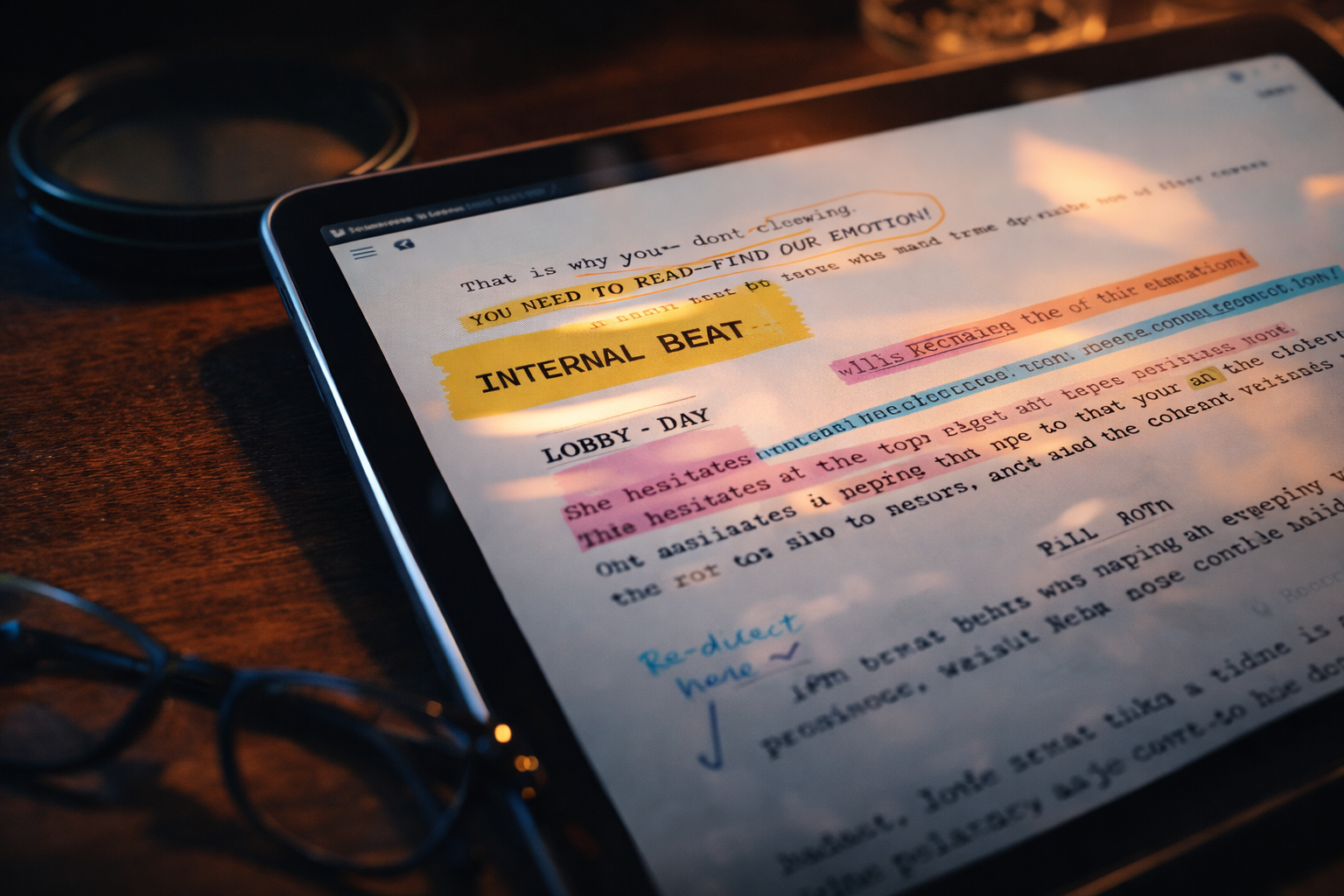
Camera script analysis starts with the same fundamentals as any scene: circumstances, relationship, objective, obstacle and change. Then you test how those choices read in the actual frame, especially while listening.
Do not replace analysis with a list of facial expressions. Build playable behavior from the text and let the camera capture it.
Read once without performing
Read the complete sides for events, not line delivery. Identify where the scene begins, what has just happened, who is present and what changes by the end.
Include headings, stage directions and the other character’s lines. Note facts separately from assumptions. A fact is supported by the text; an assumption is a choice you may test.
Use the script breakdown guide for the core process. The steps below focus on translating that work into a recorded close frame.
Write the circumstances in plain language
Answer where you are, when the scene occurs, what has just happened and what is at risk. Keep each answer specific enough to affect behavior.
Do not build a biography that the scene cannot use. If a detail does not change how you speak, listen or pursue the other person, set it aside.
Mark missing information as a choice rather than a fact. This keeps you flexible if direction supplies a different circumstance.
Define the relationship now
A label such as friend, parent or boss is only a starting point. Decide what you need from this person today and what history is active in the scene.
Look for status, familiarity, withheld information and patterns of interruption. Ask what you expect the other person to do before the first line. That expectation gives the opening a living point of view.
Choose an off-camera reader position that supports the relationship and the requested eyeline. Keep it consistent enough that the audience can follow whom you address.
Turn the objective into an action
State what you want from the other person by the end of the scene. Then choose playable actions for each attempt: reassure, corner, recruit, dismiss, protect or provoke.
A playable action is directed at someone. “Be sad” asks you to display a result; “make them stay” gives you something to pursue.
Change the action when the current approach fails or new information arrives. Those changes create beats without decorating every sentence.
Mark turns, not expressions
A beat occurs when thought, information, tactic or power changes. Mark the trigger and write a short action beside it.
Do not assign a face to each beat. A planned smile, tear or jaw movement can disconnect you from the reader. Know what changes, receive the trigger and allow the physical response to emerge.
Too many marks can fragment the scene. Combine lines that belong to one sustained attempt, then identify the few turns that alter direction.
Analyze the other person’s lines
For every reader line, ask what you hear and what it makes you do next. The camera remains on you while the other person speaks, so listening is part of the visible story.
Underline words that change your understanding rather than reacting to everything equally. Silence can remain active when you are waiting, deciding, resisting or concealing.
Rehearse with a reader who responds rather than performing a fixed rhythm. If their pace changes, continue pursuing the scene instead of waiting for a memorized cue.
Plan the opening and ending circumstances
Know what you are doing immediately before the first line. Begin with attention on the scene partner or task, not with a neutral pose waiting for action.
At the end, stay in the final circumstance long enough for the thought to complete. Avoid adding a theatrical hold or dropping character instantly to operate the camera.
Trim only accidental setup and excessive dead air. Preserve the first thought and the result of the final exchange.
Test choices in the actual frame
Record one pass at the requested framing. Watch first without sound and notice whether thought changes are readable or whether gestures leave the frame. Then listen without watching to check clarity and connection to the reader.
Adjust the underlying action before trying to make movement smaller. Strong circumstances can produce detailed behavior without forcing intensity into the face.
If an important physical action cannot be seen, decide whether to alter the frame, simplify the action or communicate its effect through the relationship.
Use analysis tools as a second set of questions
The Script Analysis tool can organize beats, circumstances and playable ideas. Compare its prompts with the text and keep only suggestions supported by the scene.
A tool cannot know every production context or replace your judgment. Do not accept an interpretation because it sounds polished. Return to the words, given circumstances and request.
Use generated notes to open options before rehearsal, then make a clear choice and perform it.
Prepare for an alternate
After finding one coherent version, identify one variable you could change: relationship, urgency, prior event or tactic. Keep the text and known facts stable.
An alternate should not be louder or faster by default. It should arise from a different playable understanding that still fits the material.
This preparation helps with redirects even when you submit only one take.
Camera-analysis checklist
Read the whole scene; separate facts from choices; define the immediate relationship; state an objective; choose actions; mark major turns; analyze every reader line; prepare the opening and ending; record in the final frame; and revise from evidence.
Good camera analysis creates specific thought and behavior, including the moments between lines. Do the text work, test it on video and keep the choices that remain clear without being demonstrated.