Blog
2 months agoBest Self-Tape Backdrops Under $50 (2026): The Actor's Buying Guide
Your backdrop is the first thing a casting director sees before you say a single word — and the wrong one is quietly signaling amateur before your performance even begins. These are the best self-tape backdrops under $50 in 2026, ranked by what actually works on camera.
By Admin

Most actors spend hours perfecting their performance and thirty seconds thinking about their backdrop. Casting directors notice the opposite order.
Your background loads before your face does. It is the first visual signal in the frame — and in the 2.5 seconds a casting director takes to decide whether to keep watching, a cluttered, wrinkled, or distracting backdrop has already done damage that your performance cannot undo.
The good news: a backdrop that looks like a professional set does not cost more than $50. It never has. What it requires is knowing what to buy, what color to choose, and what to avoid. This guide covers all of it.
What Casting Directors Actually Want to See Behind You
Before the products, the standard.
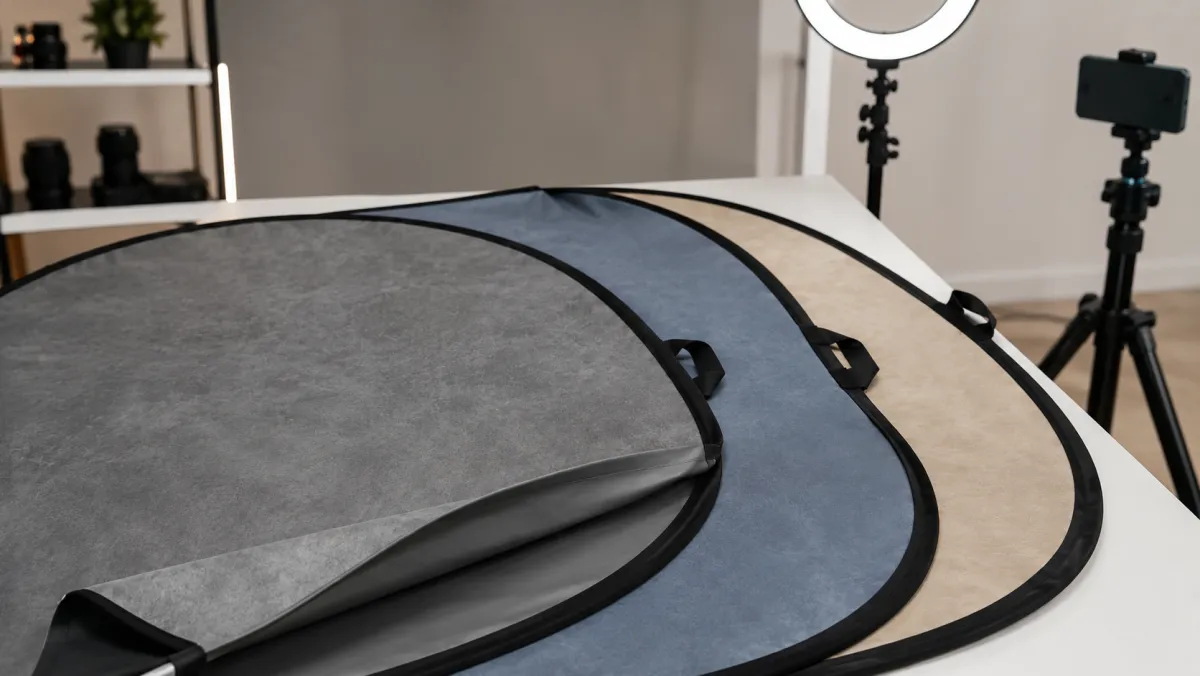
Neutral shades like gray, beige, or slate blue are best. They minimize distractions and flatter skin tones. This is not a preference — it is the industry baseline. Colors like gray, navy blue, and beige complement most skin tones and clothing choices, creating a clean, polished look that keeps the focus entirely on the actor.
What to avoid: anything bright, patterned, or textured. Only use a green screen if specifically requested — otherwise, it may make your tape look less authentic. White walls are also a trap. A blank wall in a neutral color is the best self-tape backdrop — but if you do not have uninterrupted blank wall space, a muslin photography backdrop is necessary.
One more technical rule that most actors skip: place yourself at least two to three feet in front of the backdrop to avoid shadows and allow for proper camera framing. The backdrop itself is only half the equation. Your distance from it determines whether it reads clean or creates the halo shadow problem that immediately signals an amateur setup.
The 5 Best Self-Tape Backdrops Under $50 in 2026
Pick 1: Kate 5x6.5ft Collapsible Pop-Up Backdrop — Gray/Blue Best overall — ~$35–45
This is the most recommended backdrop in the actor community right now and the one most consistently cited by working professionals. It is a 5x6.5ft double-sided collapsible backdrop with gray on one side and blue on the other, designed specifically for self-tape auditions, professional headshots, and video conferencing.
The gray side is your default — it works for every genre, every skin tone, and every lighting setup. The blue side adds a slightly cooler, more commercial feel and works particularly well for comedy and commercial auditions. Neutral colors like light grays, soft tans, and muted blues are pleasing to the eye and will not wash you out or compete for attention.
The pop-up construction means setup takes under 60 seconds. No stand required. It comes with a carrying case, which makes it genuinely portable for actors who tape in multiple locations or travel for work. At under $45, it is the single best value in this category.
Best for: actors who want one backdrop that handles every audition type without a second purchase.
Pick 2: Fovitec Gray/Blue Muslin Pop-Up Collapsible Backdrop — 5x6.5ft Best for versatility — ~$30–40
Neutral gray is incredibly versatile — add light for a white background effect or use less light for a darker, moodier result. It lends a professional touch to many video types and creates a non-distracting background that puts the focus on the performer.
The Fovitec is slightly more forgiving with lighting than the Kate because the muslin material diffuses light rather than reflecting it, which helps in rooms where your key light is strong or slightly uneven. It folds up neatly into a 28-inch circular carrying case and attaches to a stand with background clips or built-in Velcro straps in portrait or landscape orientations.
If you are working in a bright room with a lot of natural light variance, this is the backdrop that handles it most gracefully.
Best for: actors with inconsistent lighting environments or those who tape with window light.
Pick 3: Selens 5x6.6ft Reversible Green/Gray Muslin Pop-Up Best for actors doing content creation alongside auditions — ~$25–35
The Selens features a green chromakey screen on one side and a gray backdrop on the reverse, made of thick muslin material with a built-in steel frame for quick installation and a fabric that stays tight during recording.
For pure self-taping, you will use the gray side exclusively. But for actors who also create content — social media reels, YouTube, class recordings — the green screen side gives you a second tool at no extra cost. The green is broadcast quality for basic compositing and works cleanly with most video editing software.
One important note: only use a green screen for auditions if it is specifically requested by the production. For standard submissions, always flip to gray.
Best for: actor-content creators who want a single piece of equipment that serves both purposes.
Pick 4: GFCC 8x10ft Gray Fabric Backdrop Best for larger spaces — ~$20–30
If you have the wall space and prefer a hanging backdrop over a pop-up, the GFCC 8x10ft is the value leader in the hanging fabric category. At 8 feet wide and 10 feet tall, it covers significantly more background than a standard 5x6.5ft collapsible — useful for actors who tape full-body or in larger rooms where a smaller backdrop would leave edges of the room visible at the sides of the frame.
A black or gray fabric backdrop is perfect for covering a mirror on the wall behind you, hiding pictures, or generally creating a less distracting background. It can be folded and stored when not in use and takes an iron or steamer well to remove wrinkles quickly. The same principle applies here — wrinkle management is the one consistent maintenance task with any fabric backdrop.
You will need a stand or wall clips to hang it. Factor that into the budget if you do not already own one.
Best for: actors with larger taping spaces who want maximum coverage without spending more than $30.
Pick 5: The $0 Option — Your Wall Best for actors just starting out
If you are just starting, do not overthink it. A clean, uncluttered wall painted light gray, tan, or muted blue can make a fantastic backdrop and costs next to nothing.
This is not a compromise. Working casting directors regularly watch and pass on tapes shot in front of well-chosen walls. What matters is that the wall is uninterrupted — no outlet covers, no picture frames, no gradients from nearby furniture casting color into the frame. If your wall qualifies, a can of flat-finish light gray or warm beige paint is genuinely all you need.
You could also hang a plain sheet behind you — just make sure you iron it. Wrinkles in a sheet catch light in a way that looks immediately amateur on camera. Iron or steam before every session.
Best for: actors building their first setup on zero budget who have an appropriate wall available.
The One Technical Rule That Overrides All of This
You can own the best backdrop on this list and still look like you filmed in a broom closet.
Stand two to three feet in front of the backdrop at a minimum. Place two lights at 45-degree angles in front of you. This combination — distance plus front lighting — is what eliminates the shadow halo behind you that plagues most amateur setups. The backdrop is not the whole equation. Your relationship to it is.
Ideally, maintain at least five feet between yourself and the backdrop to allow for proper camera framing and to avoid shadows. In a small apartment, this may require some creative furniture rearrangement, but it is the single most impactful technical adjustment most actors can make to their existing setup.
Which One Should You Buy
If you want one recommendation: the Kate Gray/Blue collapsible. It is under $45, sets up in 60 seconds, gives you two colors in one purchase, comes with a carrying case, and is what the majority of working actors at every level are using right now.
If you are already taping in front of a clean, neutral wall, do not buy anything. Spend that $45 on a better microphone instead.
The backdrop's job is to disappear. The best one is whichever option keeps casting directors focused entirely on your face.
Note: Product prices fluctuate on Amazon. Verify current pricing before purchasing. This article contains affiliate links — if you purchase through them, HowToSelfTape.com may earn a small commission at no additional cost to you.
Your background loads before your face does. It is the first visual signal in the frame — and in the 2.5 seconds a casting director takes to decide whether to keep watching, a cluttered, wrinkled, or distracting backdrop has already done damage that your performance cannot undo.
The good news: a backdrop that looks like a professional set does not cost more than $50. It never has. What it requires is knowing what to buy, what color to choose, and what to avoid. This guide covers all of it.
What Casting Directors Actually Want to See Behind You
Before the products, the standard.
Neutral shades like gray, beige, or slate blue are best. They minimize distractions and flatter skin tones. This is not a preference — it is the industry baseline. Colors like gray, navy blue, and beige complement most skin tones and clothing choices, creating a clean, polished look that keeps the focus entirely on the actor.
What to avoid: anything bright, patterned, or textured. Only use a green screen if specifically requested — otherwise, it may make your tape look less authentic. White walls are also a trap. A blank wall in a neutral color is the best self-tape backdrop — but if you do not have uninterrupted blank wall space, a muslin photography backdrop is necessary.
One more technical rule that most actors skip: place yourself at least two to three feet in front of the backdrop to avoid shadows and allow for proper camera framing. The backdrop itself is only half the equation. Your distance from it determines whether it reads clean or creates the halo shadow problem that immediately signals an amateur setup.
The 5 Best Self-Tape Backdrops Under $50 in 2026
Pick 1: Kate 5x6.5ft Collapsible Pop-Up Backdrop — Gray/Blue Best overall — ~$35–45
This is the most recommended backdrop in the actor community right now and the one most consistently cited by working professionals. It is a 5x6.5ft double-sided collapsible backdrop with gray on one side and blue on the other, designed specifically for self-tape auditions, professional headshots, and video conferencing.
The gray side is your default — it works for every genre, every skin tone, and every lighting setup. The blue side adds a slightly cooler, more commercial feel and works particularly well for comedy and commercial auditions. Neutral colors like light grays, soft tans, and muted blues are pleasing to the eye and will not wash you out or compete for attention.
The pop-up construction means setup takes under 60 seconds. No stand required. It comes with a carrying case, which makes it genuinely portable for actors who tape in multiple locations or travel for work. At under $45, it is the single best value in this category.
Best for: actors who want one backdrop that handles every audition type without a second purchase.
Pick 2: Fovitec Gray/Blue Muslin Pop-Up Collapsible Backdrop — 5x6.5ft Best for versatility — ~$30–40
Neutral gray is incredibly versatile — add light for a white background effect or use less light for a darker, moodier result. It lends a professional touch to many video types and creates a non-distracting background that puts the focus on the performer.
The Fovitec is slightly more forgiving with lighting than the Kate because the muslin material diffuses light rather than reflecting it, which helps in rooms where your key light is strong or slightly uneven. It folds up neatly into a 28-inch circular carrying case and attaches to a stand with background clips or built-in Velcro straps in portrait or landscape orientations.
If you are working in a bright room with a lot of natural light variance, this is the backdrop that handles it most gracefully.
Best for: actors with inconsistent lighting environments or those who tape with window light.
Pick 3: Selens 5x6.6ft Reversible Green/Gray Muslin Pop-Up Best for actors doing content creation alongside auditions — ~$25–35
The Selens features a green chromakey screen on one side and a gray backdrop on the reverse, made of thick muslin material with a built-in steel frame for quick installation and a fabric that stays tight during recording.
For pure self-taping, you will use the gray side exclusively. But for actors who also create content — social media reels, YouTube, class recordings — the green screen side gives you a second tool at no extra cost. The green is broadcast quality for basic compositing and works cleanly with most video editing software.
One important note: only use a green screen for auditions if it is specifically requested by the production. For standard submissions, always flip to gray.
Best for: actor-content creators who want a single piece of equipment that serves both purposes.
Pick 4: GFCC 8x10ft Gray Fabric Backdrop Best for larger spaces — ~$20–30
If you have the wall space and prefer a hanging backdrop over a pop-up, the GFCC 8x10ft is the value leader in the hanging fabric category. At 8 feet wide and 10 feet tall, it covers significantly more background than a standard 5x6.5ft collapsible — useful for actors who tape full-body or in larger rooms where a smaller backdrop would leave edges of the room visible at the sides of the frame.
A black or gray fabric backdrop is perfect for covering a mirror on the wall behind you, hiding pictures, or generally creating a less distracting background. It can be folded and stored when not in use and takes an iron or steamer well to remove wrinkles quickly. The same principle applies here — wrinkle management is the one consistent maintenance task with any fabric backdrop.
You will need a stand or wall clips to hang it. Factor that into the budget if you do not already own one.
Best for: actors with larger taping spaces who want maximum coverage without spending more than $30.
Pick 5: The $0 Option — Your Wall Best for actors just starting out
If you are just starting, do not overthink it. A clean, uncluttered wall painted light gray, tan, or muted blue can make a fantastic backdrop and costs next to nothing.
This is not a compromise. Working casting directors regularly watch and pass on tapes shot in front of well-chosen walls. What matters is that the wall is uninterrupted — no outlet covers, no picture frames, no gradients from nearby furniture casting color into the frame. If your wall qualifies, a can of flat-finish light gray or warm beige paint is genuinely all you need.
You could also hang a plain sheet behind you — just make sure you iron it. Wrinkles in a sheet catch light in a way that looks immediately amateur on camera. Iron or steam before every session.
Best for: actors building their first setup on zero budget who have an appropriate wall available.
The One Technical Rule That Overrides All of This
You can own the best backdrop on this list and still look like you filmed in a broom closet.
Stand two to three feet in front of the backdrop at a minimum. Place two lights at 45-degree angles in front of you. This combination — distance plus front lighting — is what eliminates the shadow halo behind you that plagues most amateur setups. The backdrop is not the whole equation. Your relationship to it is.
Ideally, maintain at least five feet between yourself and the backdrop to allow for proper camera framing and to avoid shadows. In a small apartment, this may require some creative furniture rearrangement, but it is the single most impactful technical adjustment most actors can make to their existing setup.
Which One Should You Buy
If you want one recommendation: the Kate Gray/Blue collapsible. It is under $45, sets up in 60 seconds, gives you two colors in one purchase, comes with a carrying case, and is what the majority of working actors at every level are using right now.
If you are already taping in front of a clean, neutral wall, do not buy anything. Spend that $45 on a better microphone instead.
The backdrop's job is to disappear. The best one is whichever option keeps casting directors focused entirely on your face.
Note: Product prices fluctuate on Amazon. Verify current pricing before purchasing. This article contains affiliate links — if you purchase through them, HowToSelfTape.com may earn a small commission at no additional cost to you.